


 COVID19 Pandemic
World must be ready for the next pandemic, UN says on first International Day of Epidemic Preparedness
New York: The United Nations is commemorating the first International Day of Epidemic Preparedness on Sunday, underscoring the need to learn lessons from the coronavirus pandemic, and urging greater investments in preparedness, to confront future health emergencies.
“This first observance of the International Day of Epidemic Preparedness falls at the end of a year in which a scenario many had feared came tragically true … As we strive to control and recover from the current pandemic, we must think about the next,” Secretary-General António Guterres said in a message.
He also highlighted the need for strong health systems and social protection, support for communities on the frontlines, and technical cooperation for countries.
“Across this work, science must be our guide. Solidarity and coordination are crucial, within and among countries; no one is safe unless all of us are safe,” the Secretary-General added.
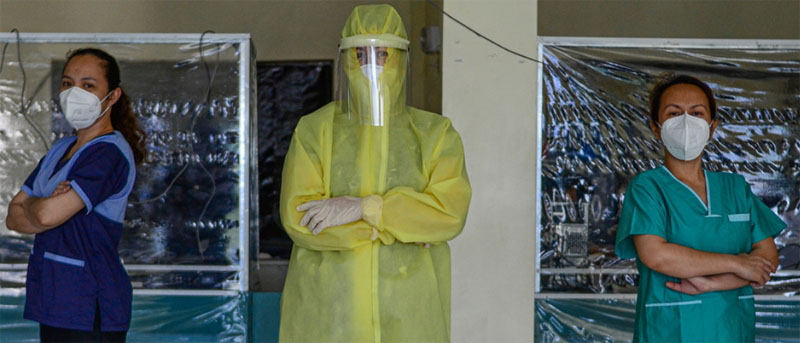
Guterres also honoured medical professionals, front-line personnel and essential workers globally for their “remarkable commitment” in face of the coronavirus pandemic.
“As we recover from the pandemic, let us resolve to build up our prevention capacities so that we are ready when the world faces the next outbreak,” he urged.
We cannot be complacent
Similarly, Volkan Bozkir, President of the General Assembly, underscored that the “devastating experience” of the COVID-19 pandemic has made clear, the benefits of tackling epidemics.
“If we ready ourselves, then we can save lives and stop epidemics from developing into pandemics,” he said, adding that COVID-19 “must be our final warning.”
“We cannot afford to be complacent, and we must learn from our mistakes.”
Bozkir urged everyone to join him in trusting science, supporting early warning mechanisms, and standing together in solidarity.
“We will prepare as we have never prepared before – so that epidemics and pandemics can no longer cause the kind of suffering we have seen across the globe this year,” the President of the General Assembly urged.
In a separate message, Tedros Adhanom Ghebreyesus, Director-General of the UN World Health Organization (WHO) highlighted the importance of a “One Health Approach”, which integrates human health, animal health and plant health, as well as environmental factors.
This is all the more important given that 75 per cent of new and emerging human infectious diseases are zoonotic, caused by germs that spread between animals and people.
“Any efforts to improve human health are doomed unless they address the critical interface between human and animals,” said Dr. Tedros.
The head of WHO also urged countries to invest in preparedness capacity to prevent, detect and mitigate emergencies, and reiterated the importance of strong primary health systems as the foundation of universal health coverage as well as the “eyes and ears” of health systems everywhere.
“True preparedness is not just a job of the health sector, it requires an all-of-government and all-of-society approach,” he added.
The International Day
The International Day of Epidemic Preparedness, to be marked on 27 December annually, was proclaimed earlier this month by the General Assembly, to advocate the importance of the prevention of, preparedness for, and partnership against epidemics.
The General Assembly also recognized the role of the UN system, in particular WHO, in coordinating responses to epidemics, and supporting efforts to prevent, mitigate and address the impacts of infectious diseases.
This International Day falls on the birthdate of Louis Pasteur, the French chemist and microbiologist, responsible for ground-breaking work on vaccinations.
Support Our Journalism
We cannot do without you.. your contribution supports unbiased journalism
IBNS is not driven by any ism- not wokeism, not racism, not skewed secularism, not hyper right-wing or left liberal ideals, nor by any hardline religious beliefs or hyper nationalism. We want to serve you good old objective news, as they are. We do not judge or preach. We let people decide for themselves. We only try to present factual and well-sourced news.
Support objective journalism for a small contribution.


