WHO releases US$1.5 million to fight diphtheria in Cox’s Bazar as probable cases exceed 1,500
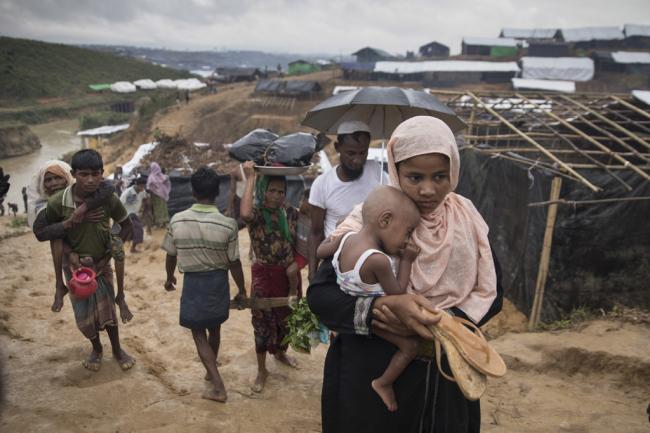
Cox’s Bazar, Bangladesh, Dec 19 (IBNS): The World Health Organization has deployed additional staff and resources to respond to a rapidly spreading outbreak of diphtheria among Rohingya refugees in Cox’s Bazar, Bangladesh.
WHO has released US$1.5 million from its Contingency Fund for Emergencies to help finance scaling up of health operations in Cox’s Bazar over the next six months, in efforts to respond to an outbreak that has seen more than 1,500 probable cases, including 21 deaths.
“The Rohingya refugees are an extremely vulnerable population, with low routine vaccination coverage. WHO is applying a ‘no regrets’ policy when allocating resources to help prevent and protect communities from the spread of diphtheria and ensure that those who are sick receive critical care and treatment,” said Dr Roderico Ofrin, Regional Emergency Director, WHO South-East Asia Regional Office. “The funds released will be crucial to sustaining our efforts until we receive more support from donors for this response.”
Over the next 6 months, the funds will be used to support immunization activities; improve laboratory capacity, support community engagement, contact tracing and case management in health facilities through critical guidance as well as the provision of essential medicines and supplies.
In the past week, WHO has deployed additional experts, procured hospital beds to accommodate more patients in diphtheria treatment centres, provided 1,345 vials of lifesaving diphtheria anti-toxins and 300 000 doses of antibiotics, and is working with health authorities to support ongoing vaccination efforts for both children and health workers.
In addition to this, WHO is working with more than 80 health partners to improve access to essential life-saving primary and secondary health services in Cox’s Bazar.
For 2018, the health sector will request additional funding to help 1.2 million people living in refugee camps and temporary settlements.
Support Our Journalism
We cannot do without you.. your contribution supports unbiased journalism
IBNS is not driven by any ism- not wokeism, not racism, not skewed secularism, not hyper right-wing or left liberal ideals, nor by any hardline religious beliefs or hyper nationalism. We want to serve you good old objective news, as they are. We do not judge or preach. We let people decide for themselves. We only try to present factual and well-sourced news.
Support objective journalism for a small contribution.