


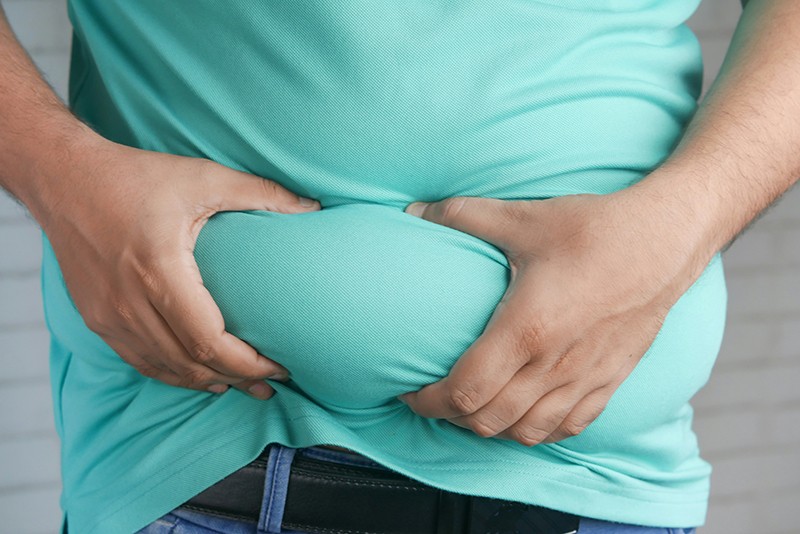
 Obesity
Global health alert: Obesity linked to 10% of all infectious disease deaths, says study
Obesity substantially increases the risk of hospitalization and death from a wide range of infectious diseases—including influenza, COVID-19, pneumonia, gastroenteritis, urinary tract infections, and respiratory infections—according to a study of 540,000 people published in The Lancet.
When extrapolated globally, the findings suggest that obesity may have contributed to 0.6 million out of 5.4 million (10.8%) infectious disease deaths in 2023.
Dr. Solja Nyberg of the University of Helsinki, lead author of the study, said:
"Our findings suggest that people living with obesity are significantly more likely to become severely ill or die from a wide range of infectious diseases. As global obesity rates continue to rise, we can expect a corresponding increase in hospitalizations and deaths linked to infectious diseases."
She emphasized the urgent need for policies that promote healthy lifestyles and support weight loss, including access to affordable nutritious food and opportunities for physical activity. Maintaining up-to-date vaccinations is particularly important for individuals with obesity.
During the COVID-19 pandemic, people with obesity were known to have a higher risk of severe illness and death from SARS-CoV-2 infection. However, evidence on obesity as a risk factor for infectious diseases in general had been limited until now.
To address this, the study analyzed data from over 67,000 adults in two Finnish cohorts and more than 470,000 adults in the UK Biobank. Participants’ body mass index (BMI) was recorded at study entry and they were followed for an average of 13–14 years. The average starting age was 42 in the Finnish cohorts and 57 in the UK Biobank.
Key findings include:
Individuals with obesity (BMI ≥30 kg/m²) had a 70% higher risk of hospitalization or death from any infectious disease compared to those with a healthy BMI (18.5–24.9 kg/m²).
For example, adults with a healthy BMI in the UK Biobank had a 1.1% annual risk of severe infection, compared to 1.8% for adults with obesity.
Risk increased steadily with body weight, with individuals with severe obesity (BMI ≥40 kg/m²) experiencing three times the risk of those with a healthy BMI.
The study examined ten common infectious diseases in detail and found that obesity was associated with higher risk for most of them, including flu, COVID-19, pneumonia, gastroenteritis, urinary tract infections, and lower respiratory tract infections. Obesity did not appear to increase the risk of severe HIV or tuberculosis.
Professor Mika Kivimäki of University College London, who led the study, commented:
"Our findings suggest that broad biological mechanisms may link obesity to a wide range of infectious diseases. Obesity may impair the immune system’s ability to fight bacteria, viruses, parasites, or fungi, resulting in more severe illness. Evidence from trials of GLP-1 weight-loss drugs also supports that reducing obesity lowers the risk of severe infections, alongside other health benefits. However, further research is needed to understand the underlying mechanisms."
The researchers also used data from the Global Burden of Diseases (GBD) Study to estimate the global impact of obesity on infectious disease deaths. Their analysis suggested that in 2023, obesity contributed to 0.6 million of 5.4 million infectious disease deaths worldwide.
National-level data revealed significant variation:
USA: Highest proportion among high-income countries, with obesity linked to 25.7% of infectious disease deaths (35,900 of 139,400).
UK: One in six deaths linked to obesity (17.4%, 7,300 of 42,000).
Vietnam: Lowest proportion, with obesity linked to just 1.2% of deaths (600 of 50,500).
The authors noted limitations, including the observational nature of the study, which cannot confirm causality, and the fact that the cohorts studied may not fully represent the general population. Dr. Sara Ahmadi-Abhari of Imperial College London emphasized that GBD data may have inaccuracies, particularly in low-resource countries, and global estimates should be interpreted with caution.
Support Our Journalism
We cannot do without you.. your contribution supports unbiased journalism
IBNS is not driven by any ism- not wokeism, not racism, not skewed secularism, not hyper right-wing or left liberal ideals, nor by any hardline religious beliefs or hyper nationalism. We want to serve you good old objective news, as they are. We do not judge or preach. We let people decide for themselves. We only try to present factual and well-sourced news.
Support objective journalism for a small contribution.


