 Tedros
WHO chief says global COVID-19 cases double over past six weeks
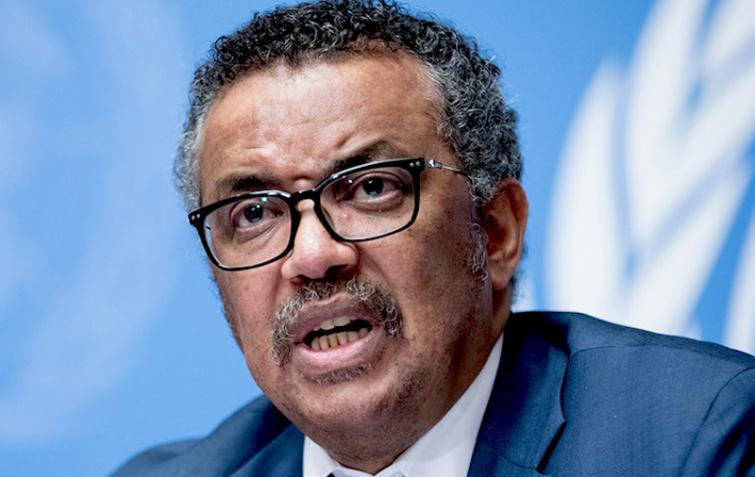
Geneva/Xinhua: World Health Organization (WHO) Director-General Tedros Adhanom Ghebreyesus said Monday that he will reconvene the Emergency Committee on Thursday to re-evaluate the COVID-19 pandemic, as global COVID-19 cases had doubled over the past six weeks.
Saying that this Thursday (July 30) marks six months since Jan. 30 when WHO declared the coronavirus outbreak a public health emergency of international concern, Tedros told a virtual press conference that almost 16 million cases have now been reported to WHO, with more than 640,000 deaths worldwide.
"This is the sixth time a global health emergency has been declared under the International Health Regulations, but it is easily the most severe," he said, adding that the pandemic continues to accelerate.
In the past six weeks, the global total number of cases has roughly doubled, Tedros said.
He said that although the world has changed, the basic measures needed to suppress transmission and save lives have not -- find, isolate, test and care for cases, and trace and quarantine their contacts.
"Countries and communities that have followed this advice carefully and consistently have done well, either in preventing large-scale outbreaks -- like Cambodia, New Zealand, Rwanda, Thailand, Vietnam, and islands in the Pacific and Caribbean -- or in bringing large outbreaks under control, like Canada, China, Germany and the Republic of Korea," he said.
Support Our Journalism
We cannot do without you.. your contribution supports unbiased journalism
IBNS is not driven by any ism- not wokeism, not racism, not skewed secularism, not hyper right-wing or left liberal ideals, nor by any hardline religious beliefs or hyper nationalism. We want to serve you good old objective news, as they are. We do not judge or preach. We let people decide for themselves. We only try to present factual and well-sourced news.
Support objective journalism for a small contribution.