 Water
Water
Water, hygiene woes at health facilities putting lives at risk: UN report
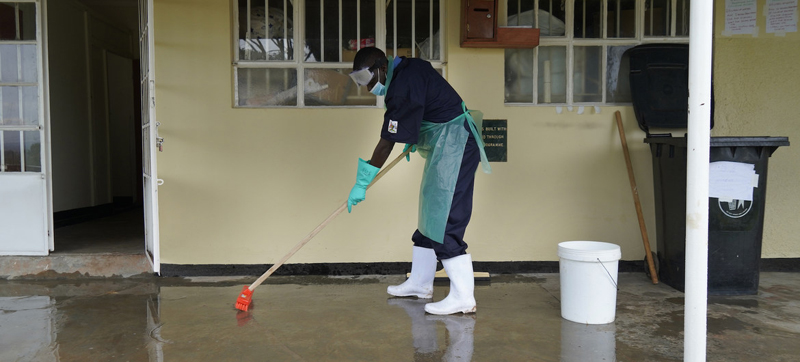
New York: Lack of basic water and sanitation services at health facilities has put around 1.8 billion health workers and patients at higher risk of COVID-19 infection and other diseases, the World Health Organization (WHO) and UN Children’s Fund (UNICEF) have said.
In a new report, released on Monday, the two agencies also warned that an alarming number of health care facilities do not have access to effective hand hygiene and are unable to segregate waste safely.
“Working in a health care facility without water, sanitation and hygiene is akin to sending nurses and doctors to work without personal protective equipment”, said Tedros Adhanom Ghebreyesus, WHO Director-General.
“Water supply, sanitation and hygiene in healthcare facilities are fundamental to stopping COVID-19. But there are still major gaps to overcome, particularly in least developed countries.”
In least developed countries (LDCs), one in two health care facilities do not have basic drinking water, one in four lack hand hygiene facilities at points of care, and three out of five do not have basic sanitation services, according to the report.
‘Disparities impossible to ignore’
UNICEF Executive Director Henrietta Fore said that while such vulnerabilities within health systems existed before the coronavirus pandemic, 2020 “made these disparities impossible to ignore”.
“As we reimagine and shape a post-COVID world, making sure we are sending children and mothers to places of care equipped with adequate water, sanitation and hygiene (WASH) services is not merely something we can and should do. It is an absolute must,” she stressed.
The WASH services are especially important for vulnerable populations, including pregnant mothers, newborns and children, protecting them from a range of life-threatening conditions.
The report, Fundamentals first: Universal water, sanitation, and hygiene services in health care facilities for safe, quality care, is based on statistics from 165 countries with surveys representing some 760,000 facilities.
Improving hygiene, a ‘best buy’
According to preliminary estimates, it would cost about $1 per capita to enable all 47 LDCs to establish basic water service in health facilities. On average, $0.20 per capita would be needed each year to operate and maintain the services.
The report found that immediate, incremental investments in water, sanitation and hygiene (WASH) have big returns: improving hygiene in health care facilities is a “best buy” for tackling antimicrobial resistance.
“It reduces health care costs because it reduces health-care associated infections (which are costly to treat). It saves time as health workers do not have to search for water for hand hygiene. Better hygiene also increases uptake of services,” said WHO and UNICEF.
This all adds up to a return of $1.5 for every dollar invested, the agencies added.
Support Our Journalism
We cannot do without you.. your contribution supports unbiased journalism
IBNS is not driven by any ism- not wokeism, not racism, not skewed secularism, not hyper right-wing or left liberal ideals, nor by any hardline religious beliefs or hyper nationalism. We want to serve you good old objective news, as they are. We do not judge or preach. We let people decide for themselves. We only try to present factual and well-sourced news.
Support objective journalism for a small contribution.