 Vaccine
Vaccine inequity triggers ‘huge disconnect’ between countries
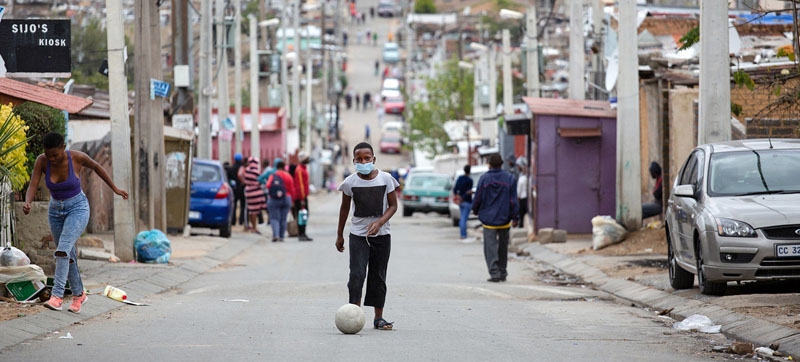
New York: Although COVID-19 cases and deaths continue to decline globally for a second consecutive week, the UN health agency chief said on Monday that “a huge disconnect” is mounting between some highly vaccinated countries, which see the pandemic as largely resolved, while huge waves of infection continue to grip others where shots are scarce.
“The pandemic is a long way from over, and it will not be over anywhere until it’s over everywhere”, Tedros Adhanom Ghebreyesus, Director-General of the World Health Organization (WHO) told journalists once more, at the regular press briefing in Geneva.
Still under threat
Tedros pointed to “dramatic increases” in cases, hospitalizations and deaths, in places where the coronavirus had previously been contained and added that new variants, fragile health systems, relaxed public health measures - and shortages of oxygen, dexamethasone and vaccines - were compounding the problem.
“But there are solutions”, he said, urging people to adhere to physical distancing, continue to wear masks and avoid large gatherings. “Even where cases have dropped, genetic sequencing is critical so that variants can be tracked and measures are not eased prematurely”.
Urgent financial support needed
Although WHO has been responding to the surge in India and other flashpoints, immediate additional funding is required to sustain support in all countries experiencing new waves of cases.
The 2021 response plan is already underfunded, and the vast majority of it is “ring fenced” by donors for specific countries or activities, which is constraining WHO’s ability to provide “an adaptable and scalable response in emerging hotspots”, Tedros said.
Urgent and flexible funding would allow the UN health agency to scale up support for countries and the ACT Accelerator.
Set ambitious goals ‘collectively’
Meanwhile, the UN Children’s Fund (UNICEF) outlined a 190 million dose shortfall in the UN-backed COVAX vaccine initiative for equitable COVID inoculations.
While COVAX has delivered 65 million doses to 124 countries and economies to date, the WHO chief called on manufacturers to publicly commit to sharing their vaccines with COVAX by lifting contractual barriers “within days not months”.
He also pressed manufacturers to give the right of first refusal to COVAX on any additional doses and encouraged them to make deals with companies willing to use their facilities to produce COVID-19 vaccines.
“We need to collectively set ambitious goals to at least vaccinate the world’s adult population as quickly as possible”, Tedros underscored.
Road safety priorities
Although pandemic lockdowns and telecommuting has led to fewer car journeys and road crashes, the WHO chief pointed to a converse problem caused by drivers’ speeding. This has meant the number of deaths had not decreased proportionately.
Kicking off UN Road Safety Week, Tedros asked for national and local policy commitments “to deliver 30 kilometre per hour speed limits in urban areas and generate local support for low speed measures overall”.
Addressing the risk of road traffic deaths is also fundamental to achieve the Sustainable Development Goals (SDGs), specifically those affecting health security, sustainable cities and reducing inequalities among and within countries.
And policies that tackle the of impact road traffic, and create environments for safe, sustainable and inclusive transport options, also unlock action for protecting the climate and gender equality.
A paradigm shift in how streets are designed can make streets safe, accessible and equitable for all road users – delivering multiple benefits while accelerating action across interlinking SDGs, according to WHO.
Support Our Journalism
We cannot do without you.. your contribution supports unbiased journalism
IBNS is not driven by any ism- not wokeism, not racism, not skewed secularism, not hyper right-wing or left liberal ideals, nor by any hardline religious beliefs or hyper nationalism. We want to serve you good old objective news, as they are. We do not judge or preach. We let people decide for themselves. We only try to present factual and well-sourced news.
Support objective journalism for a small contribution.