


 Europe Vaccination
Vaccinated Europeans now outnumber those infected by COVID, but ‘threat remains present’
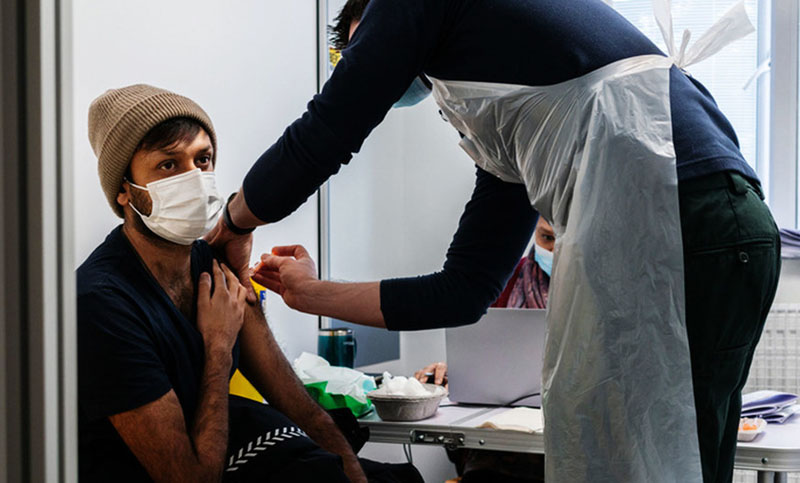
New York: Just over 460 days since the first COVID-19 cases were reported in Europe, more citizens living in the region have now been vaccinated, than the number infected, and although new cases and hospitalizations are falling, “the threat remains present”, a senior UN health official said on Thursday.
Based on confirmed cases, 5.5 per cent of the entire European population has now had COVID-19, while 7 per cent has completed a full vaccination series.
But WHO Regional Director for Europe, Hans Kluge said in a video message, “the virus still carries the potential to inflict devastating effects”.
“As a matter of fact, close to half of all COVID-19 infections in the Region since January last year were reported to WHO during the first 4 months of this year”, he added.
Shaping the pandemic’s course
Although new cases fell significantly last week, for the first time in two months, infection rates across the region remain “extremely high”, according to Dr. Kluge, who noted that individual and collective public health and social measures in most countries, remain “dominant factors in shaping the pandemic’s course”.
Crucially, national governments in the region are slowly but surely vaccinating those most at risk.
“To date, some 215 million doses of vaccine have been administered”, said the WHO official.
Approximately 16 per cent of the region’s population has had a first vaccine dose, as well as 81 per cent of health workers in 28 countries throughout the region.
Hospital admissions are decreasing and death rates are falling in high-risk groups with the highest vaccination rates.
“Vaccines are saving lives, and they will change the course of this pandemic and eventually help end it”, said Dr. Kluge.
‘Clearest path to normal’
The WHO Regional Director maintained that vaccines alone will not end the pandemic but along with strong public health measures, they offer “the clearest path back to normal”.
He underscored the importance of continuing to share information, engage communities and maintain surveillance, saying otherwise “we can’t identify new variants”.
“And without contact tracing, governments may need to reimpose restrictive measures”, Dr. Kluge warned.
Vital immunizations
Every year during European Immunization Week, WHO highlights that for over 200 years, vaccines have protected against life-threatening diseases.
“Today they help protect against more than 20 diseases, from pneumonia to cervical cancer and now also COVID-19”, said Dr. Kluge.
Vaccines are bringing us closer to ending this pandemic, eradicating polio and eliminating measles, cervical cancer and other vaccine-preventable diseases.
And they are helping to edge populations into a world without the threat of antibiotic resistance.
“The fact that the countries of the European Region on average reached 96% of children scheduled to receive their first dose of measles vaccine in 2019, is testament to the commitment of governments in the Region to eliminate measles”, he said.
“We now need that commitment to vaccinating against the SARS-CoV-2 virus”.
Beyond COVID
To keep an upper hand on vaccine-preventable diseases, health systems must provide essential primary health care, including routine inoculations while controlling the pandemic.
Dr. Kluge recalled that faltering immunization rates in 2019 led to more than 100,000 measles cases, warning that that when routine immunization services are temporarily interrupted – as also witnessed a year ago in European countries hardest hit by the first wave of COVID – infectious disease outbreaks may flare up further down the line.
“Hard-earned success can slip away fast”, he said urging “high immunization coverage with routine vaccines”.
For vaccines to again change the course of history, they must be injected into people’s arms, he added.
“Ultimately, it is us, the people who receive them, who make them work for the good of all”.
Support Our Journalism
We cannot do without you.. your contribution supports unbiased journalism
IBNS is not driven by any ism- not wokeism, not racism, not skewed secularism, not hyper right-wing or left liberal ideals, nor by any hardline religious beliefs or hyper nationalism. We want to serve you good old objective news, as they are. We do not judge or preach. We let people decide for themselves. We only try to present factual and well-sourced news.
Support objective journalism for a small contribution.


