October 23, 2026 03:05 am (IST)

Follow us:


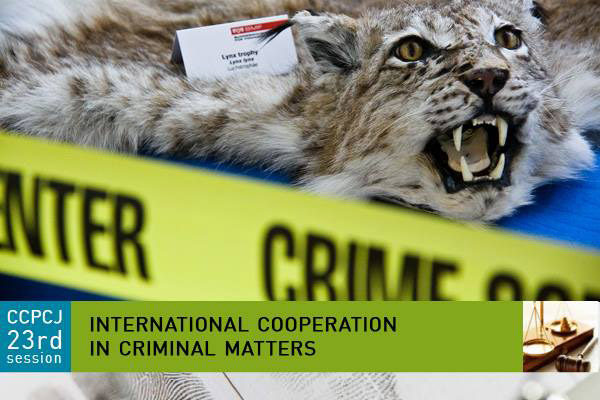
UN urges global action to disrupt illegal wildlife trade
New York, May 14 (IBNS): Urging the international community to "come together at the highest political level" to halt the escalation of wildlife and forest crime, the United Nations crime chief said on Tuesday that the USD 8-USD 10 billion reaped annually from this "ruthless trade" ranks it alongside the trafficking of human beings, arms and drugs in terms of illicit profits.
“The rate of poaching is such that a number of iconic and lesser known species risk being wiped out over the next decade – and we will all bear responsibility for those losses,” warned Yury Fedotov, Executive Director of the UN Office on Drugs and Crime (UNODC), at a special event taking place in Vienna on the margins of the 23rd session of the Commission on Crime Prevention and Criminal Justice.
Fedotov stressed that the illegal wildlife trade – broadly considered poaching and other illicit exploitation of the world’s wild flora and fauna – needed to be recognized everywhere for what it is: a very serious transnational organized crime requiring effective legislation and criminal justice systems.
The London Conference that took place in February 2014 had added to the political commitments expressed in Paris, Gaborone, Marrakesh and Bishkek in 2013.
“We must now translate our resolve into concrete action and channel this momentum into the General Assembly,” he said.
Stemming this tragedy is a shared responsibility, said Fedotov, explaining that UNODC is working with Governments and partners, such as the International Consortium on Combating Wild Life Crime (ICCWC), to improve legislation, strengthen law enforcement and criminal justice systems that can investigate, prosecute and sentence criminals in source countries and end-markets, and forge closer international cooperation.
In addition, UNODC will soon launch the Global Programme for Combating Wildlife and Forest Crime, which would deliver regional and national assistance to support law-enforcement responses, put in place legislation to address this crime, strengthen investigative, prosecutorial and judicial capacities, as well as combat the related issues of money-laundering and corruption.
It will also support States in their efforts to introduce livelihoods to affected communities.
Fedotov stressed however that law enforcement alone cannot eliminate wildlife crime, and he underlined the need to tackle the underlying development dimension.
“Education and public awareness campaigns are needed to reduce the demand for protected fauna and flora, together with efforts to promote sustainable livelihoods for communities in source countries, where poverty and their lack of economic opportunities drive many to engage in this criminal enterprise,” he said.
Fedotov said he hoped that more countries would implement the UNODC Wildlife and Forest Crime Analytic Toolkit developed with ICCWC to assess countries’ preventive and criminal justice responses to wildlife and forest crime, following the example of Gabon, Nepal, Bangladesh and Peru.
Other initiatives of UNODC include the recent “Be a responsible traveller” campaign jointly launched with the UN World Tourism Organization (UNWTO) to curb demand for wild animals, exotic plants and endangered wood products.
(UNODC says wildlife crime worth $8-10 billion annually. Credit: UNODC)
Support Our Journalism
We cannot do without you.. your contribution supports unbiased journalism
IBNS is not driven by any ism- not wokeism, not racism, not skewed secularism, not hyper right-wing or left liberal ideals, nor by any hardline religious beliefs or hyper nationalism. We want to serve you good old objective news, as they are. We do not judge or preach. We let people decide for themselves. We only try to present factual and well-sourced news.
Support objective journalism for a small contribution.



Latest Headlines
Man jumps into tiger enclosure at UK wildlife park, mauled to death
Mon, Oct 12 2026
Two captive-bred Great Indian Bustards released into the wild in Rajasthan, marking shift to rewilding phase
Sun, Oct 04 2026
Disappearing Nilgiri grasslands impact bird populations
Mon, Aug 24 2026
Boat operator fined Rs 5 Lakh for waking sleeping polar bear with foghorn in Norway
Sun, Aug 16 2026
US: Terrifying moment at Yellowstone National Park when giant bison charges SUV, leaves tyre shredded
Mon, Jul 27 2026
A Wild Success? Tracking a Decade of Rhino Reintroduction in Manas
Tue, May 12 2026