 Portugal-Spain
Meteor lights up sky above Portugal, Spain, skygazers left amazed
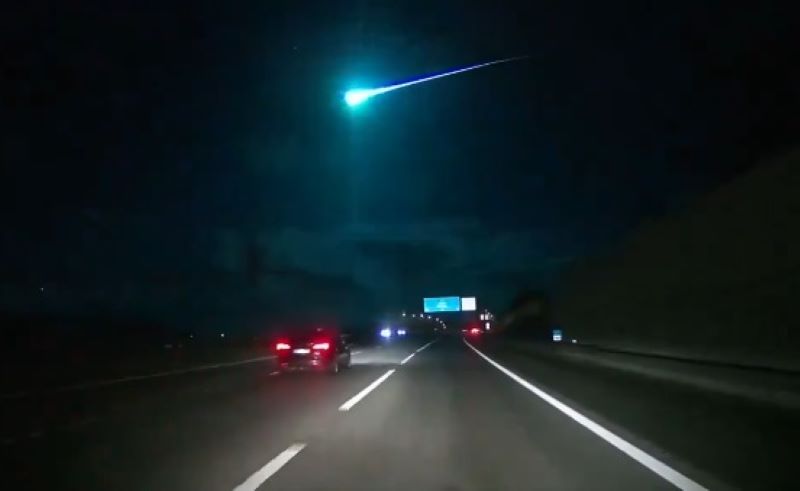
Portugal and Spain witnessed a rare celestial event recently when a giant blue shiny light was seen moving across the night sky.
The rare meteor shower illuminated the sky, leaving people in the two nations to view a rare event and gain the experience of a lifetime.
According to reports, it is still not clear whether the meteor hit the Earth's surface.
However, some media reports claimed it fall near the town of Castro Daire.
Sky gazers did not fail to capture the moment on their mobile phones and shared videos and images on social media.
What is a Meteor Shower?
Scientists estimate that about 48.5 tons (44 tonnes or 44,000 kilograms) of meteoritic material falls on Earth each day. Almost all the material is vaporized in Earth's atmosphere, leaving a bright trail fondly called "shooting stars." Several meteors per hour can usually be seen on any given night. Sometimes the number increases dramatically—these events are termed meteor showers, read NASA website.
Support Our Journalism
We cannot do without you.. your contribution supports unbiased journalism
IBNS is not driven by any ism- not wokeism, not racism, not skewed secularism, not hyper right-wing or left liberal ideals, nor by any hardline religious beliefs or hyper nationalism. We want to serve you good old objective news, as they are. We do not judge or preach. We let people decide for themselves. We only try to present factual and well-sourced news.
Support objective journalism for a small contribution.