


 Mothers-Infants
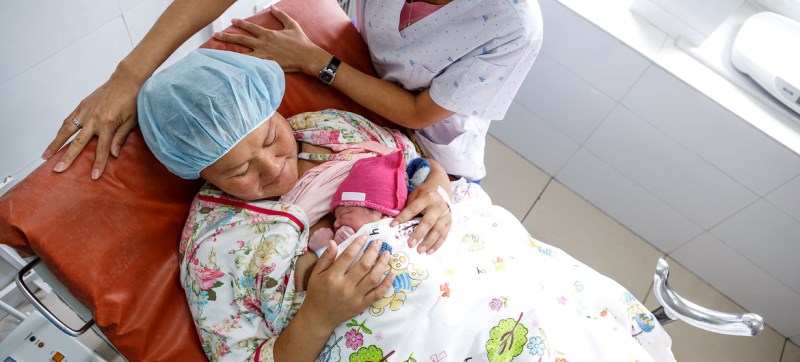
Keep mothers and newborns together, new health research says
New York: The UN World Health Organization (WHO) on Tuesday, highlighted the risks of separating newborns from mothers, with new research showing that up to 125,000 lives could be saved by keeping them together to ensure skin-to-skin contact.
In many countries, if COVID-19 infections are confirmed or suspected, newborn babies are being routinely separated from their mothers, putting them at higher risk of death and lifelong health complications, according to the agency.
“Disruptions to essential health services during COVID-19 have severely affected the quality of care provided to some of the most vulnerable babies, and this includes their right to the lifesaving contact they need with their parents”, Anshu Banerjee, WHO Director for Maternal, Newborn, Child and Adolescent Health, said.
According to WHO, the risk is greatest in the poorest countries where the greatest number of preterm births and infant deaths occur, and disruptions to kangaroo mother care – early, prolonged skin-to-skin contact with a parent, and exclusive breastfeeding – will worsen these risks.
“Decades of progress in reducing child deaths will be jeopardized unless we act now to protect and improve quality care services for mothers and newborns, and expand coverage of lifesaving interventions like kangaroo mother care”, Dr. Banerjee added.
The new research, by WHO and partners, was published in the Lancet EclinicalMedicine.
Kangaroo mother care
WHO said that up to 125,000 babies’ lives could be saved with full coverage of kangaroo mother care. The model of care is particularly important for babies born preterm (before 37 weeks) or at low birthweight (under 2.5 kilogrammes), where it has shown to reduce infant deaths by as much as 40 per cent, hypothermia by more than 70 per cent, and severe infections by 65 per cent.
Queen Dube, Director of Health at the Ministry of Health in Malawi, one of the report authors, underscored the benefits.
“Kangaroo Mother Care is one of our most cost-effective ways to protect small and sick newborns. According to our analysis, these risks by far outweigh the small chance of a newborn baby getting severe disease from COVID-19”, Dr. Dube said.
WHO advised that mothers should continue to share a room with their babies from birth and be able to breastfeed and practice skin-to-skin contact – even when COVID-19 infections are suspected or confirmed – and should be supported to ensure appropriate infection prevention practices.
Low COVID risk
It also noted that studies showed mainly no symptoms or mild disease from COVID-19 in infected newborns, with low risk of neonatal death, with the new study estimating the risk of newborns catching COVID-19 would result in fewer than 2,000 deaths.
However, infection during pregnancy may result in increased risk of preterm birth, which means it is even more important to ensure the right care is given to support preterm babies and their parents during the COVID-19 pandemic, WHO added.
Support Our Journalism
We cannot do without you.. your contribution supports unbiased journalism
IBNS is not driven by any ism- not wokeism, not racism, not skewed secularism, not hyper right-wing or left liberal ideals, nor by any hardline religious beliefs or hyper nationalism. We want to serve you good old objective news, as they are. We do not judge or preach. We let people decide for themselves. We only try to present factual and well-sourced news.
Support objective journalism for a small contribution.


