

 Cancer
India’s big push against Cervical Cancer: 80 lakh girls get HPV vaccine
India has crossed a significant milestone in its efforts to prevent cervical cancer, with more than 80 lakh (8 million) doses of the Human Papillomavirus (HPV) vaccine administered under the National HPV Vaccination Campaign since its launch in February 2026.
The milestone highlights the expanding reach of HPV vaccination through the public health system and reinforces India’s commitment to strengthening preventive healthcare for adolescent girls, according to a government statement.
The National HPV Vaccination Campaign was launched by Prime Minister Narendra Modi in February 2026. Under the campaign, 14-year-old girls are provided voluntary and free-of-cost single-dose HPV vaccination, with parental consent, at government health facilities.
According to 2021 estimates by the Registrar General of India (RGI), approximately 1.2 crore girls form the annual cohort of 14-year-olds expected to benefit from the initiative each year.
States and Union Territories have made significant progress in expanding HPV vaccination coverage, with several states achieving complete coverage of their identified target cohorts.
Gujarat, Uttar Pradesh, Madhya Pradesh and Mizoram have achieved 100 per cent coverage of their respective identified target populations. Bihar, Andhra Pradesh and Assam have crossed 90 per cent coverage, while Karnataka has achieved more than 85 per cent coverage. Chhattisgarh, Sikkim, Kerala, Telangana and Odisha have crossed 60 per cent coverage.
Among the states, Uttar Pradesh has recorded the highest number of vaccinations, with more than 22 lakh adolescent girls vaccinated under the campaign.
The progress reflects coordinated implementation by States and Union Territories, sustained community mobilisation and active engagement of district-level health teams. States have adopted context-specific approaches to reach eligible adolescent girls through the public health delivery network, including in rural, urban, remote and geographically challenging areas.
Madhya Pradesh and Gujarat have achieved 100 per cent coverage of their identified target cohorts, supported by sustained community mobilisation, coordinated implementation and focused field-level efforts.
The progress in Assam and other Northeastern states also demonstrates the role of integrated community health networks and coordinated field-level action in expanding access across geographically diverse areas.
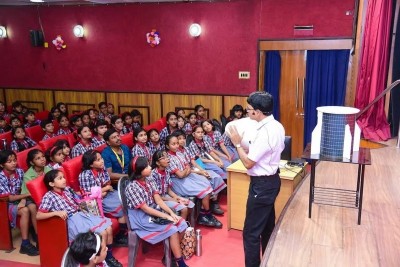
The campaign has placed strong emphasis on community engagement and access to credible information. Parents, healthcare providers, teachers and frontline health workers have been actively engaged to address concerns and counter misinformation surrounding HPV vaccination.
Healthcare providers, including paediatricians and gynaecologists, as well as experts from institutions such as AIIMS, have supported awareness and mobilisation efforts across states and districts. Teachers and frontline health workers, including ASHAs and ANMs, have also played an important role in community outreach.
The campaign has also leveraged India’s digital health infrastructure through the U-WIN platform, enabling programme managers to monitor vaccination coverage at the district level, identify coverage gaps and missed beneficiaries, and support more effective programme planning and resource allocation.
The national campaign builds on extensive global experience with HPV vaccination. More than 800 million doses of HPV vaccines have been distributed globally, providing substantial real-world experience regarding their use and safety.
HPV vaccination, initially adopted predominantly by high-income countries, has progressively expanded into national immunisation programmes across countries at different income levels.
At present, 87 per cent of upper-middle-income countries, 78 per cent of lower-middle-income countries and 54 per cent of low-income countries have adopted HPV vaccines as part of their National Immunization Programmes.
Support Our Journalism
We cannot do without you.. your contribution supports unbiased journalism
IBNS is not driven by any ism- not wokeism, not racism, not skewed secularism, not hyper right-wing or left liberal ideals, nor by any hardline religious beliefs or hyper nationalism. We want to serve you good old objective news, as they are. We do not judge or preach. We let people decide for themselves. We only try to present factual and well-sourced news.
Support objective journalism for a small contribution.