


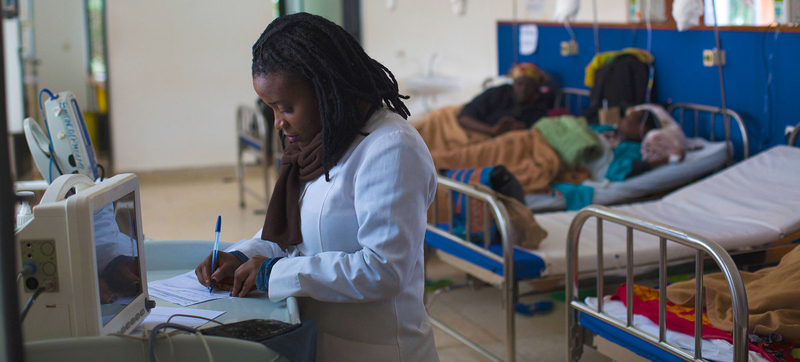
 COVID19 Cancer
Impact of COVID-19 on cancer care has been ‘profound’, warns UN health agency
New York: The COVID-19 pandemic has had a “profound” impact on the diagnosis and treatment of cancer around the world, the UN World Health Organization (WHO) said on Tuesday, before highlighting that breast cancer has become the most common type of the disease.
More than a year since the new coronavirus crisis began, its impact on cancer care has been stark, with “50 per cent of governments (having) cancer services partially or completely disrupted because of the pandemic”, said Dr André Ilbawi, from WHO’s Department of Noncommunicable Diseases.
“Delays in diagnosis are common. Interruptions in therapy or abandonment have increased significantly,” he continued, adding that this would likely have an impact in the total number of cancer deaths in coming years.
Pressure to deliver
“Healthcare professionals have been under great stress to deliver services and there are significant reductions in research and clinical trial enrolment. To state it simply, the consequences of the pandemic on cancer control efforts have been profound.”
An unspecified number of countries “of all income levels” had been affected, the WHO medic continued, although some wealthier nations had managed to counter the effects of the pandemic, including the Netherlands, where special programmes have been set up to speed up access to cancer diagnosis and treatment for those with symptoms.
Amid uncertainty over which COVID-19 vaccine might be most suitable for cancer patients, given the increased vulnerability of some individuals, Dr Ilbawi said that data from ongoing clinical vaccine trials had yet to be published.
“We do appreciate that cancer patients are being noted in these clinical trials because evidence has shown that cancer patients are at greater risk for COVID-related morbidity and mortality because of their immuno-suppression”, he said.
Trillion-dollar issue
According to the WHO, the economic burden of cancer on communities is huge and increasing; in 2010, its cost was estimated at $1.16 trillion.
“In 2020, the number of people diagnosed with cancer globally reached 19.3 million, with the number of people dying increasing to 10 million”, said Dr Ilbawi.
According to the agency, there were 2.3 million new breast cancer cases in 2020, representing almost 12 per cent of all cancer cases. It is also the leading cause of cancer death worldwide among women.
Speaking via Zoom in Geneva ahead of World Cancer Day this Thursday, Dr Ilbawi noted that “for the first time, breast cancer now constitutes the most commonly occurring cancer globally, followed by lung, which has historically been leading cause in most of, of cancer, and third colorectal”.
Worldwide burden
The WHO official warned that the burden of cancer is expected to rise further in the years ahead for a variety of reasons including population growth, with the number of new cases worldwide in 2040 likely to be 47 per cent higher than in 2020.
The greatest increases will be in low and middle income countries where late-stage diagnosis and lack of access to quality and affordable diagnosis and treatment are common, the UN agency said in a statement.
Sufferers from poorer countries are disproportionately affected, with nearly 90 per cent of global deaths in 2020 from cervical cancer occurring in low and middle income nations. Highlighting efforts to tackle cervical cancer, WHO noted that it is the fourth most common cancer among women globally, with an estimated 604,000 new cases in 2020 and 700,000 cases and 400,000 deaths forecast in 2030.
Diagnose and treat quickly
Underscoring the benefits of early diagnosis and appropriate treatment, the UN health agency appealed for better availability of human papillomavirus vaccine (HPV) and low-cost approaches for screening and treating pre-cancer “before it progresses to invasive cancer”, in addition to new approaches to surgical training.
“To get on the path to eliminate cervical cancer, we must achieve three targets by 2030: 90 per cent of girls fully vaccinated with the HPV vaccine by 15 years of age, 70 per cent of women screened using a high-performance test by age 35 and again by 45 and 90 per cent of women identified with cervical cancer treated,” WHO said.
Achieving these targets would lead to a decline in cases of more than 70 per cent by 2050 and help to avert 4.5 million cervical cancer deaths.
Support Our Journalism
We cannot do without you.. your contribution supports unbiased journalism
IBNS is not driven by any ism- not wokeism, not racism, not skewed secularism, not hyper right-wing or left liberal ideals, nor by any hardline religious beliefs or hyper nationalism. We want to serve you good old objective news, as they are. We do not judge or preach. We let people decide for themselves. We only try to present factual and well-sourced news.
Support objective journalism for a small contribution.


