Food choices today, impact health of both ‘people and planet’ tomorrow
New York, Feb 7 (IBNS): The food we eat has huge potential to improve both human health and environmental sustainability, but too often today it is posing a threat to both people and planet, according to a new report by the EAT-Lancet Commission, launched on Tuesday at United Nations Headquarters in New York.
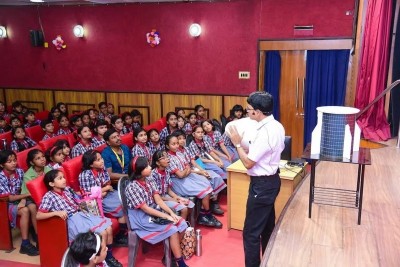
Co-organized by the UN Environment Programme (UNEP) and the Permanent Mission of Norway, the head of the agency’s New York office, Satya Tripathi, noted that it was his home country of India, which had originated the aphorism that “you are what you eat”.
“And it not just about food, it’s about process, it’s about what it results in”, he continued, saying that this “age-old wisdom” has been “scientifically articulated in a very powerful manner” in the report, which pins down “the science, the numbers and the analytics of what you need to do to be healthy”.
The report argues that there is an immense challenge facing humanity to “provide a growing world population with healthy diets from sustainable food systems”, noting that while calorie production has kept pace with population growth, more than 820 million people either lack sufficient food, consume low quality diets or simply eat too much.
“A radical transformation of the global food system is urgently needed”, the report stressed, without which the world not only risks failing to meet the Sustainable Development Goals (SDGs) and the 2015 Paris Agreement, but leaves today’s children dealing with environmental degredation and a population increasingly suffering from malnutrition and preventable disease.
Gunhild A. Stordalen, Founder and Executive Chair of the EAT Foundation, told the launch event that while food poses intrinsic challenges in nearly every part of the Sustainable Development Agenda leading up to 2030, it also has “super powers”.
“The power of food is all about connections” she stated, “the links between people and planet are everywhere, but nowhere are these connections more obvious or the synergies more numerous than on our plates and across the food system”.
Flagging that a healthy food supply will be a defining issue of the 21st Century, the report provides a scientific blue print for a healthy and sustainable future, spelling out that “if we change the way we produce, consume, transport and waste food we can feed everyone a healthy diet and improve the health of the planet”.
United States-based actor and activist Alec Baldwin, warned that humankind was “causing global climate change, which, if we do not act, will be our undoing”.
He urged everyone to look at “the mutually achievable goals” of food and environmental security, saying that we need to alter agricultural priorities to make better use of the land we already have and drastically reduce meat production.
“If we shift to plant-rich diets, we can help save the planet”, Baldwin asserted. Transforming the food system can also lower risks of cancer, strokes and diabetes and avoid 11 million adult deaths per year, the meeting heard.
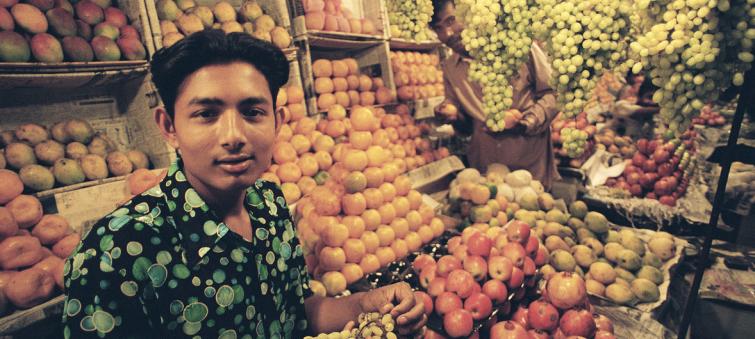
To move to a healthy diet, the reports suggests that the world doubles its consumption of fruits, vegetables, legumes and nuts while reducing at least by half, red meat and food with added sugar.
“The greatest challenge we face is influencing human behavior, you cannot outlaw the consumption of meat…We can only shine a light” on cause and effect, concluded Baldwin.
EAT is a global non-profit established with partners to catalyze a food system transformation.
Image Credit: World Bank/ScottWallace
Support Our Journalism
We cannot do without you.. your contribution supports unbiased journalism
IBNS is not driven by any ism- not wokeism, not racism, not skewed secularism, not hyper right-wing or left liberal ideals, nor by any hardline religious beliefs or hyper nationalism. We want to serve you good old objective news, as they are. We do not judge or preach. We let people decide for themselves. We only try to present factual and well-sourced news.
Support objective journalism for a small contribution.