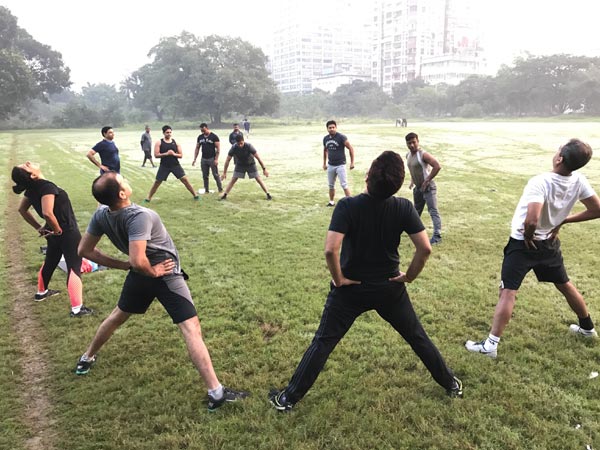
Fight extra weight with more physical activity, study suggests
London, Dec 25 (IBNS): If the new year prompted you to renew your annual commitment to exercise regularly, it could pay off in the long run.
Adults trying to lose weight or maintain a healthy weight may benefit from increasing their physical activity level, such as performing regular exercise, according to a study led by senior author Dr. Lu Qi, HCA Regents Distinguished Chair and Professor in the School of Public Health and Tropical Medicine, and director of the Tulane University Obesity Research Center.
The benefits of increased activity seem to hold true even for adults who are predisposed to gain weight as they get older.
The study, “Genetic Susceptibility, Change in Physical Activity, and Long-term Weight Gain,” suggests that physical activity can offset genetic risk for obesity. The study, led by Tulane University in collaboration with investigators from Harvard University, was published last year in Diabetes, the journal of the American Diabetes Association.
“The study indeed analyzed natural changes in body weight as people become older during adulthood. In the follow-up of the populations, some people increased their physical activity over time” — perhaps due to their efforts to lose or control weight — “while other people decreased their physical activity,” Qi said.
Qi and his associates studied self-reported data from 9,390 women and 5,291 men over five four-year intervals and assigned each individual a genetic risk score based on body mass index (BMI) and body fat percentage. Of those individuals who had higher genetic risk scores, a more sedentary lifestyle led to greater increases in BMI and body fat percentage over time.
However, increased physical activity was associated with less dramatic increases in BMI and body fat percentage, even among individuals with higher genetic risk scores.
The researchers did not monitor different types of activity, only total amounts of physical activity, nor did they compare the participants’ dietary habits.
“Clearly, more physical activity would benefit weight control,” Qi added.
Support Our Journalism
We cannot do without you.. your contribution supports unbiased journalism
IBNS is not driven by any ism- not wokeism, not racism, not skewed secularism, not hyper right-wing or left liberal ideals, nor by any hardline religious beliefs or hyper nationalism. We want to serve you good old objective news, as they are. We do not judge or preach. We let people decide for themselves. We only try to present factual and well-sourced news.
Support objective journalism for a small contribution.