


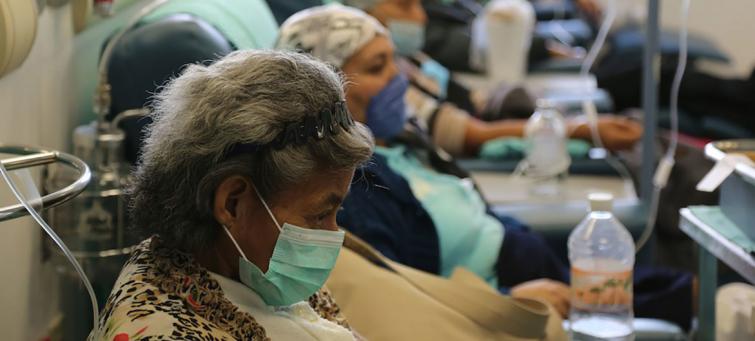
COVID-19 disrupting services to treat non-communicable diseases, WHO survey finds
New York/IBNS: The fight against COVID-19 has severely disrupted services to prevent and treat cancer, diabetes, hypertension and other non-communicable diseases (NCDs) which kill more than 40 million people each year, according to a new survey published on Monday by the World Health Organization (WHO).
The UN agency said the situation is concerning as people living with these diseases are more vulnerable to becoming severely ill or dying from the new coronavirus infection.
“The results of this survey confirm what we have been hearing from countries for a number of weeks now,” said Tedros Adhanom Ghebreyesus, the WHO Director-General.
“Many people who need treatment for diseases like cancer, cardiovascular disease and diabetes have not been receiving the health services and medicines they need since the COVID-19 pandemic began. It’s vital that countries find innovative ways to ensure that essential services for NCDs continue, even as they fight COVID-19.”
Health workers reassigned, screenings postponed
WHO surveyed 155 countries during a three-week period in May.
The results confirmed that while the impact is global, low-income countries have been most affected.
More than half of the nations reported that services for NCDs have been partially or completely disrupted, while two-thirds said rehabilitation services were affected.
Meanwhile, a staggering 94 per cent of countries have had to partially or fully re-assign health ministry staff working on NCDs to support COVID-19 response.
Screening campaigns - for breast and cervical cancer, for example - were also postponed in more than half of countries.
While this is consistent with WHO recommendations in the initial stages of the pandemic, the main reasons cited were appointment cancellations, decreased public transport and lack of staff due to health worker reassignments; though one in five countries discontinued services due to shortages of medicines, diagnostics and other technologies.
Effective alternatives
The survey revealed some bright spots amid a crisis that has touched practically every corner of the globe. WHO reported that as of Monday, there were six million cases of COVID-19 worldwide and more than 370,000 deaths.
Most countries have established alternative strategies to support people at highest risk to continue receiving treatment during the pandemic, including through telemedicine to replace in-person consultations. The figure is 42 per cent in low-income countries, WHO said.
More than 70 per cent of countries have also collected data on the number of COVID-19 patients who also have an NCD.
Dr. Bente Mikkelsen, Director of the Department of Noncommunicable Diseases at WHO, said it will be some time before the full extent of the impact will be known.
“What we know now, however, is that not only are people with NCDs more vulnerable to becoming seriously ill with the virus, but many are unable to access the treatment they need to manage their illnesses", he said.
“It is very important not only that care for people living with NCDs is included in national response and preparedness plans for COVID-19 - but that innovative ways are found to implement those plans. We must be ready to ‘build back better’ ̶ strengthening health services so that they are better equipped to prevent, diagnose and provide care for NCDs in the future, in any circumstances.”
Support Our Journalism
We cannot do without you.. your contribution supports unbiased journalism
IBNS is not driven by any ism- not wokeism, not racism, not skewed secularism, not hyper right-wing or left liberal ideals, nor by any hardline religious beliefs or hyper nationalism. We want to serve you good old objective news, as they are. We do not judge or preach. We let people decide for themselves. We only try to present factual and well-sourced news.
Support objective journalism for a small contribution.


