October 23, 2026 05:54 am (IST)

Follow us:


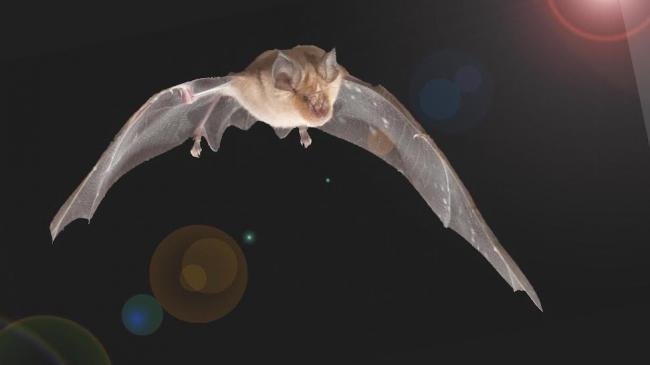
City bats won' fly through bright spaces: Research
Birmingham, June 5 (IBNS) Researchers at the University of Birmingham have discovered that bats living in a city are less likely to move from tree to tree in brightly lit areas.
According to research published online on Friday in the journal Global Change Biology, to maintain high biodiversity in cities, wildlife must be able to move between patches of habitat, which are often separated by paved surfaces, buildings and roads.
The bats studied in this experiment emerge in the evening from their roosts, often within residential housing areas, to feed on small insects in gardens, streams and other green spaces. To reach these feeding areas they often “commute” along lines of trees, which are thought to provide protection from predators and high winds.
The researchers, along with colleagues from Lancaster University, were studying the impact of artificial light on the bat species, Pipistrellus pipistrellus (the Common pipistrelle), that is found in many parts of UK cities.
The bats studied in this experiment emerge in the evening from their roosts, often within residential housing areas, to feed on small insects in gardens, streams and other green spaces. To reach these feeding areas they often “commute” along lines of trees, which are thought to provide protection from predators and high winds.
The researchers, along with colleagues from Lancaster University, were studying the impact of artificial light on the bat species, Pipistrellus pipistrellus (the Common pipistrelle), that is found in many parts of UK cities.
They wanted to find out whether the bats’ crossing behaviour was affected by the distance between trees and the brightness of lighting within the intervening gap. They found that the bats crossed via the darker parts of the gaps, but with sufficient lighting these gaps became barriers to movement. Importantly, this barrier effect varied with the width of the gap in the tree line – bats would tolerate strong lighting in narrow gaps, but even low levels of lighting in larger gaps was enough to stop them crossing.
James Hale, from the University of Birmingham’s School of Geography, Earth and Environmental Sciences, who led the study, said: "The ability to freely move around is key to individual bat fitness and resilience of the broader bat population. Intensification and expansion of lighting due to the availability of cheaper and more energy efficient lighting technologies could prove a real problem for bats as they move around a city.
James Hale, from the University of Birmingham’s School of Geography, Earth and Environmental Sciences, who led the study, said: "The ability to freely move around is key to individual bat fitness and resilience of the broader bat population. Intensification and expansion of lighting due to the availability of cheaper and more energy efficient lighting technologies could prove a real problem for bats as they move around a city.
"Understanding the factors that affect movement between habitat patches is therefore important for urban species survival and conservation. Our models predict that movement would be most restricted in the urban centre, which might explain why even this common species of bat is rarely found in intensively developed areas."
He continued: ‘We have focussed our study on the Common pipistrelle, but the flight behaviour of several other bat species may be influenced by artificial lighting. More research is now needed to explore the potential disruption of movement for other species.’
Gemma Davies of Lancaster University’s Environment Centre, a co-author on the study, said: "We used Geographic Information Systems to combine data about the illumination from artificial lights, with the distance from trees, to predict the landscape resistance to bat movement The logical next step for this research would be to feed these findings into the town and city planning process, by identifying areas where bat populations are low and strategically dimming or shielding street lamps and narrowing gaps in the local tree networks."
This work was supported by the UK Engineering and Physical Sciences Research Council (EPSRC) through the Urban Futures project, Mapping Artificial Lightscapes project and the Liveable Cities programme
The University of Birmingham is ranked amongst the world’s top 100 institutions, its work brings people from across the world to Birmingham, including researchers and teachers and more than 6,000 international students from nearly 150 countries.
He continued: ‘We have focussed our study on the Common pipistrelle, but the flight behaviour of several other bat species may be influenced by artificial lighting. More research is now needed to explore the potential disruption of movement for other species.’
Gemma Davies of Lancaster University’s Environment Centre, a co-author on the study, said: "We used Geographic Information Systems to combine data about the illumination from artificial lights, with the distance from trees, to predict the landscape resistance to bat movement The logical next step for this research would be to feed these findings into the town and city planning process, by identifying areas where bat populations are low and strategically dimming or shielding street lamps and narrowing gaps in the local tree networks."
This work was supported by the UK Engineering and Physical Sciences Research Council (EPSRC) through the Urban Futures project, Mapping Artificial Lightscapes project and the Liveable Cities programme
The University of Birmingham is ranked amongst the world’s top 100 institutions, its work brings people from across the world to Birmingham, including researchers and teachers and more than 6,000 international students from nearly 150 countries.
#City bats won' fly through bright spaces
# Research
# UK Engineering and Physical Sciences Research Council (EPSRC)
# Global Change Biology
Support Our Journalism
We cannot do without you.. your contribution supports unbiased journalism
IBNS is not driven by any ism- not wokeism, not racism, not skewed secularism, not hyper right-wing or left liberal ideals, nor by any hardline religious beliefs or hyper nationalism. We want to serve you good old objective news, as they are. We do not judge or preach. We let people decide for themselves. We only try to present factual and well-sourced news.
Support objective journalism for a small contribution.



Latest Headlines
Man jumps into tiger enclosure at UK wildlife park, mauled to death
Mon, Oct 12 2026
Two captive-bred Great Indian Bustards released into the wild in Rajasthan, marking shift to rewilding phase
Sun, Oct 04 2026
Disappearing Nilgiri grasslands impact bird populations
Mon, Aug 24 2026
Boat operator fined Rs 5 Lakh for waking sleeping polar bear with foghorn in Norway
Sun, Aug 16 2026
US: Terrifying moment at Yellowstone National Park when giant bison charges SUV, leaves tyre shredded
Mon, Jul 27 2026
A Wild Success? Tracking a Decade of Rhino Reintroduction in Manas
Tue, May 12 2026