
March 07, 2026 07:25 pm (IST)
Follow us:
facebook-white sharing button
twitter-white sharing button
instagram-white sharing button
youtube-white sharing button
Iranian drone strike near Dubai Intl. Airport's terminal forces emergency flight suspensions | 26-year-old Hindu man killed after Holi altercation with Muslim neighbour in Delhi’s Uttam Nagar; four arrested | Zohran Mamdani defends wife amid scrutiny over her 'support' for Palestinian cause | Explosions rock club in Kolkata’s Paikpara, locals claim bombs were stored inside | Iran conflict: White House says US could achieve ‘Operation Epic Fury’ objectives in 4–6 weeks | Sensex, Nifty tumble as global tensions and Dow selloff rattle Indian markets | Two IAF pilots killed as Su-30MKI fighter jet crashes in Assam | 'Who is the US to permit?': Congress slams Modi govt over Trump administration’s waiver on India’s Russian oil purchase | US makes surprise move: India gets 30-day waiver to buy Russian oil amid global supply crisis | India edge England by 7 runs in thriller to reach T20 World Cup 2026 final
Wikimedia Commons

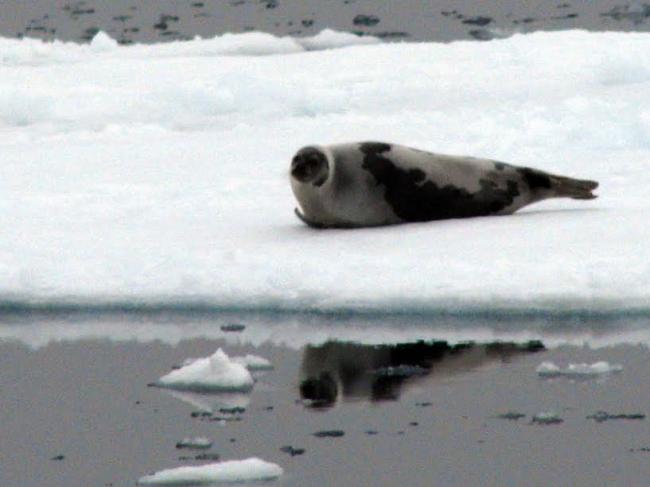
Canada: Poor ice conditions compel seals to move to thicker ice grounds

| | Apr 19, 2017, at 04:39 am
Toronto, Apr 18 (IBNS): Officials from the Fisheries Department said that harp seals who usually reproduces in the Gulf of St. Lawrence, had been forced, this year, to move off coast of Newfoundland, which with abundant thick ice, provided a favourable reproduction condition to the species, media reports said.

According to Fisheries and Oceans Canada reports, the number of harp seal pups born in a year is estimated from time to time by using aerial surveys conducted in the spring, when the seals have pulled out onto the ice to have their pups.

Estimates of abundance of harp seals have been found using a population model that incorporates annual reproductive rates and periodic estimates of pup production as well as information on removals.

Scientist Garry Stenson says the seal herd is spread out over a much larger area than usual instead of congregating in a few areas.

Stevenson tweeted that he followed timing of births by identifying Newfoundland pups’ developmental stage.
 

(Reporting by Asha Bajaj)

Support Our Journalism

We cannot do without you.. your contribution supports unbiased journalism

IBNS is not driven by any ism- not wokeism, not racism, not skewed secularism, not hyper right-wing or left liberal ideals, nor by any hardline religious beliefs or hyper nationalism. We want to serve you good old objective news, as they are. We do not judge or preach. We let people decide for themselves. We only try to present factual and well-sourced news.

Support objective journalism for a small contribution.


