 Bhutan
Bhutan may see moderate rise in emissions if measures not taken
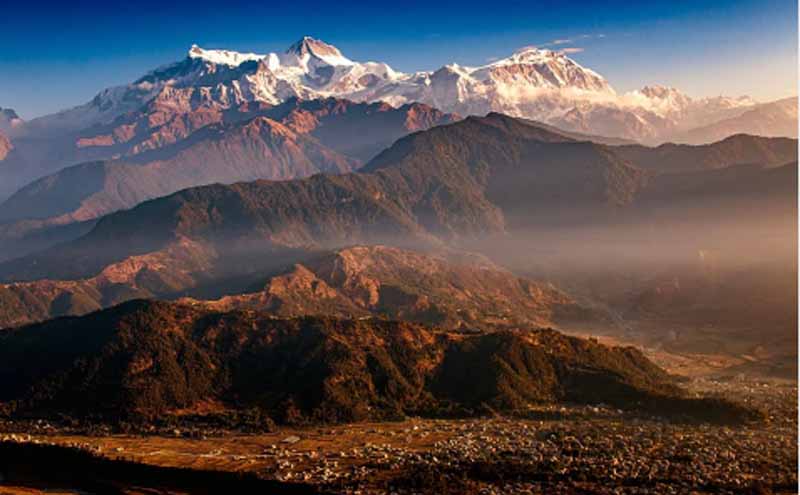
Bhutan - one of the world's greenest countries with a high forest cover - could see a moderate rise in emission level by 2050 if it failed to maintain emissions from deforestation and forest degradation, Kuensel reported.
Bhutan’s forests absorbed 9.4 million tonnes (MT) of carbon dioxide and emitted 3.8 MT of the poisonous gas, resulting in net negative emissions of 5.6MT of CO2 in 2015, according to the third national greenhouse gas inventory.
However, an official with National Environment Commission (NEC), Tshering Yangzom, said modeling studies showed a moderate rise in emission level (6.25 MT CO2e by 2046 and 6.43 MT CO2e by 2050) in the case of a medium GDP growth rate of 4 percent.
“There are emission high reduction potentials in waste, livestock, and basic metals,” she said during a virtual consultation with development partners and relevant agencies on Bhutan’s low emission development strategies (LEDS).
Without mitigation activities, Tshering Yangzom said the emission level would rise while the forest sink capacity would be just 3.6 MtCO2e, which would put the country’s carbon-neutral status at risk.
Support Our Journalism
We cannot do without you.. your contribution supports unbiased journalism
IBNS is not driven by any ism- not wokeism, not racism, not skewed secularism, not hyper right-wing or left liberal ideals, nor by any hardline religious beliefs or hyper nationalism. We want to serve you good old objective news, as they are. We do not judge or preach. We let people decide for themselves. We only try to present factual and well-sourced news.
Support objective journalism for a small contribution.