 AYUSH
AYUSH
Ayush innovations features in WHO’s landmark brief on AI in traditional medicine
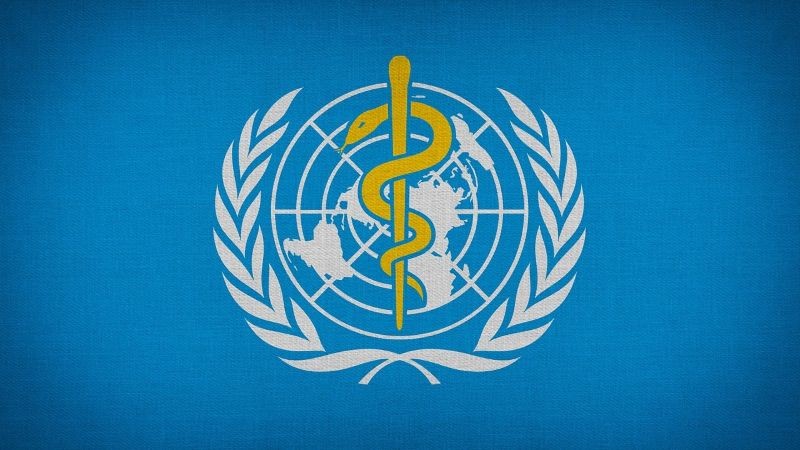
In a significant milestone for global healthcare innovation, the World Health Organization (WHO) has released a technical brief titled "Mapping the Application of Artificial Intelligence in Traditional Medicine", acknowledging India’s pioneering efforts in integrating Artificial Intelligence (AI) with traditional medicine systems, particularly Ayush systems.
The release follows India’s proposal on the subject, leading to the development of WHO’s first-ever roadmap for applying AI in traditional medicine.
India’s efforts to harness the potential of Artificial Intelligence (AI) to advance and amplify the strengths of its Ayush systems reflect the broader vision of Hon’ble Prime Minister Narendra Modi, who seeks to position the country as a global leader in digital health innovation and the integration of traditional medicine.
Speaking at the inauguration of the Global Partnership on Artificial Intelligence (GPAI) Summit in 2023, Prime Minister Modi remarked, “We have developed government policies and programmes inspired by the spirit of ‘AI for all’. Our endeavour is to take full advantage of the capabilities of AI for social development and inclusive growth.”
Union Minister of State (Independent Charge) for Ayush and Minister of State for Health & Family Welfare, Prataprao Jadhav, remarked that India’s AI-led initiatives, mentioned in WHO’s technical brief, reflect the deep commitment of Indian scientists to advancing traditional medicine through cutting-edge technology.
“This recognition underscores our alignment with Hon’ble Prime Minister Shri Narendra Modi ji’s visionary call to harness emerging technologies like Artificial Intelligence to expand the global relevance of Traditional Medicine. By integrating AI with Ayush systems—and through pioneering digital platforms such as the SAHI portal, NAMASTE portal, and the Ayush Research Portal—India is not only safeguarding its centuries-old medical wisdom but also leading the way in shaping a future of personalised, evidence-based, and globally accessible healthcare.”
Vaidya Rajesh Kotecha, Secretary, Ministry of Ayush, said, “The WHO document highlights several pioneering AI-driven innovations led by India—ranging from predictive diagnostics using Prakriti-based machine learning models to the groundbreaking Ayurgenomics project that brings together Ayurveda knowledge and modern genomics. At the core of this digital transformation is the Ayush Grid—a comprehensive digital health platform launched in 2018—which serves as the foundation for several citizen-centric initiatives such as the SAHI portal, NAMASTE portal, and the Ayush Research Portal. Together, these AI-enabled platforms are not only preserving and validating India’s traditional knowledge systems of medicine but are also advancing their global integration within evidence-based, digital healthcare frameworks.”
This WHO publication not only validates India's growing influence in the global traditional medicine landscape but also acknowledges several key Indian innovations in the AI and Ayush space.
The document showcases a range of AI-driven applications in Ayurveda, Siddha, Unani, Sowa Rigpa, and Homoeopathy, including diagnosis support systems that integrate traditional methods like pulse reading, tongue examination, and Prakriti assessment with machine learning algorithms and deep neural networks. These efforts are enhancing diagnostic accuracy and enabling personalised preventive care.
One of the standout features in the WHO brief is the mention of Ayurgenomics, a scientific breakthrough that combines genomics with Ayurvedic principles.
This initiative aims to identify predictive disease markers and personalise health recommendations using AI-based analysis of Ayurvedic constitution types.
The document also highlights efforts to decode the genomic and molecular basis of herbal formulations for repurposing in modern disease conditions—a major leap in integrating traditional wisdom with contemporary science.
India’s initiatives to digitise traditional knowledge, such as the Traditional Knowledge Digital Library (TKDL), are praised as global models for the preservation and responsible use of indigenous medical heritage. Furthermore, AI-powered tools are being used for cataloguing and semantic analysis of ancient texts, enabling easier access to time-tested therapeutic knowledge.
Another critical aspect recognised by the WHO is the use of AI for drug action pathway identification, comparative studies across systems like Ayurveda, TCM, and Unani, and the development of artificial chemical sensors to assess traditional parameters such as Rasa, Guna, and Virya. These technological interventions are helping validate and modernise traditional formulations.
The document also applauds India’s broader efforts in incorporating digital platforms for online consultations, promoting digital literacy among Ayush practitioners, and building interoperable systems to integrate traditional medicine with mainstream healthcare.
The Ministry of Ayush welcomes this recognition as a testament to India’s leadership in creating a robust scientific ecosystem for traditional medicine. It also reaffirms the country's commitment to fostering global collaboration and responsible innovation, as envisioned under WHO’s broader framework for AI and traditional medicine.
Support Our Journalism
We cannot do without you.. your contribution supports unbiased journalism
IBNS is not driven by any ism- not wokeism, not racism, not skewed secularism, not hyper right-wing or left liberal ideals, nor by any hardline religious beliefs or hyper nationalism. We want to serve you good old objective news, as they are. We do not judge or preach. We let people decide for themselves. We only try to present factual and well-sourced news.
Support objective journalism for a small contribution.