90 million years old bird species identified in Canadian Arctic
John Tarduno, professor and chair of the Department of Earth and Environmental Sciences at the University of Rochester and leader of the expedition with his team had unearthed three bird bones: part of the ulna and portions of the humerus, which, in birds, are located in the wings. Along with these bones they found the bones of some vertebrates on Axel Heiberg Island in Nunavut, Canada, said CBC News.
From the bone features, as well as its thickness and proportions, the team's paleontologist, Julia Clarke of the University of Texas, was able to determine the evolutionary relationships of the new birds as well as characteristics that indicate whether it likely was able to fly or dive.
"The bird would have been a cross between a large seagull and a diving bird like a cormorant, but likely had teeth," said Tarduno.
From the bone features, as well as its thickness and proportions, the team's paleontologist, Julia Clarke of the University of Texas, was able to determine the evolutionary relationships of the new birds as well as characteristics that indicate whether it likely was able to fly or dive.
These physiological characteristics were still assumptions, Tarduno emphasized, but he said the bird's environment gives clear indications as to why the bird fossils were found in this location.
Tarduno and his team, which included both undergraduate and graduate students, named the bird Tingmiatornis arctica.
Tingmiat means those that fly in the Inuktitut language spoken in the central and eastern Canadian.
Tarduno and his team had unearthed some fossil records from the same geological time period and location during previous expeditions. By combining these fossil records with those discovered recently they were able to portray a clear picture of an ecosystem that would have existed in the Canadian Arctic during the Cretaceous period's Turonian age, which lasted from approximately 93.9 to 89.8 million years ago.
"These fossils allow us to flesh out the community and add to our understanding of the community's composition and how it differed from other places in the world," said Donald Brinkman, vertebrate paleontologist and director of preservation and research at the Royal Tyrrell Museum in Alberta, Canada, reported ScienceDaily.
Building historic climate records enabled the scientists determine the effects of climate on various communities, ecosystems, and the distribution of species and helped in prediction of future climatic effects.
"Before our fossil, people were suggesting that it was warm, but you still would have had seasonal ice," Tarduno says. "We're suggesting that's not even the case, and that it's one of these hyper-warm intervals because the bird's food sources and the whole part of the ecosystem could not have survived in ice", reported ScienceDaily.
From the fossil and deposits records, Tarduno and his team were able to infer the bird's environment in the Canadian Arctic during the Turonian age.
The Tingmiatornis arctica fossils were found above basalt lava fields, created from a series of volcanic eruptions. Scientists believe volcanoes pumped carbon dioxide into Earth's atmosphere, causing a greenhouse effect and a period of extraordinary polar heat. This created an ecosystem allowing large birds, including Tingmiatornis arctica, to thrive, reported ScieceDaily.
"It's there because everything is right," Tarduno says. "The food supply was there, there was a freshwater environment, and the climate became so warm that all of the background ecological factors were established to make it a great place" ScienceDaily reported.
The researchers hoped that their findings will also help determine how a changing climate will affect ecosystems and wildlife in the north.
The following news of U.S. & Canada’s decision to ban offshore drilling in Arctic waters reinforces the need for sustainability of the Arctic economy and ecosystem
"Today, President Obama and Prime Minister Trudeau are proud to launch actions ensuring a strong, sustainable and viable Arctic economy and ecosystem, with low-impact shipping, science based management of marine resources, and free from the future risks of offshore oil and gas activity,” the statement read, reported by CBC News.
(Reported by Asha Bajaj)
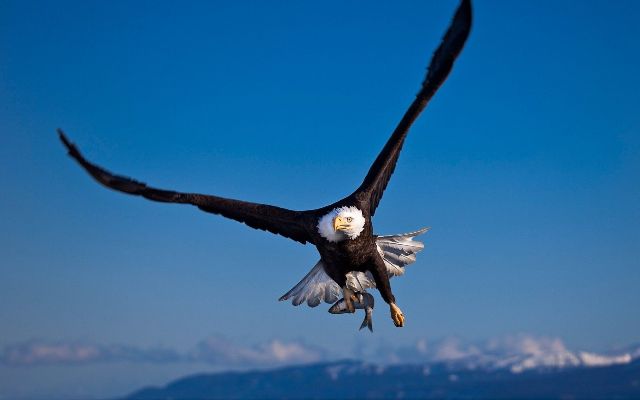
Image: wallpapercrave
Support Our Journalism
We cannot do without you.. your contribution supports unbiased journalism
IBNS is not driven by any ism- not wokeism, not racism, not skewed secularism, not hyper right-wing or left liberal ideals, nor by any hardline religious beliefs or hyper nationalism. We want to serve you good old objective news, as they are. We do not judge or preach. We let people decide for themselves. We only try to present factual and well-sourced news.
Support objective journalism for a small contribution.