GST overhaul brings relief to middle class; slabs cut to 5% and 18%: Find out what gets cheaper, what stays costlier
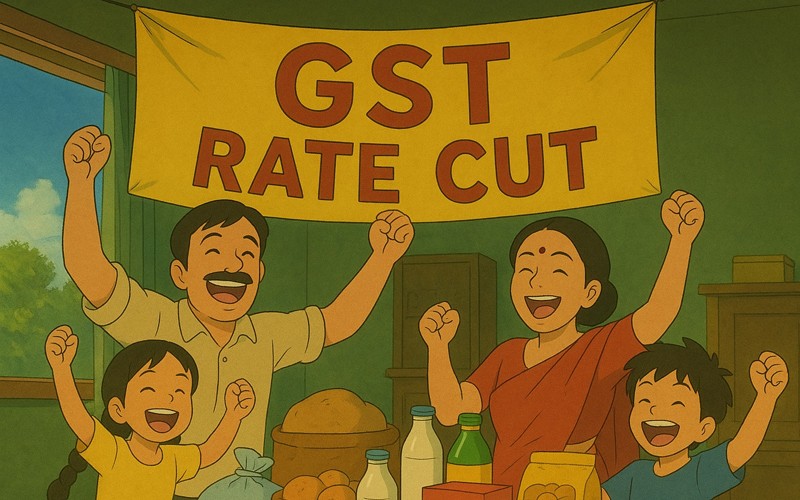
New Delhi: The Goods and Services Tax (GST) Council on Wednesday approved a sweeping overhaul of the indirect tax system, collapsing the existing four-rate structure into just two slabs. The long-anticipated rationalisation—seen as a relief for the middle class—abolishes the 12% and 28% categories, leaving only the 5% and 18% slabs.
The Prime Minister set the tone for the next generation reforms on 15th August when he spoke from the Red Fort. He decided to give the benefit at the earliest, by Diwali
— PIB India (@PIB_India) September 3, 2025
This reform is not just on rationalising rates, it's also on structural reforms, ease of living, so that… pic.twitter.com/gCtWMycoTv
Products previously taxed at 12% and 28% will now be redistributed into the lower brackets, making a vast range of items more affordable.
The move is expected to ease household expenses, spur consumption and provide a timely lift to the economy.
According to the Council’s statement, “Pan Masala, gutkha, cigarettes, chewing tobacco products like zarda, unmanufactured tobacco and bidi will continue at the existing rates of GST and compensation cess where applicable, till loan and interest payment obligations under the compensation cess account are completely discharged.”
Hon’ble Prime Minister Shri @narendramodi announced the Next-Generation GST Reforms in his Independence Day address from the ramparts of Red Fort.
— Nirmala Sitharaman Office (@nsitharamanoffc) September 3, 2025
Working on the same principle, the GST Council has approved significant reforms today.
These reforms have a multi-sectoral and… pic.twitter.com/NzvvVScKCF
The decision comes shortly after Prime Minister Narendra Modi, in his Independence Day address, had promised a “Diwali gift” in the form of a GST revamp. The proposal was drafted by a Group of Ministers and cleared in Wednesday’s meeting.
Except for pan masala, gutkha, cigarettes, chewing tobacco products like zarda, unmanufactured tobacco and bidi, the changes in GST rates of all goods will be implemented with effect from September 22, 2025.
What gets cheaper
Common man items such as Hair Oil, Toilet Soap, Soap Bars, Shampoos, Toothbrushes, Toothpaste, Bicycles, Tableware, Kitchenware, and other household articles have all been brought under the 5% GST slab
— PIB India (@PIB_India) September 3, 2025
Similarly, the GST on items such as ultra-high temperature milk, chena, and… pic.twitter.com/RnKFIRrz70
Consumer durables: Air conditioners, televisions, refrigerators and washing machines will now face 18% GST instead of 28%.
Daily-use goods: Ghee, nuts, bottled water (20 litres), footwear, medicines, medical devices, pencils, bicycles, umbrellas and hairpins have been shifted from 12% to 5%.
Milk products: UHT milk becomes tax-free, while condensed milk, butter, ghee, paneer and cheese are now in the 5% or nil category.
Staples: Malt, starches, pasta, cornflakes, biscuits, chocolates and cocoa products drop from 12–18% to 5%.
Dry fruits and nuts: Almonds, cashews, pistachios, hazelnuts and dates move from 12% to 5%.
Sugar and confectionery: Refined sugar, syrups, toffees and candies are taxed at 5%.
Packaged foods: Vegetable oils, edible spreads, meat and fish products, sausages and malt-based foods reduced to 5%.
Snacks: Bhujia, mixtures, chabena and similar packaged items drop from 12% to 5%.
Drinking water: Mineral, natural and aerated water without sugar or flavour cut from 18% to 5%.
Fertilisers and crop inputs: Reduced from 12–18% to 5%.
Health products: Life-saving drugs, medical devices and allied items reduced to 5% or exempted.
Education: Books, learning aids and similar items fall to nil or 5%.
Electronics: Entry-level appliances move from 28% to 18%.
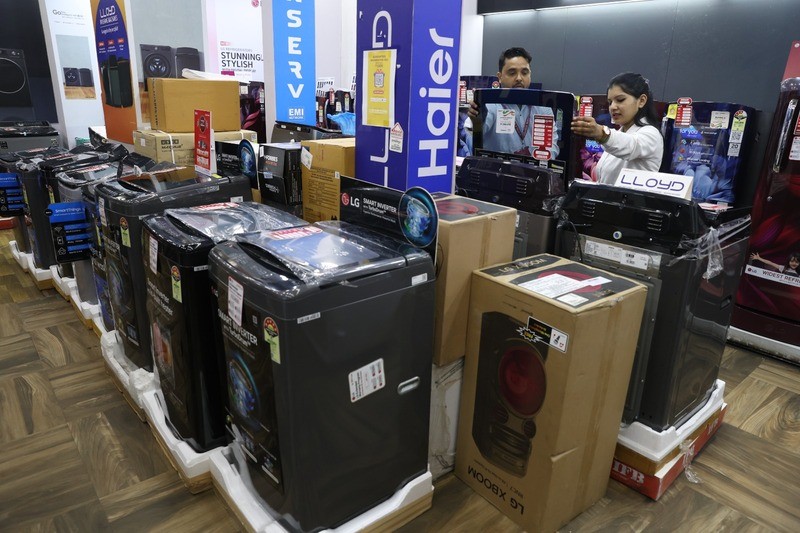 Entry-level appliances like ACs, TVs, and refrigerators are set to become more affordable. Photo: Rupak De Chowdhuri/IBNS
Footwear and textiles: Down from 12% to 5%.
Paper: Certain grades made tax-free.
Personal care: Hair oil, shampoo, toothpaste and dental floss slashed from 18% to 5%.
Energy and construction: Renewable energy equipment, building materials and allied items cut to 5%.
Others: Sports goods, toys, leather, wood products and handicrafts shifted to 5%.
What stays costlier
Sin goods: Pan masala, gutkha, zarda, bidis and cigarettes remain under high GST plus cess until cess borrowings are fully repaid. Valuation will now be linked to retail sale price rather than transaction value to prevent leakages.
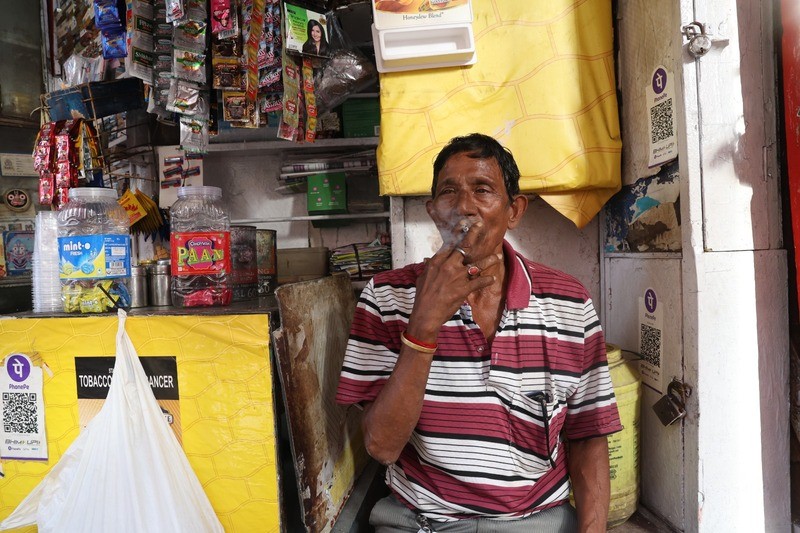 Sin goods like tobacco and pan masala will now attract a steep 40% GST, making harmful products costlier under India’s new tax regime. Photo: Rupak De Chowdhuri/IBNS
Sugary drinks: Flavoured and aerated beverages will see GST raised from 28% to 40%.
Luxury items: Cigarettes, premium liquor and high-end cars stay in the 40% bracket. Imported armoured sedans will be exempt only when purchased for official state use, such as by the President’s Secretariat.
Coal: Taxed higher at 18%, up from 5%, raising costs for coal-reliant industries.
Restaurants: Those in specified premises will no longer be allowed the 18% rate with input tax credit.
Lotteries and intermediary services: Revised valuation rules will keep their tax burden unchanged.
Relief on health insurance
The Council has exempted health insurance premiums from GST, eliminating the earlier 18% levy.
This is expected to increase coverage in a country where fewer than 20% of citizens have private health policies.
While widely welcomed by insurers and policyholders, several states flagged potential revenue losses.
The GST Council also removed Goods and Services Tax on individual life insurance policies as part of its wider overhaul of the indirect tax framework.
Under the revised structure, effective September 22, all individual health covers—including family floater plans and senior citizen policies—will also be exempt from GST.
This exemption will make purchasing health or life insurance more affordable for consumers.
“Many MPs questioned taxing insurance premiums. We'll make sure benefits of insurance GST reforms is passed on to families, individuals,” said Nirmala Sitharaman.
Relief for small cars, bikes
As part of Wednesday’s GST restructuring, small cars and motorcycles with engines below 350cc have received a 10 percentage point tax cut. They now fall into the 18% bracket following the scrapping of the 28% slab.
According to a chart shared by Prime Minister Narendra Modi, small cars are defined as petrol vehicles with engines up to 1200cc, or diesel variants up to 1500cc, with a maximum length of 4000 mm.
In contrast, motorcycles above 350cc and larger cars will be placed in the new 40% luxury goods slab once the revised rates take effect on September 22.
Electric vehicles will continue to attract just 5% GST.
Economic backdrop
The rationalisation coincides with rising trade concerns after global tariff hikes, including a recent 50% levy on Indian exports. Despite these pressures, analysts remain confident that domestic consumption will drive growth.
Industry bodies, including the Confederation of Indian Industry (CII), welcomed the move, calling it timely for stimulating consumer demand and helping businesses adjust to tariff changes.
Experts said the changes could provide a significant boost to consumption and economic activity during the upcoming festive season.
Evolution of GST structure
Introduced on July 1, 2017, GST began with four tax rates—5%, 12%, 18% and 28%—alongside a compensation cess on luxury and demerit goods to help states meet revenue needs. The cess mechanism ended in June 2022.
With the Council now reducing GST to just two slabs, policymakers hope the simplified system will finally realise the original vision of affordability, efficiency and stronger consumption-led growth.
Support Our Journalism
We cannot do without you.. your contribution supports unbiased journalism
IBNS is not driven by any ism- not wokeism, not racism, not skewed secularism, not hyper right-wing or left liberal ideals, nor by any hardline religious beliefs or hyper nationalism. We want to serve you good old objective news, as they are. We do not judge or preach. We let people decide for themselves. We only try to present factual and well-sourced news.
Support objective journalism for a small contribution.