

 Jobloss
Global youth job crisis deepens: 67 million young people now unemployed, ILO warns
A new report published Tuesday by the UN’s International Labour Organization (ILO) found that worldwide youth unemployment rebounded after the COVID-19 pandemic but is now beginning to worsen again, leaving millions unable to get that crucial first job.
After sinking to a two-decade low in 2023, global youth unemployment – covering the 15 to 24 age bracket – ticked up to 12.4 per cent in 2025, totalling 67 million jobless worldwide.
The global share of young people not in employment, education or training (NEET) also rose from 19.7 per cent in 2023 to 20 per cent in 2025, bringing the total to 257 million worldwide.
NEET status reflects people who have disengaged from the labor market entirely, making it harder to reverse.
“A generation that cannot find decent work cannot build its future with confidence,” ILO Director-General Gilbert F. Houngbo said. “When young people are locked out of quality employment, countries lose talent, productivity and social cohesion. Creating decent jobs for young people is not just a social imperative, it is one of the smartest investments a country can make.”
Regional differences
Youth unemployment worsened or stayed flat in eight of 11 global subregions between 2023 and 2025, and 105 countries saw youth unemployment rise, compared with only 58 where it fell.
The Arab States and North Africa continue to record the world’s highest youth unemployment rates at 26.2 and 22.6 per cent, respectively.
Also Read: Indian economy needs to generate close to 7.85 million jobs annually until 2030 in the non-farm sector, shows Economic Survey
The increase in the youth unemployment rate between 2023 and 2025 was most pronounced in North America, where the rate climbed from 8.3 per cent to 9.8 per cent.
Northern, Southern and Western Europe saw smaller increases, but at 15 per cent, the overall rate of youth unemployment across the three subregions remained very high.
Volatile market
Jobs that have traditionally provided entry points for young workers in higher-income countries are shrinking, according to the report.
Meanwhile, in regions like Sub-Saharan Africa, there aren’t enough jobs to keep up with a rapidly-growing population.
Many workers in developing countries are engaged in informal or unstable work, which often denies them meaningful social protections.
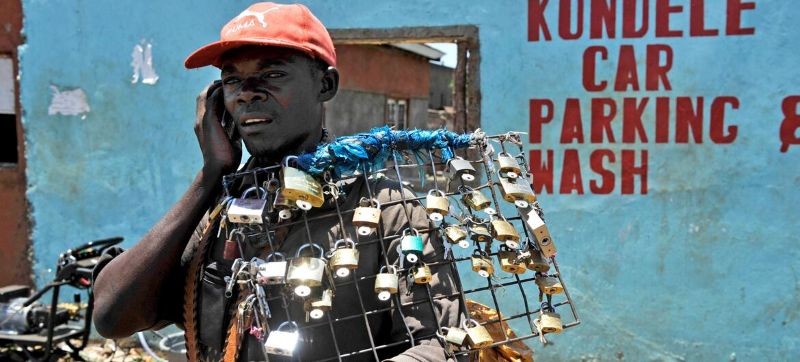
Nearly nine in 10 young workers aged 15 to 29 in low and lower-middle-income countries are employed informally – with the problem especially pronounced in Sub-Saharan Africa, the report says.
Transformational technology
The ILO identified slower global economic growth, geopolitical tensions, the effects of artificial intelligence (AI) on entry-level jobs, a lack of new highly-skilled positions and the “experience paradox” – employers demanding extensive experience to secure entry-level roles – as factors contributing to the difficult youth labor market.
The report estimates that 6.1 per cent of jobs held by people aged 15 to 29 are in occupations highly exposed to AI-related changes. These primarily include clerical and administrative roles.
“Technological progress, including AI, must work for young people, not against them,” said Sukti Dasgupta, ILO Director of the Employment, Skills and Sustainable Enterprises Department.
Still, fields like science, health and engineering continue to grow worldwide, highlighting the need for investments in skill building and education.
Also Read: One family, zero jobs: Viral Reddit story reveals devastating impact of mass layoffs
To address rising youth unemployment, the report recommends adopting a human-centred approach to AI governance, investing in quality education, strengthening employment services, expanding social protection and creating more decent job opportunities.
Support Our Journalism
We cannot do without you.. your contribution supports unbiased journalism
IBNS is not driven by any ism- not wokeism, not racism, not skewed secularism, not hyper right-wing or left liberal ideals, nor by any hardline religious beliefs or hyper nationalism. We want to serve you good old objective news, as they are. We do not judge or preach. We let people decide for themselves. We only try to present factual and well-sourced news.
Support objective journalism for a small contribution.