 Women Leadership
Firms with women in board, top management perform better: NCAER Study
New Delhi/IBNS: The ‘woman director’ mandate under The Companies Act (2013) to address gender gap led to a remarkable rise in the share of women in board positions, which led to better economic performance and lower financial risk, particularly of large and medium-sized firms, says a study by the National Council of Applied Economic Research (NCAER).
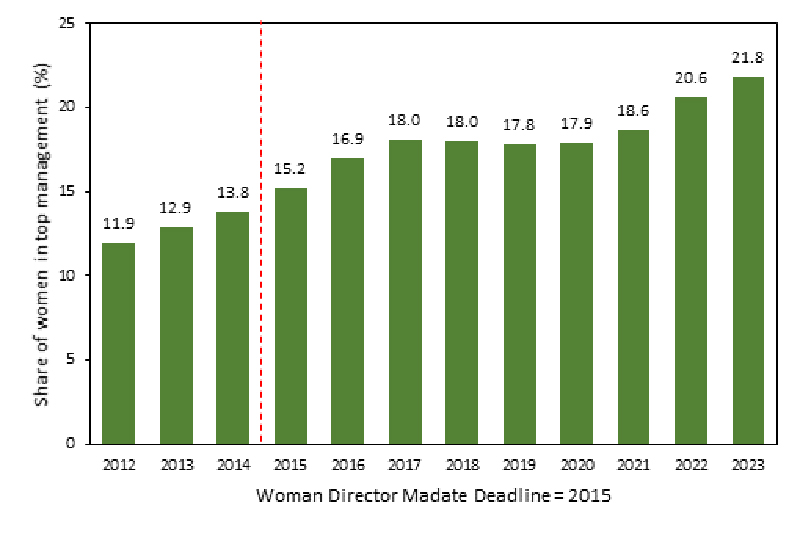
Within a year after the ground-breaking Act of 2013, the percentage of listed firms without women on board plummeted from 53% to less than 10%.
The share of women in boards of companies went up from just over 5% in FY 2013-14 to nearly 16% in FY 2022-23, finds the study titled “Female Leadership in Corporate India: Firm Performance and Firm Culture” for the India Policy Forum (2024) conclave, organised by NCAER. The paper found that younger and more educated women, compared to men, were joining the boardroom even before the mandate, and the gender gap for age significantly widened post-mandate.
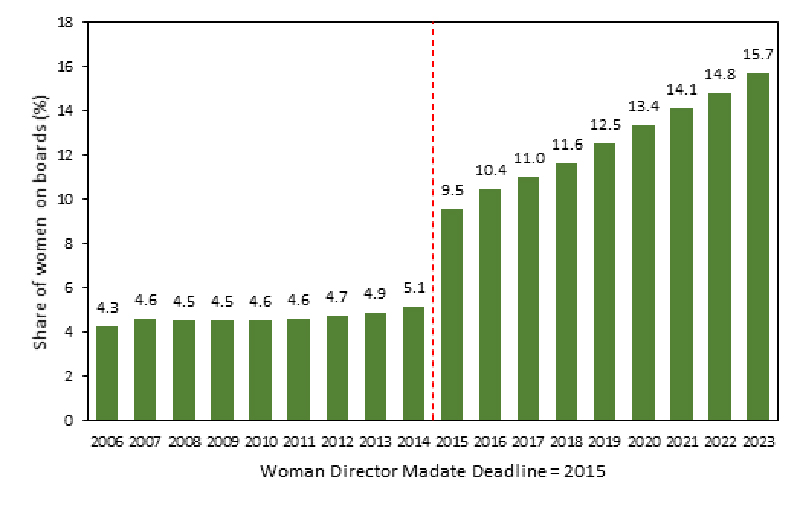
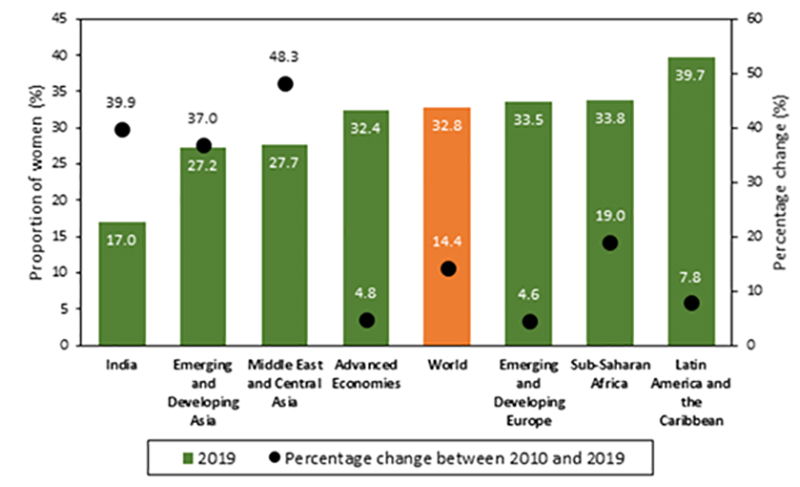
Women in top management positions also increased steadily, increasing from nearly 14% to about 22% during the same period. However, India still lags in the share of women in middle and senior management roles at only 20%, compared to nearly 33% for the world (as of 2019). Almost 60% of the firms studied did not have any women in top management teams as of March 2023.
Despite the positive developments over time, the top ten NSE-listed firms by market capitalization lagged. Eight out of the ten firms had lower shares of women on board compared to the average for other listed firms in FY 2022-23. Additionally, five of these top ten firms had no women in their top management teams as of March 2023.
Making a business case for appointing more women at the top in corporate India, the authors of the study, led by NCAER’s Professor (Dr) Ratna Sahay, found that “having at least one woman on board is associated with higher economic performance and lower financial risk, and this effect is significant for large and medium-sized firms.”
After enforcement of the mandate, the paper says, the gender gap in attendance of board meetings fell, and by 2020, the average share of meetings attended by men and women was almost equal. This means that women were playing a more meaningful role in board decisions.
However, the NCAER study found that the mandate was not replicated in top management teams (C-Suite). More than half of the NSE-listed firms in the sample didn’t have even one woman in their top management teams, and about 10% of firms had just one woman.
The authors combined personnel-level data for 1402 NSE-listed firms over a period of 15 years (FY 2005-06 to FY 2019-20) with their performance indicators to see the impact of female leadership. To quantify and study organization culture, they built a novel database by scraping text information presented in more than 4 lakh company reviews by their employees.
“Higher share of women in board positions correlate positively with employee ratings and sentiment scores. Employees are more likely to give higher ratings and use positive language to describe the positive aspects of their workplace culture in firms with higher share of women on boards, but only if the firm also has women in the top management team,” says the study.
Finally, it found that “firms, on average, were appointing more women than mandated by the Act, suggesting the favourable impact of the positive experience gained by them and the positive signal of the government in recent years to promote women-led development”.
Support Our Journalism
We cannot do without you.. your contribution supports unbiased journalism
IBNS is not driven by any ism- not wokeism, not racism, not skewed secularism, not hyper right-wing or left liberal ideals, nor by any hardline religious beliefs or hyper nationalism. We want to serve you good old objective news, as they are. We do not judge or preach. We let people decide for themselves. We only try to present factual and well-sourced news.
Support objective journalism for a small contribution.