'Casteist slur inside closed room not ‘public view’ offence under SC/ST Act: Supreme Court
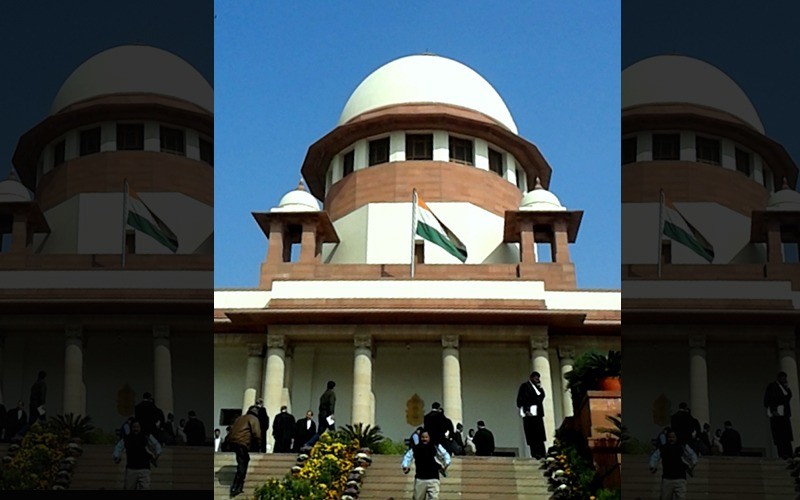
The Supreme Court has held that an alleged casteist slur uttered inside a closed room, where no member of the public was present or able to hear it, cannot by itself constitute an offence committed “within public view” under the Scheduled Castes and the Scheduled Tribes (Prevention of Atrocities) Act, 1989.
The court made the observation while quashing proceedings under the SC/ST Act against a school manager, ruling that the prosecution had failed to establish even a prima facie case that the alleged casteist abuse took place in circumstances satisfying the statutory requirement of public view.
What the Supreme Court said
A bench comprising Justice Vikram Nath and Justice Sandeep Mehta was hearing an appeal against an Allahabad High Court order that had refused to quash the proceedings against the school manager.
The Supreme Court examined the requirements of Sections 3(1)(r) and 3(1)(s) of the SC/ST Act, which deal with intentional insult, intimidation and caste-based abuse against a member of a Scheduled Caste or Scheduled Tribe in a place within public view.
The bench reiterated that a place can be considered to be within “public view” when members of the public are present and are able to see or hear the alleged words or conduct.
However, an incident occurring inside a closed room, with no members of the public present or able to hear what was said, cannot automatically be treated as having occurred in public view.
Dispute at school led to police case
The case arose after the complainant approached the school manager following a dispute involving his two sons, who were students at the school.
The complainant alleged that the school manager and staff assaulted him and hurled casteist slurs at him during the confrontation.
A police case was subsequently registered under the SC/ST Act and a chargesheet was filed.
The school manager's wife also lodged a cross-FIR, alleging that the complainant had verbally abused and assaulted her in the school office. She claimed that the manager intervened and was subsequently assaulted.
A local court took cognisance of the chargesheet in that case as well.
Witnesses did not support alleged casteist abuse
The school manager challenged the summons issued by the special court before the Allahabad High Court.
However, the High Court declined to quash the proceedings, holding that the allegations disclosed a prima facie case and that the plea of personal vendetta was not sufficient to terminate the case.
Before the Supreme Court, the manager's lawyer argued that the alleged casteist remarks were made inside a closed room and that witness statements did not establish that anyone from the public was present or that anyone outside the room could hear the alleged remarks.
The Supreme Court noted that while school teachers had confirmed that a dispute and altercation had taken place, none of them stated that they were present when the alleged casteist abuses were made or that they had heard the remarks.
SC/ST Act proceedings quashed
The Supreme Court found that the essential requirement of the alleged casteist abuse having occurred within “public view” was not established.
It therefore cancelled the proceedings against the school manager under the SC/ST Act.
However, the court clarified that proceedings relating to other offences under the Indian Penal Code will continue.
The ruling underscores that for allegations under the relevant provisions of the SC/ST Act, merely uttering an alleged casteist slur is not sufficient; the prosecution must also establish the statutory requirement that the act occurred within public view.
Support Our Journalism
We cannot do without you.. your contribution supports unbiased journalism
IBNS is not driven by any ism- not wokeism, not racism, not skewed secularism, not hyper right-wing or left liberal ideals, nor by any hardline religious beliefs or hyper nationalism. We want to serve you good old objective news, as they are. We do not judge or preach. We let people decide for themselves. We only try to present factual and well-sourced news.
Support objective journalism for a small contribution.