July 11, 2026 10:29 am (IST)

Follow us:


World Economic Forum's report highlights risks that can lead to fragmentation of internet
Davos-Klosters, Switzerland, Jan 23 (IBNS): Concern has been growing over the past two years that the global public Internet is in danger of splintering into a series of bordered cyberspace segments.
Troubling trends have emerged that could endanger the openness and consistency of the Internet’s underlying infrastructure and erect barriers to some of the content and transactions it conveys.
Unfortunately, there is no consensus about the nature, scope and potential impact of this Internet fragmentation, much less how the problem is best addressed.
To help build a shared understanding and advance the emerging conversation about this global challenge, the World Economic Forum’s Global Challenge on the Future of the Internet initiative invited three leading experts –William J. Drake, International Fellow and Lecturer, University of Zurich, Switzerland; Vinton Cerf,
Vice-President and Chief Internet Evangelist, Google, USA; and Wolfgang Kleinwachter, Professor for International Communication Policy and Regulation, University of Aarhus, Denmark – to produce a white paper that lays out the issues.
The paper maps the landscape of Internet fragmentation and cites 28 examples arising from technical, governmental and commercial trends.
The report concludes that meeting the challenge of Internet fragmentation will require vigilance, analysis and international cooperation involving all relevant stakeholders.
Over 2,500 leaders from business, government, international organizations, civil society, academia, media and the arts are participating in the 46th World Economic Forum Annual Meeting in Davos-Klosters, Switzerland, on 20-23 January.
Support Our Journalism
We cannot do without you.. your contribution supports unbiased journalism
IBNS is not driven by any ism- not wokeism, not racism, not skewed secularism, not hyper right-wing or left liberal ideals, nor by any hardline religious beliefs or hyper nationalism. We want to serve you good old objective news, as they are. We do not judge or preach. We let people decide for themselves. We only try to present factual and well-sourced news.
Support objective journalism for a small contribution.

Latest Headlines
Prashant Kishor effect? BJP replaces candidate days before high-stakes Bankipur bypoll
Sat, Jul 11 2026
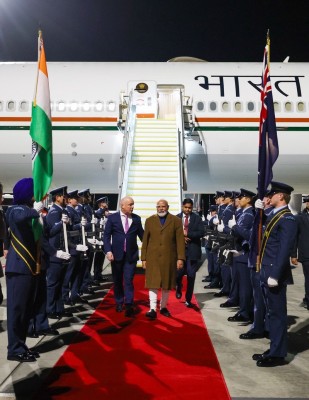
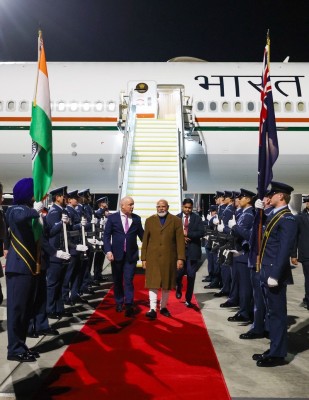
India, New Zealand seal strategic partnership: PM Modi, Luxon unveil ambitious roadmap to 2030
Sat, Jul 11 2026
'You are ordering us?': Supreme Court bench stunned as petitioner abuses CJI, throws papers
Fri, Jul 10 2026
Kerala Police open murder case in Uzbekistan medical student's death, family alleges torture
Fri, Jul 10 2026
Why E20 fuel isn't cheaper than pure petrol: Govt explains pricing, mileage and engine compatibility
Fri, Jul 10 2026
Kolkata Metro breakthrough: TBM ‘Durga’ completes key tunnel drive, brings Joka-Esplanade corridor closer to reality
Fri, Jul 10 2026
'They could have stopped me': Vijay blames police, former DMK government over Karur stampede
Fri, Jul 10 2026