 NISAR
NISAR
NASA-ISRO's NISAR satellite set to be launched in July
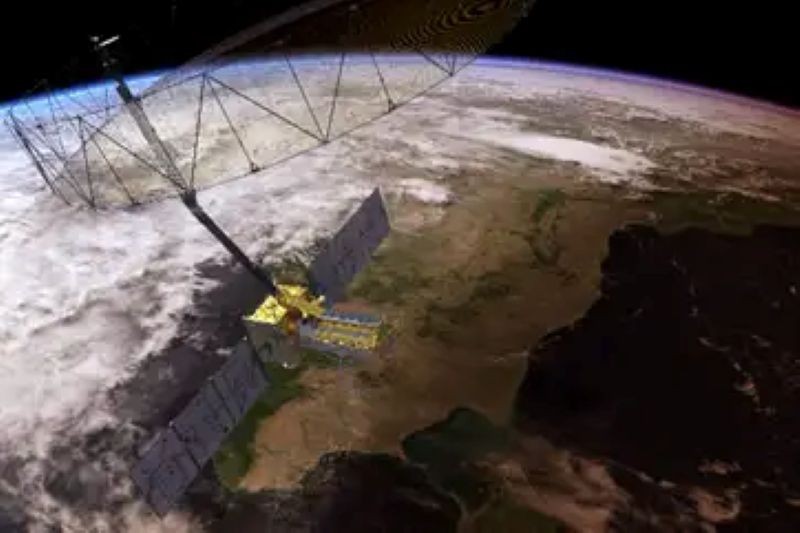
NASA and India's ISRO's joint effort, NISAR satellite, the $1.5 billion Earth-observing mission, is expected to be launched in July.
The satellite moved another step closer to launch last month when it arrived safely and sound at Satish Dhawan Space Centre on India’s southeastern coast.
"Home to ISRO’s launch facilities, the center will host the satellite’s liftoff, slated for July," read the NASA website.
Prior to arriving at the launch site on May 15, NISAR was at the ISRO Satellite Integration and Test Establishment in Bengaluru.
Engineers from ISRO and NASA’s Jet Propulsion Laboratory in Southern California, which manages the mission for NASA, had been working together there since March 2023 on bringing together components and assembling the satellite.
They also tested it to ensure it can withstand the rigors of launch and function properly in orbit.
In the early morning of May 14, crews placed the satellite in a specialized container and transported it about 220 miles (360 kilometers) by truck to the space center, arriving the following day.
It will be placed in its launch fairing and mounted atop an ISRO Geosynchronous Launch Vehicle Mark II rocket in preparation for launch.
Why NISAR is important?
In orbit, NISAR will collect an unprecedented amount of information about our planet’s environment.
It will scan nearly all of Earth’s land and ice surfaces twice every 12 days, providing insights into the expansion and contraction of ice sheets, sea ice, and glaciers, the deformation of its crust due to natural hazards, as well as natural and human changes to Earth’s terrestrial ecosystems.
These measurements will be carried out by two radar systems — an L-band system built by JPL, and an S-band system constructed by ISRO’s Space Applications Centre in Ahmedabad.
Not only is NISAR the first satellite to carry two radars working at two different frequencies, but the mission also marks the first hardware collaboration on an Earth-observing mission between the two space agencies.
The NISAR mission marks a significant milestone in NASA’s ongoing collaboration with ISRO, indicative of strong bilateral relations between the United States and India.
In February of this year, President Donald J. Trump met with Prime Minister Narendra Modi of India when the two leaders hailed this year as a pioneering year for U.S.-India civil space cooperation and reaffirmed their mutual support for the NISAR mission.
"The leaders committed to further commercial space collaboration through industry engagements in conventional and emerging areas, such as connectivity, advanced spaceflight, satellite and space launch systems, space sustainability, and advanced space manufacturing," read the NASA website.
Support Our Journalism
We cannot do without you.. your contribution supports unbiased journalism
IBNS is not driven by any ism- not wokeism, not racism, not skewed secularism, not hyper right-wing or left liberal ideals, nor by any hardline religious beliefs or hyper nationalism. We want to serve you good old objective news, as they are. We do not judge or preach. We let people decide for themselves. We only try to present factual and well-sourced news.
Support objective journalism for a small contribution.