Women and girls deserve more protection in emergencies, UN rights council hears
New York: The collective impact of climate change, COVID-19 and conflict mean that well over 200 million people will likely need humanitarian assistance by 2022, the UN’s deputy rights chief said on Monday.
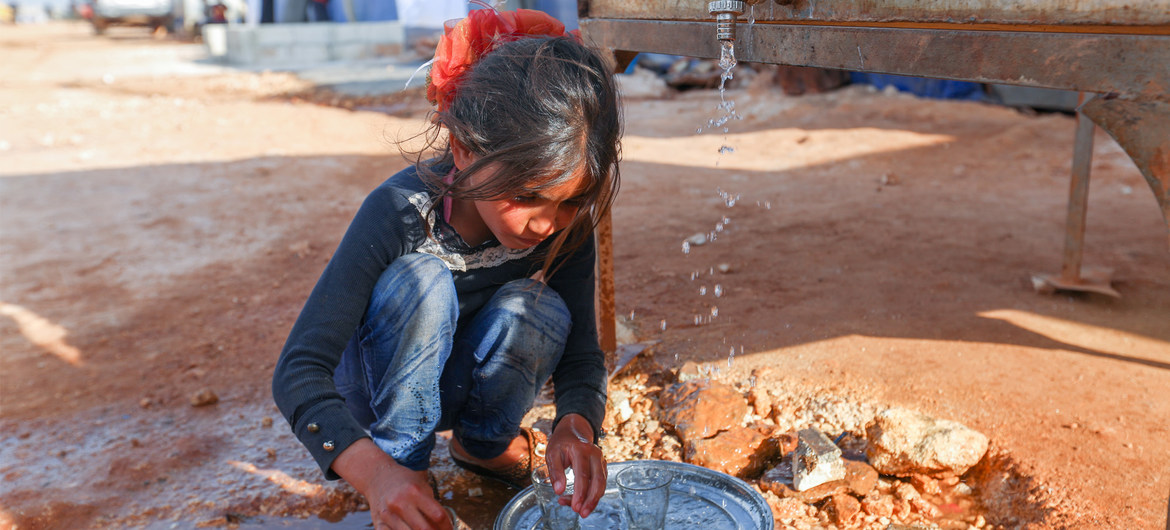
Nada Al-Nashif, Deputy High Commissioner for Human Rights, told the UN Human Rights Council that the situation is especially worrying for women and girls.
They face additional hardships from the pandemic – including sexual abuse - Ms. Al-Nashif warned, particularly those displaced by war.
“Experience demonstrates that insecurity and displacement fuel increases in sexual and gender-based violence, as well as other crimes and human rights violations such as child, early and forced marriages, or denial of access to sexual and reproductive health services.”
According to the UN’s Office for the Coordination of Humanitarian Affairs (OCHA), more than 212 million people may need humanitarian assistance by 2022.
This year, it’s believed that nearly 168 million people are in need of such protection, representing around one in 45 people in the world, the highest figure in decades.
At a discussion on how to improve accountability for women and girls in emergencies, the deputy rights chief urged Member States at the Geneva forum to consider adopting a new approach.
Swift and thorough justice
In addition to the current practice of ensuring criminal prosecution for abusers, she called for specific laws to be enacted that would prevent or eradicate a “continuum of human rights violations”, by addressing the root causes of the lack of accountability for women and girls.
This was the only way to restore their full equality and rights in dignity, she said.
Highlighting recent human rights Council investigations into Myanmar, Venezuela and South Sudan, Ms. Al-Nashif noted that all countries shared systemic discrimination against women and girls that enabled violations to persist.
In Myanmar, the Independent International Fact-Finding Mission on Myanmar reported on wide-ranging gender inequality and the denial of freedom of movement faced by ethnic Rohingya women and girls, including sexual and gender-based violence, the UN official said.
It also found the denial of access to education, basic health care and other economic and social rights.
Turning to Venezuela, the deputy rights chief pointed to a 2019 UN human rights office (OHCHR) report that documented limited access to sexual and reproductive health services, “with zero contraceptives available in several cities, alongside severe restrictions on abortion”.
The resulting high rates of teenage pregnancies “have been a major factor driving many girls to leave school”, Ms. Al-Nashif added, while preventable maternal mortality is also increasing, she said, with an estimated one in five maternal deaths linked to unsafe abortions.
South Sudanese sorrow
In South Sudan, where sexual violence has been a widespread and pervasive feature of the conflict since 2013, an investigation into health care for victims of such abuse indicated that there was only one health facility per 10,000 people, and many did not have enough qualified personnel to treat survivors.
“As a result, victims may only seek assistance when they develop serious medical conditions and, of course, stigmatization forces many to continue to suffer in silence,” the UN official added.
Support Our Journalism
We cannot do without you.. your contribution supports unbiased journalism
IBNS is not driven by any ism- not wokeism, not racism, not skewed secularism, not hyper right-wing or left liberal ideals, nor by any hardline religious beliefs or hyper nationalism. We want to serve you good old objective news, as they are. We do not judge or preach. We let people decide for themselves. We only try to present factual and well-sourced news.
Support objective journalism for a small contribution.