Welcoming Kenya’s decision on Dadaab camp, UN urges flexibility on time frames for Somali refugees
In a press release, UNHCR praised Kenya’s commitment to “voluntary, human, safe and dignified returns in accordance with international law.”
“The voluntariness of returns is key,” the statement read.
According to press reports, Kenya said it will delay by six months the closure of the Dadaab refugee camp, the world's largest.
Earlier this summer, UNHCR said it expects the majority of the remaining refugee population to return to Somalia throughout 2017 and possibly into early 2018.
UNHCR has supported people’s returns from Dadaab for years and on 25 June 2016, it worked with the Governments of Kenya and Somalia to devise an action plan to that effect. Since 2014, some 35,000 people have received support in their voluntary returns to Somalia. A survey this summer found that 283,558 refugees were living at Dadaab, 58,000 fewer than in the past.
The agency is calling upon the Government of Kenya to be flexible in terms of a return time frame in order to meet the different elements of the plan that was devised earlier this year, citing a concern that rigid time frames would be difficult to meet.
“For solutions to be genuinely voluntary, people must be properly informed and able to make their individual decisions free from pressure and in full awareness of the facts.”
UNHCR is urging all stakeholders to focus their attention on the implementation of the action plan in all dimensions, not only in Kenya, but throughout the region and inside Somalia as well. In order to ensure this occurs, it recently appointed Ambassador Mohamed Abdi Affey as Special Envoy for the Somali refugee situation.
“A crucial element for the success of the action plan is for the international community to make adequate investments in Somalia in support of its progress towards security and stability,” the agency said.
“This must include much stronger assistance for the integration of returnees together with increased efforts to reduce and eventually eliminate internal displacements,” added UNHCR.
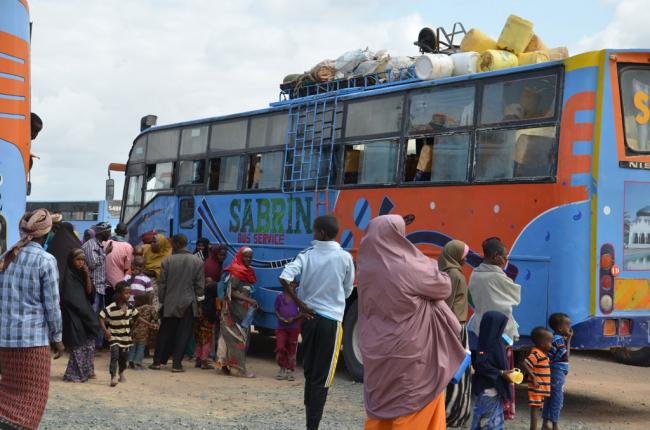
Photo: UNHCR/Assadullah Nasrullah
Source: www.justearthnews.com
Keyword: Kenya, Dadaab camp, UN, Somali refugeesIn a press release, UNHCR praised Kenya’s commitment to “voluntary, human, safe and dignified returns in accordance with international law.”
“The voluntariness of returns is key,” the statement read.
According to press reports, Kenya said it will delay by six months the closure of the Dadaab refugee camp, the world's largest.
Earlier this summer, UNHCR said it expects the majority of the remaining refugee population to return to Somalia throughout 2017 and possibly into early 2018.
UNHCR has supported people’s returns from Dadaab for years and on 25 June 2016, it worked with the Governments of Kenya and Somalia to devise an action plan to that effect. Since 2014, some 35,000 people have received support in their voluntary returns to Somalia. A survey this summer found that 283,558 refugees were living at Dadaab, 58,000 fewer than in the past.
The agency is calling upon the Government of Kenya to be flexible in terms of a return time frame in order to meet the different elements of the plan that was devised earlier this year, citing a concern that rigid time frames would be difficult to meet.
“For solutions to be genuinely voluntary, people must be properly informed and able to make their individual decisions free from pressure and in full awareness of the facts.”
UNHCR is urging all stakeholders to focus their attention on the implementation of the action plan in all dimensions, not only in Kenya, but throughout the region and inside Somalia as well. In order to ensure this occurs, it recently appointed Ambassador Mohamed Abdi Affey as Special Envoy for the Somali refugee situation.
“A crucial element for the success of the action plan is for the international community to make adequate investments in Somalia in support of its progress towards security and stability,” the agency said.
“This must include much stronger assistance for the integration of returnees together with increased efforts to reduce and eventually eliminate internal displacements,” added UNHCR.
Photo: UNHCR/Assadullah Nasrullah
Source: www.justearthnews.com
Support Our Journalism
We cannot do without you.. your contribution supports unbiased journalism
IBNS is not driven by any ism- not wokeism, not racism, not skewed secularism, not hyper right-wing or left liberal ideals, nor by any hardline religious beliefs or hyper nationalism. We want to serve you good old objective news, as they are. We do not judge or preach. We let people decide for themselves. We only try to present factual and well-sourced news.
Support objective journalism for a small contribution.