


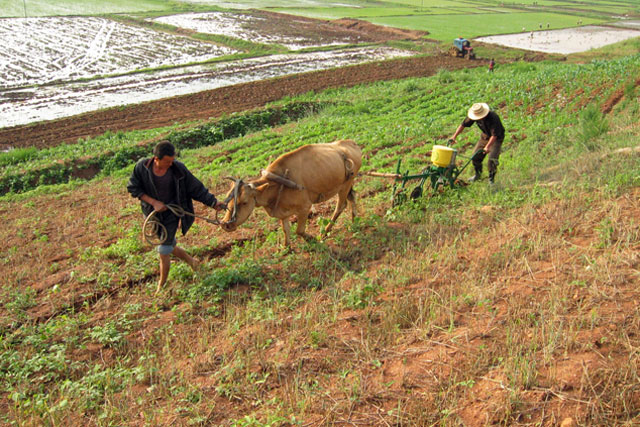
Water scarcity in DPR Korea causes first drop in food production since 2010 – UN agency
“The dropping production was the result of poor rains during the cropping season,” Cristina Coslet, FAO Country Monitor, said in a video interview, adding that “low availabilities of irrigation water following recurrent dry spells also in the previous year compounded the situation.”
Paddy rice and maize, being the country’s main staple and its second most crucial crop, have reduced by more than one fourth to 1.9 million tonnes and three per cent to 2.29 million tonnes in 2015, according to the latest data by FAO's Global Information and Early Warning System.
Moreover, an uncovered deficit of 394,000 out of 694,000 tonnes cereal import target represents the highest gap since 2011/12.
“This situation is of particular concern as the public distribution systems rations, which are the main source of food for around eight million [people in DPR Korea] have been decreased considerably since July 2015,” Coslet stressed.
However, the report also noted about a one third increase of drought-resistant soybeans and a triple harvest of other cereals such as sorghum, millet and buckwheat.
Expressing concern over tight food supplies and deteriorating food security, the UN agency is offering immediate technical support as well as long-term risk prevention and mitigation guidance.
“FAO is providing the most-affected farms located in the north and south provinces with essential agricultural inputs such as fertilizers and seeds as well as equipment such as water pumps, said Coslet, adding that it will help “farmers to cope with future shocks for planning and provide training in risk reduction management.”
Photo: FAO
Support Our Journalism
We cannot do without you.. your contribution supports unbiased journalism
IBNS is not driven by any ism- not wokeism, not racism, not skewed secularism, not hyper right-wing or left liberal ideals, nor by any hardline religious beliefs or hyper nationalism. We want to serve you good old objective news, as they are. We do not judge or preach. We let people decide for themselves. We only try to present factual and well-sourced news.
Support objective journalism for a small contribution.


