


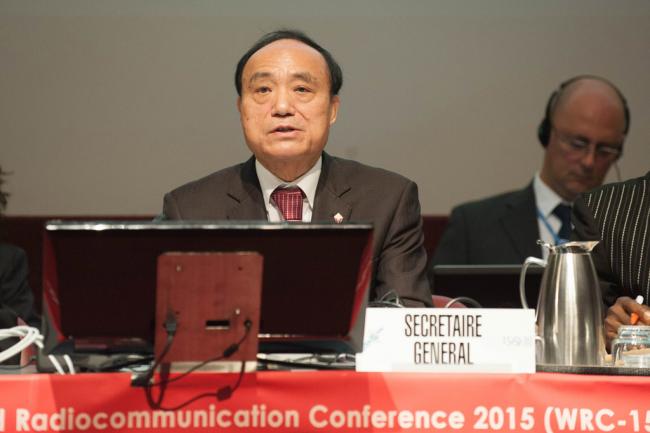
UN treaty-making body opens with focus on rapidly expanding radiocommunications
The Conference “will define new and better ways to regulate radio services and applications,” said International Telecommunication Union (ITU) Secretary-General Houlin Zhao in a press release.
“In a world where radiocommunications play an increasingly important role in connecting people, I am convinced that the outcome of the conference will contribute towards making the world a better place for all,” he added.
The Conference, known as WRC-15, will also review the international regulatory framework for radiocommunications, or Radio Regulations, and address a number of key issues challenging radiocommunications performances.
“With the relentless expansion of wireless services worldwide, all services relying on radio waves are competing for a share of the radio-frequency spectrum to support new applications, growing user numbers and exploding traffic,” said François Rancy, Director of ITU’s Radiocommunication Bureau.
Some of the issues that the Conference aims to address are the provision of additional frequencies to meet the rapidly growing demand for mobile broadband communications; the allocation of frequencies for disaster relief or emergency communications; new allocations for monitoring the environment and climate change; and spectrum allocation for unmanned aircrafts, wireless avionics systems and global flight tracking for civil aviation.
Further, participants will also discuss measures to improve road safety by allocating frequencies for short-range, high-resolution radars for collision avoidance systems in vehicles and enhance maritime communications systems by facilitating the use of on-board digital transmissions and automatic identification system on vessels for improved navigation safety.
“The deliberations at WRC-15 and its outcomes will ensure that we can maintain a stable, predictable and universally applied regulatory environment that secures long-term investments for a multi-trillion dollar industry,’ said Mr. Rancy.
Some 3,000 participants, representing more than 160 member States of the Geneva-based ITU are attending the Conference, which runs through 27 November. Additionally, 100 observers from among ITU’s 700 private sector members, along with international organizations, are also slated to attend.
Photo: ITU/D. Woldu
Support Our Journalism
We cannot do without you.. your contribution supports unbiased journalism
IBNS is not driven by any ism- not wokeism, not racism, not skewed secularism, not hyper right-wing or left liberal ideals, nor by any hardline religious beliefs or hyper nationalism. We want to serve you good old objective news, as they are. We do not judge or preach. We let people decide for themselves. We only try to present factual and well-sourced news.
Support objective journalism for a small contribution.


