


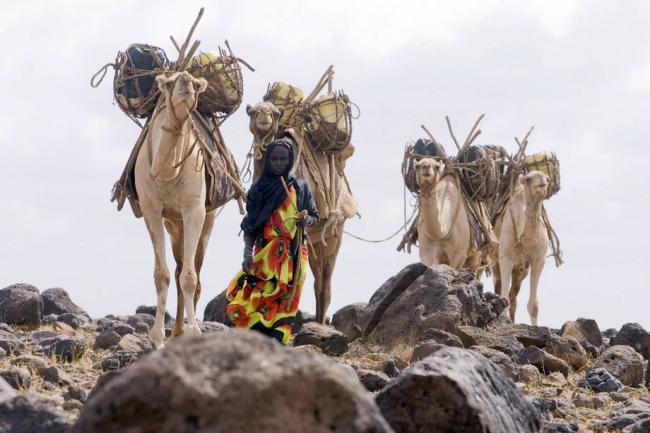
UN platform aims to bring pastoralists’ voices to global decision-making stage
Launched by the UN Food and Agriculture Organization (FAO) and its partners, thePastoralist Knowledge Hub will enable mobile livestock keepers to connect, to meet and discuss issues like agricultural innovations or land regulations and find shared solutions to common challenges, the agency said in a press release.
The online tool also offers a growing database of research on pastoralism, contacts for a worldwide network of pastoral representatives, and discussion forums for pastoralist networks and partnering institutions.
It will aim to fill the gaps identified over the past years, especially the lack of global policy discussions on pastoralism and the need to bring attention to the challenges faced by pastoral communities.
“Pastoralists are able to produce food where no crops can be grown. Yet, their concerns are poorly heard by the international community,” said FAO Deputy Director-General Helena Semedo.
She added, "This hub is an important platform to help them project their voices, share knowledge, and affect policy debates.”
The new hub also includes a mechanism that lets pastoral communities nominate and select representatives to global forums such as the Committee on World Food Security, according to FAO.
Examples of well-known pastoral societies include the Bedouin of North Africa and the Arabian Peninsula, the Maasai in East Africa, the Navajo of North America, the Sherpa in Nepal, and Scandinavia's Sami people.
The several hundred million pastoralists who manage the world’s rangelands rely on a rich legacy of traditional knowledge and mobility to survive in the harshest environments on the planet.
They remain important producers of livestock, meat, milk, hair and hides and in many countries produce more than half of agricultural gross domestic product (GDP).
The new hub brings together partner institutions including the African Union, the European Union, the International Fund for Agricultural Development (IFAD), the International Union for Conservation of Nature (IUCN), the UN Environment Programme (UNEP), the World Bank and non-governmental organizations, as well as pastoralist civil society groups.
Photo: FAO/Giulio Napolitano
Support Our Journalism
We cannot do without you.. your contribution supports unbiased journalism
IBNS is not driven by any ism- not wokeism, not racism, not skewed secularism, not hyper right-wing or left liberal ideals, nor by any hardline religious beliefs or hyper nationalism. We want to serve you good old objective news, as they are. We do not judge or preach. We let people decide for themselves. We only try to present factual and well-sourced news.
Support objective journalism for a small contribution.


