UN official urges more rapid change for gender equality
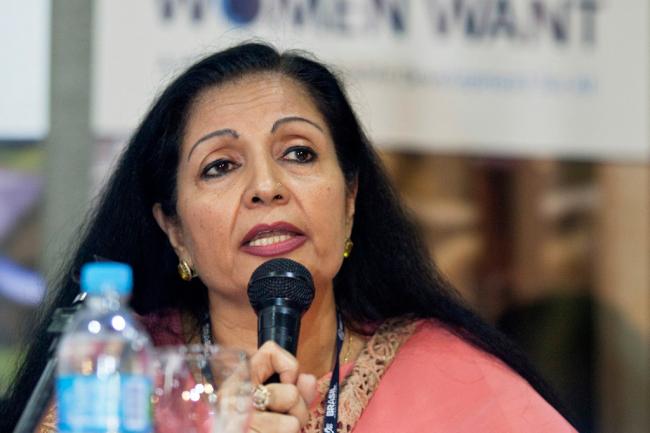
Speaking at an event held on the margins of the current session of the UN Commission on the Status of Women, Lakshmi Puri, Deputy Executive Director of UN Women, said the world had witnessed “numerous improvements” in women’s lives in fields such as employment and education since Beijing but equality was still elusive.
“No sector or country has met the standards laid out in Beijing, where gender equality is a reality,” she said.
She added, “While we should rejoice at the progress made when we look back and see where we are at present, we do have to convey a strong message … that we need to take every step, every measure, every law, every programme in order to push the pace and push the envelope on this issue.
She said, “Otherwise, we are going to take almost another century to get to Planet 50:50 by 2030. This is absolutely not acceptable.”
She called for evaluation of the progress achieved but also of the gaps, with a focus on what the challenges have been and on how to get to Planet 50:50 by 2030.
The Beijing Platform for Action, she noted, mandated the full participation of women in the public, private and governmental realms.
“It also affirms that the equal and active participation of women is fundamental for the achievement of equality, development and peace,” she said, going on to note the demands it made of the UN system as well.
She said responsibility for implementing the Platform lay at the highest level and she pointed to the proven importance of the role of senior leaders in catalysing and bringing about change, highlighting Secretary-General Ban Ki-moon as a good example of a leader who had stood behind positive change.
Even within the UN system, the situation of women faced significant challenges and had not achieved the aims of the Beijing Platform, noted Ms. Puri.
“Good progress but not enough,” she said, adding that the slow rate meant it would take until 2043 for some parts of the UN to achieve full gender parity.
She added, “So even we are not going to be able to say 50:50 by 2030 if we do not speed up.”
Deborah Gillis, the CEO of research advisory organisation Catalyst, described the research her company has done and the significance of the data produced.
“Clearly there’s so much work ahead,” she acknowledged, noting significant movement in the percentages of women in several sectors of economies but adding that the extent of those moves had been nowhere near the expectations.
She said, “The picture that emerges from this data is that we have failed to make the significant progress that we’d hoped to.”
She considered the work needed to shift that picture and accelerate change, and called for leadership commitment and individual intent.
She also underlined the importance of engaging men and abandoning the idea that gender equality was an issue about women, for women, run by women.
“It really must be a multi-sector focus for us to really see the kinds of achievements that we really all are in for,” she said.
She added, “Men need to be core to that conversation. We need to find more ways to empower them to make change happen.”
Photo: UN Women/Fabricio Barreto (file)
Support Our Journalism
We cannot do without you.. your contribution supports unbiased journalism
IBNS is not driven by any ism- not wokeism, not racism, not skewed secularism, not hyper right-wing or left liberal ideals, nor by any hardline religious beliefs or hyper nationalism. We want to serve you good old objective news, as they are. We do not judge or preach. We let people decide for themselves. We only try to present factual and well-sourced news.
Support objective journalism for a small contribution.