UN humanitarian agencies reach thousands of South Sudanese cut off for months
“With little or no services available, children are going without nourishing food and healthcare in these villages,” said Jonathan Veitch, Representative for the UN Children’s Fund (UNICEF) in South Sudan.
“It is a desperate situation,” he added during a visit to the town of Wau Shilluk, on the west bank of the Nile River, across from the capital of Malakal in South Sudan’s Upper Nile State.
“In the past several months, access problems and concerns for staff safety have prevented humanitarian agencies from reaching people living in Wau Shilluk and other areas of rural Upper Nile,” UNICEF said in a joint press release with the UN World Food Programme (WFP). “Many agencies have been forced to scale down their operations on the west bank of the Nile because of insecurity.”
Since fighting broke out in South Sudan in December 2013, more than 2 million people have been uprooted from their homes, and 4.6 million people face severe food insecurity.
The World Food Programme and UNICEF, together with their partners, have reached more than 1.3 million people, including 220,000 children under the age of 5, in the most hard-to-reach areas of the country since they began deploying the joint teams known as Rapid Response Missions more than a year ago.
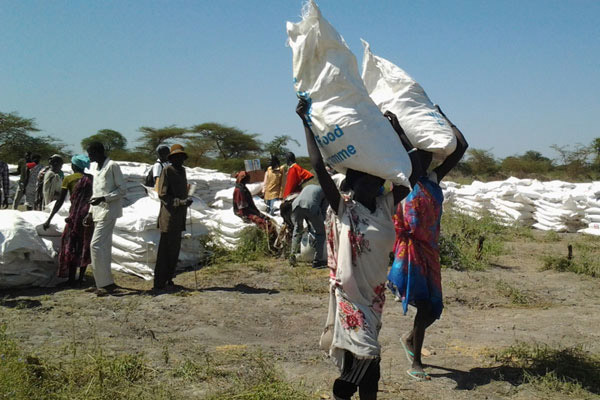
And this week, after being denied access due to insecurity since March, the World Food Programme and UNICEF deployed a mobile emergency relief team to assist more than 27,000 people in Wau Shilluk.
“We could see that people are struggling; there were only some fish and a few tomatoes for sale in the market, and almost nobody had the means to buy them,” said Valerie Guarnieri, the WFP Regional Director for East and Central Africa.
While in Wau Shilluk, WFP provided food assistance to more than 20,000 people. UNICEF screened more than 3,000 children under the age of 5 for malnutrition, vaccinated more than 8,000 children under the age of 15 against measles, and vaccinated more than 7,800 against polio. More than 400 pregnant women were vaccinated against tetanus.
“We need a stronger presence by humanitarian organizations in places like Wau Shilluk to provide immediate food and nutrition support and to reopen schools, ensure health services and support agricultural production,” WFP’s Ms. Guarnieri said.
Photo: WFP/Peter Testuzza
Support Our Journalism
We cannot do without you.. your contribution supports unbiased journalism
IBNS is not driven by any ism- not wokeism, not racism, not skewed secularism, not hyper right-wing or left liberal ideals, nor by any hardline religious beliefs or hyper nationalism. We want to serve you good old objective news, as they are. We do not judge or preach. We let people decide for themselves. We only try to present factual and well-sourced news.
Support objective journalism for a small contribution.