UN health agency recommends large-scale deworming to improve children’s health
“There is now global evidence-based consensus that periodic, large-scale deworming is the best way to reduce the suffering caused by intestinal worms,” said Dirk Engels, Director of the Neglected Tropical Diseases Department at the World Health Organization (WHO), which also noted that such programmes can also protect the 1.5 billion people currently estimated to be at risk.
WHO aims to eliminate the harm caused by worm infections in children by 2020 by regularly treating at least 75 per cent of the estimated 873 million children in areas where prevalence is high. In 2016, WHO Member States treated 63 per cent of children requiring treatment.
“Now that the world has agreed standards for deworming at-risk populations, we are in a better position to reach this target,” Antonio Montresor, who heads WHO’s global deworming programme.
The guidelines have been approved by WHO’s Guidelines Review Committee.
Four main species of intestinal worms, also known as soil-transmitted helminths, affect almost a quarter of the world’s poorest and mostly marginalized people. The worms disrupt people’s ability to absorb nutrients and impede the growth and physical development of millions of children.
Large-scale deworming programmes use medicines donated by pharmaceutical companies. These medicines are shipped to countries requesting them, and distributed during mass treatment campaigns.
“Providing medicines to populations at risk reduces the intensity of intestinal helminth infections,” said Francesco Branca, Director of WHO’s Department of Nutrition for Health and Development, adding however that improving basic hygiene, sanitation, health education and providing access to safe drinking-water are also keys to resolving the health and nutritional problems caused by intestinal wor
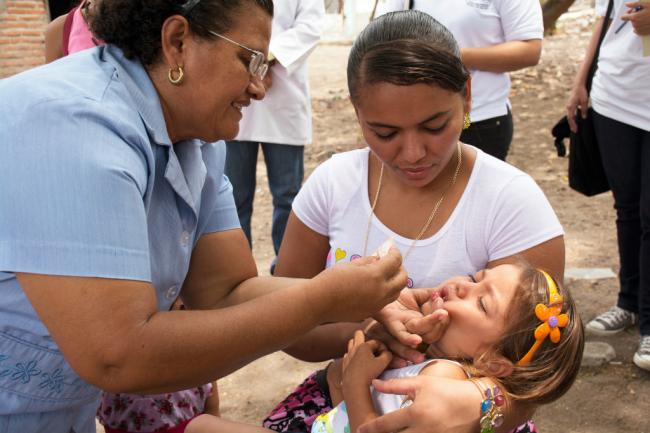
Many countries combine deworming activities for pre-school children with other health campaigns, such as vaccination, child health and vitamin supplementation days.
Photo: Sabin Institute/PAHO/WHO
Source: www.justearthnews.com
Support Our Journalism
We cannot do without you.. your contribution supports unbiased journalism
IBNS is not driven by any ism- not wokeism, not racism, not skewed secularism, not hyper right-wing or left liberal ideals, nor by any hardline religious beliefs or hyper nationalism. We want to serve you good old objective news, as they are. We do not judge or preach. We let people decide for themselves. We only try to present factual and well-sourced news.
Support objective journalism for a small contribution.