UN envoy says Somalia's success depends on managing threats
“It gives me particular pleasure to share some breaking news with you,” the Special Representative of the Secretary-General in Somalia, Michael Keating, told the 15-member Council during an update on the situation in the country.
“This morning, a decision was taken by the Somali Cabinet on the electoral model to be used later this year. This is the culmination of almost six months of intense consultations. It may be a watershed moment, marking the growing political maturity of a federal Somalia,” he said.
Separately, UN Secretary-General Ban Ki-moon congratulated the Somali leadership on this decision, noting that it paves the way to a timely transition at the expiry of the current institutions’ term.
“He particularly applauds the commitment to representation of women and minority groups, including that women will comprise 30 per cent of the next Parliament, in line with the Mogadishu Declaration of December 2015,” said a statement issued by Ban’s spokesperson.
The UN chief also reiterated the urgency of establishing a political roadmap towards universal suffrage in Somalia by 2020, to ensure continued momentum in the country’s transition to democracy.
In the Security Council, Keating, who is also the head of the UN Assistance Mission in Somalia (UNSOM), said the electoral model is Somali-devised, Somali-led and Somali-owned, adding that real momentum could and should result from the “breakthrough” achieved today.
Meanwhile, he said his two weeks as Special Representative in the horn of Africa nation “have not been Somalia’s easiest” – marked by tough political negotiations and marred by two terrorist attacks.
“Somalia’s security requires a comprehensive approach,” he continued, highlighting the UN Secretary-General recently announced Plan of Action for Preventing Violent Extremism. “Our political, security, development and human rights efforts must proceed together.”
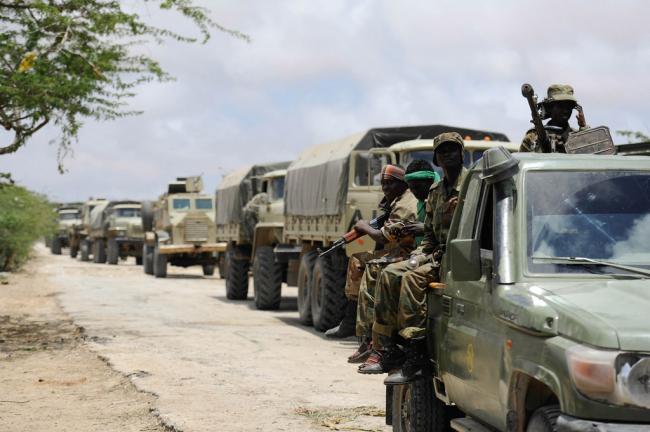
Noting that military and counterterrorism efforts need to be accompanied by stronger policing and rule of law, Keating added that a priority must be to strengthen federal and regional capabilities within Somalia as a basis for a longer term transition plan for the African Union Mission in Somalia (AMISOM), which has been in the country since 2007.
“Too many civilians and too many soldiers are dying. Al-Shabab remains a potent threat,” the UN official warned, while nonetheless stating he is encouraged by the commitments made by the President of Somalia, Hassan Sheikh Mohamoud, to security sector reform.
Turning to the humanitarian situation, Keating said the situation is very concerning. “Millions of children, women and elderly people are acutely vulnerable and in total some 4.9 million people, representing 40 per cent of the total population, are in need of humanitarian assistance.”
According to UN estimates, over 1.1 million civilians remain internally displaced and some 300,000 children under age five are acutely malnourished. Millions also lack access to basic healthcare, water and sanitation. The head of UNSOM called for the UN’s recently launched humanitarian response plan to be “generously” supported.
Photo: AMISOM/Tobin Jones/www.justearthnews.com
Support Our Journalism
We cannot do without you.. your contribution supports unbiased journalism
IBNS is not driven by any ism- not wokeism, not racism, not skewed secularism, not hyper right-wing or left liberal ideals, nor by any hardline religious beliefs or hyper nationalism. We want to serve you good old objective news, as they are. We do not judge or preach. We let people decide for themselves. We only try to present factual and well-sourced news.
Support objective journalism for a small contribution.