UN atomic energy agency looks to boost ongoing contribution to sustainable development
The Conference on the International Atomic Energy Agency (IAEA) Technical Cooperation Programme, which runs from 30 May to 1 June in the Austrian capital, will highlight the Agency’s role in providing development assistance, discuss future partnership opportunities and examine the way forward on the Sustainable Development Goals (SDGs).
After welcoming member States and other partners, IAEA Director General Yukiya Amano said: “Science and technology are critical for development. Transferring nuclear technology to developing countries is core IAEA business. Partnerships are an essential element of our work.”
“The technical cooperation programme has improved the health and prosperity of millions of people,” Amano said. “I have seen for myself in visits to developing countries all over the world that technical cooperation projects deliver huge benefits to individuals, families and entire communities.”
Partnerships key to sharing nuclear science and technology
In 2016 alone, the IAEA technical cooperation programme delivered support to 146 countries and territories, including 37 least developed countries.
Highlighting two key partnerships which help the IAEA to deliver assistance, he said: “Together with the UN Food and Agriculture Organization (FAO), the IAEA deploys nuclear techniques to help increase food production, manage pollution, reverse land degradation and restore soils. We work with the World Health Organization (WHO) to help improve the availability of radiotherapy and nuclear medicine.”
Nuclear technology contributing to development
Lifting people out of poverty to support sustainable development was also the central topic in the opening speech of the conference.
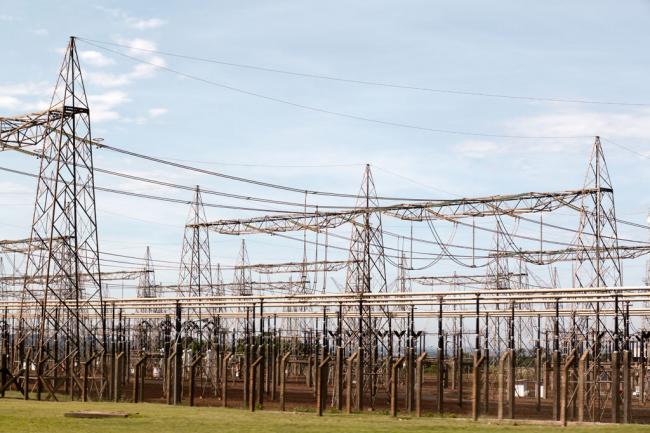
“Energy is indispensable for development,” he told the audience, stressing that “huge increases in energy supply will be required in the coming decades to support economic development and lift some 2.6 billion people out of energy poverty.”
He went on to say that many member States believe nuclear power can help them to address the twin challenges of ensuring reliable energy supplies, while curbing greenhouse gas emissions.
“Nuclear power is one of the lowest-carbon technologies available to generate electricity” Amano pointed out. “Nuclear power plants produce virtually no greenhouse gas emissions or air pollutants during their operation, and only very low emissions over their entire life cycle.”
The use of nuclear power can also help member States to alleviate concerns about volatile fuel prices and security of supply, he said.
He stated that some 30 countries are already using nuclear power and another 30 are considering building their first nuclear power plants, or have started doing so.
UN Photo/Evan Schneider
Source: www.justearthnews.com
Support Our Journalism
We cannot do without you.. your contribution supports unbiased journalism
IBNS is not driven by any ism- not wokeism, not racism, not skewed secularism, not hyper right-wing or left liberal ideals, nor by any hardline religious beliefs or hyper nationalism. We want to serve you good old objective news, as they are. We do not judge or preach. We let people decide for themselves. We only try to present factual and well-sourced news.
Support objective journalism for a small contribution.