Suriname, Côte d’Ivoire moves away from death penalty: UN
Addressing a press briefing in Geneva today, OHCHR spokesperson Ravina Shamdasani told reporters that the decisions, instituted earlier this month, would shortly be signed and promulgated by the presidents of both countries.
“We hope that Suriname’s initiative will have a positive impact on the other countries in the region which have de facto moratoria, but still maintain the death penalty in their legal frameworks,” Shamdasani said.
She added that in Côte d’Ivoire, capital punishment had been abolished in the country’s new constitution, adopted in 2000, but nonetheless remained in the penal code until now.
“We encourage both Suriname and Côte d’Ivoire to ratify the Second Optional Protocol to the International Covenant on Civil and Political Rights, which aims at the abolition of the death penalty,” the spokesperson continued.
The Americas were the first to abolish the death penalty, with Venezuela doing so in 1867. Following that, many other countries in the region abolished the death penalty, leading to the 1990 adoption of the Protocol to the Inter-American Convention on Human Rights.
In Africa, many States have taken an abolitionist stance. Meanwhile, in the past 16 years, no death sentence has been carried out in any of the 47 member States of the European Union. And in the Middle East and Asia, national human rights institutions and civil society are moving the abolitionist movement forward.
As it stands now, some 160 countries have either fully abolished the death penalty or do not practise it. In the last six months, the death penalty was abolished in Chad, Fiji and Madagascar.
However, despite these strides some countries are seeing a move towards the preservation and even reintroduction of the death penalty, according to OHCHR. In 2013 alone, there were more executing States and more victims of execution than in 2012.
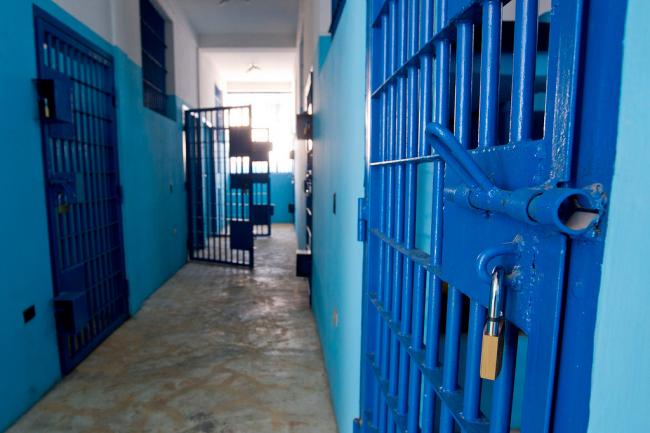
Photo: UN/MINUSTAH/Logan Abassi
Support Our Journalism
We cannot do without you.. your contribution supports unbiased journalism
IBNS is not driven by any ism- not wokeism, not racism, not skewed secularism, not hyper right-wing or left liberal ideals, nor by any hardline religious beliefs or hyper nationalism. We want to serve you good old objective news, as they are. We do not judge or preach. We let people decide for themselves. We only try to present factual and well-sourced news.
Support objective journalism for a small contribution.