November 24, 2026 06:56 am (IST)

Follow us:


South Sudan: UN reaffirms commitment to protect civilians
New York, Apr 10 (IBNS): The United Nations Mission in South Sudan (UNMISS) said on Wednesday that since the hostilities that erupted between the Government and opposition forces last December, an average of 75,000 civilians have found refuge from violence in UN bases across the country.
In a news release, the Mission also notes that currently, some 67,000 internally displaced persons (IDPs) are seeking protection at 8 of its protection sites, notably in Juba and Malakal.
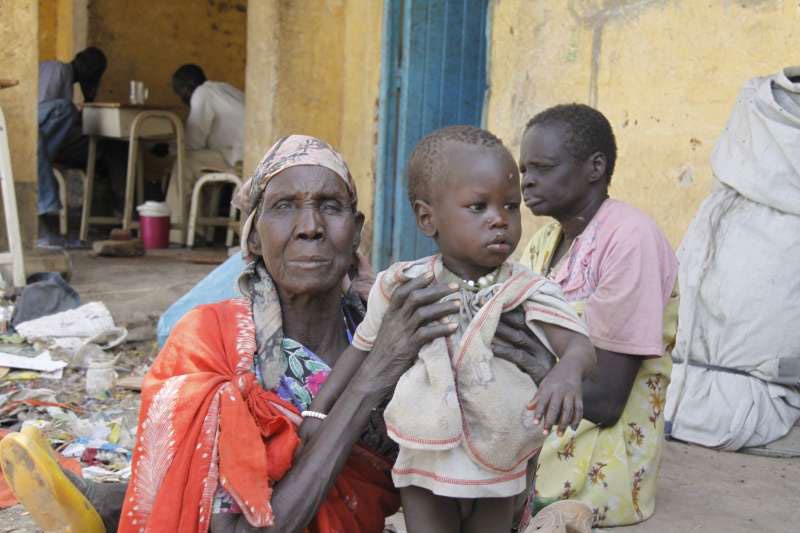
The Mission notes that none of those sites were designed to host IDPs, let alone in such huge numbers, and “with space per person reaching less than a tenth of what is recommended by minimum humanitarian standards, the risk of disease outbreaks remains extremely high.”
UNMISS says that it has been particularly concerned with the congestion in the Juba Tomping and Malakal sites since the beginning of the crisis.
In addition to providing shelter, UNMISS and its partners are also working to improve the water and sanitation situation in order to mitigate the public health risks arising from overcrowding and scorching temperatures.
The Mission has negotiated with the South Sudanese authorities’ access to more land to accommodate the displaced and is building additional new compounds aimed at the protection of civilians in Bor, Juba, and Malakal. However, these projects have been significantly delayed due to ongoing insecurity in Malakal, and limited availability of engineering capacity.
The first heavy rains in the beginning of March, revealed the inevitable deterioration of living conditions, prompting UNMISS and its partners to accelerate steps to decongest the camps, improve sanitation, and conduct scenario planning to address any outbreaks of any deadly diseases.
In order to avert any health crises, IDPs in the Tomping site are being internally relocated to areas that are not prone to floods and gradually moved to alternative sites as they are completed. The Tomping site should be closing in May, when the new camp in the Jebel area is expected to be ready, says the Mission.
Overall, about a million people in South Sudan have been forced from their homes due to the conflict. The UN continues to advocate with the country’s authorities for political and security solutions that will allow the displaced to return to their homes or seek abode in any other part of the country.
(An elderly woman holds her grandson while his mother prepares food at a secondary school in Malakal, capital of Upper Nile state, South Sudan. Photo: UNHCR/K. Gebreegziabher)
Support Our Journalism
We cannot do without you.. your contribution supports unbiased journalism
IBNS is not driven by any ism- not wokeism, not racism, not skewed secularism, not hyper right-wing or left liberal ideals, nor by any hardline religious beliefs or hyper nationalism. We want to serve you good old objective news, as they are. We do not judge or preach. We let people decide for themselves. We only try to present factual and well-sourced news.
Support objective journalism for a small contribution.


Latest Headlines
India and Bulgaria exchange five-year partnership roadmap as foreign ministers meet in New Delhi
Sun, Nov 22 2026
UK to produce Ukrainian-designed strike drones for Kyiv under new deals as Defence Secretary visits
Sun, Nov 22 2026
She swallowed an entire fork! New Zealand doctors' unusual surgery saves 27-year-old
Sun, Nov 22 2026
Eisenkot invites Netanyahu's Likud for coalition talks as Israel's government formation efforts intensify
Sun, Nov 22 2026
Houthi missile strike damages Riyadh’s tallest tower housing Saudi Arabia’s wealth fund
Fri, Nov 20 2026
Xi Jinping, Vladimir Putin hold talks ahead of Trump’s historic trilateral summit in China
Wed, Nov 18 2026