Security Council calls for regional solutions to challenges facing Africa's Great Lakes nations
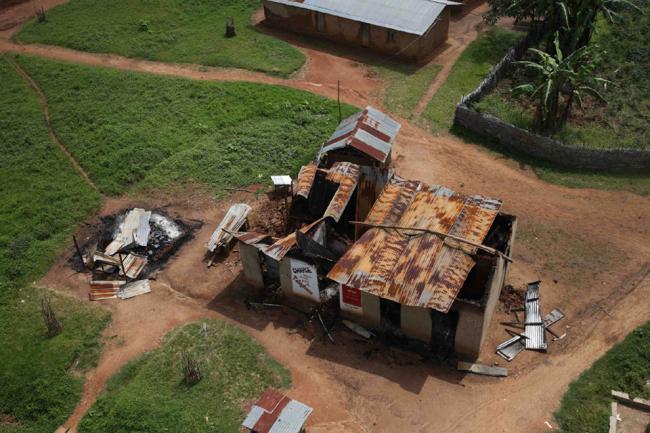
Adopting a Presidential Statement, the 15-nation Council spotlighted, among other things, cross-border issues, including the large flows of natural resources, migrants and refugees, as well as the activities of armed groups and criminal networks in and around the eastern Democratic Republic of Congo (DRC).
“Solutions to the prevailing situation in the Great Lakes region should come within a regional perspective, by addressing the root causes of conflicts, many of which are regional in nature,” the Council underscored.
The Council expressed grave concern over the continued illicit exploitation of natural resources and their trade in the eastern DRC, urging coordinated efforts by the signatory States of the Peace, Security and Cooperation (PSC) Framework, regional organizations and the international community to undercut the economic lifelines of armed groups benefitting from those activities.
On Thursday's adoption of the text followed the 21 March Council open debate on the prevention and resolution of conflicts in the Great Lakes region, held under Angola's presidency for the month.
On the security front, the Council reiterated the importance of neutralizing all armed groups in country's eastern part, particularly the Forces Démocratiques de Libération du Rwanda (FDLR), Allied Democratic Forces (ADF), Lord's Resistance Army (LRA) and the various Mai Mai groups, in accordance with resolution 2277 (2016).
Noting the announcement of the resumption of joint military operations between the DRC's Government and the UN Organization Stabilization Mission in DRC (MONUSCO), the Council called for immediate restart of such activities in earnest to completely neutralize those armed groups.
Turning to the political front, the Council urged regional support for initiatives aimed at promoting inclusive dialogue amongst national stakeholders and stressed the importance of enabling the full and free participation of peaceful political parties, civil society and the media in the political process.
The Great Lakes region includes Burundi and Rwanda as well as Uganda, Kenya and Tanzania.
While welcoming the credible and peaceful conduct of elections in some States in the region, the Council noted that the recent and ongoing electoral processes in other States raise deep concerns about the risk of instability, human rights and humanitarian law violations and abuses, and further displacement of people.
The Council called on States in the region to take steps to ensure that electoral processes promote peace and security through timely, peaceful, inclusive and credible elections.
UN Photo/Abel Kavanagh
Support Our Journalism
We cannot do without you.. your contribution supports unbiased journalism
IBNS is not driven by any ism- not wokeism, not racism, not skewed secularism, not hyper right-wing or left liberal ideals, nor by any hardline religious beliefs or hyper nationalism. We want to serve you good old objective news, as they are. We do not judge or preach. We let people decide for themselves. We only try to present factual and well-sourced news.
Support objective journalism for a small contribution.