 Omicron
Omicron: School closures must be ‘avoided whenever possible’
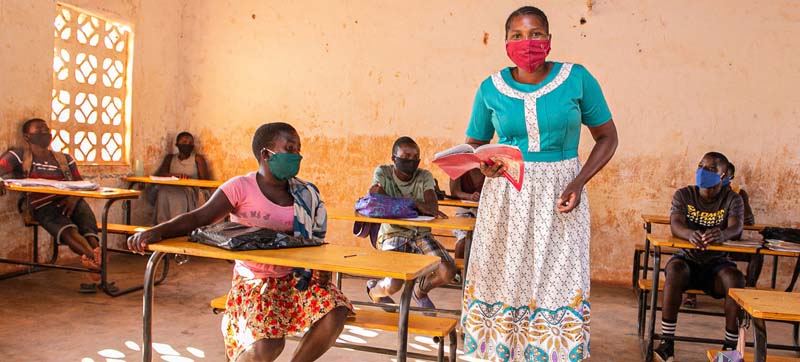
New York: COVID-19 cases are spiking all over the world, but the Executive Director of the UN Children’s Fund (UNICEF) said on Friday that despite the rise of the highly transmissible Omicron variant “nationwide school closures should be avoided whenever possible.”
“When COVID-19 community transmission increases and stringent public health measures become a necessity, schools must be the last places to close and the first to re-open”, argued Henrietta Fore.
The new cases are being fuelled, increasingly, by Omicron; the new variant of concern that public health experts and scientists are working hard to understand and assess.
Amid rising uncertainty, many governments are weighing whether to keep schools open.
Ms. Fore said that one thing was certain: “Another wave of widespread school closures would be disastrous for children.”
Rising cases
For Ms. Fore, “the evidence is clear” and further prolonged, nationwide school closures, resulting in limited resources for students, teachers and parents - and lack of access to remote learning - would have serious consequences.
“[These closures] have wiped out decades of progress in education and rendered childhood unrecognizable. A shadow pandemic of child labour, child marriage and mental health issues has taken hold”, Ms. Fore said.
Beyond lost learning, the UNICEF chief said, children have also become less safe by being excluded from a school environment, missing out on daily in-person interactions with friends, access to healthcare, and, too often, their only nutritious meal of the day.
According to the UN agency, this generation of schoolchildren could collectively lose $ 17 trillion in potential lifetime earnings.
Solutions
Addressing how to solve this challenge, Ms. Fore said that “mitigation measures in schools are effective” and authorities “must use this knowledge to do everything” to keep schools open.
Member States “must also increase investments in digital connectivity to make sure that no child is left behind”, she added.
Ms. Fore concluded saying that “2022 cannot be yet another year of disrupted learning.”
“It needs to be the year that education, and the best interests of children, take precedence”, she added.
Support Our Journalism
We cannot do without you.. your contribution supports unbiased journalism
IBNS is not driven by any ism- not wokeism, not racism, not skewed secularism, not hyper right-wing or left liberal ideals, nor by any hardline religious beliefs or hyper nationalism. We want to serve you good old objective news, as they are. We do not judge or preach. We let people decide for themselves. We only try to present factual and well-sourced news.
Support objective journalism for a small contribution.