 Human Trafficking
New study shows links between child trafficking, grave violations during conflict
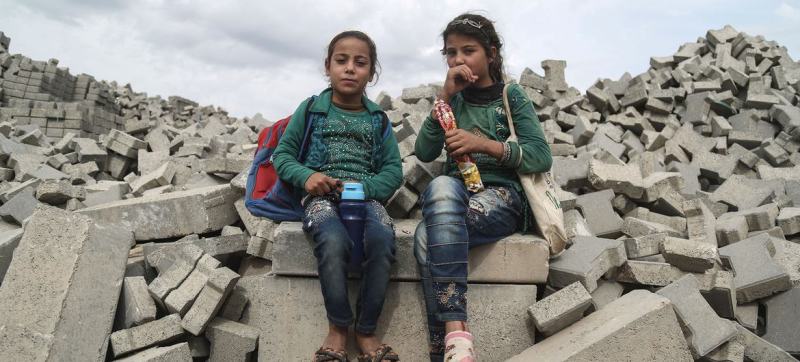
Armed conflict puts children at an increased risk of grave violations while their risk of being trafficked similarly increases, including in transitional periods, a new UN study has revealed.
The report – the first of its kind – analyses the links between child trafficking and the six grave violations against children caught up in war. They are recruitment and use, killing and maiming, rape and other forms of sexual violence, abduction, attacks on schools and hospitals, and denial of humanitarian access.
It was produced by the Office of the UN Secretary-General’s Special Representative for Children and Armed Conflict, Virginia Gamba, in close collaboration with the Special Rapporteur on trafficking in persons, especially women and children, Siobhán Mullally.
Focus was on seven countries or geographic areas - Colombia, the Lake Chad basin in Africa, Libya, Myanmar, South Sudan, Syria, and Ukraine – and the report offers recommendations for ensuring greater protection and accountability.
Control and intimidation
“What this study shows are the ways in which child trafficking overlaps and interacts with the six grave violations while mapping out legal and policy responses, which too often are done in silos,” Gamba said.
Child trafficking in armed conflict takes many forms, including sexual exploitation and sexual slavery, child marriage, recruitment and use in combat and support roles.
It has long been used by warring parties to control and terrorize communities and to support and sustain conflict.
At the same time, grave violations are often part of the lead-up to, process of, or aftermath of child trafficking. For example, denial of humanitarian access during wartime can make children more vulnerable to being trafficked.
Gender and cross-border dimensions
Furthermore, “the risks of child trafficking are deeply gendered”, according to the report. Whereas girls are most often targeted for sexual exploitation and child marriage, boys are more likely to be recruited into hostilities.
There also can be both internal and cross-border dimensions to child trafficking in armed conflict.
For example, multiple forms and locations of child trafficking have been observed in Syria since conflict erupted more than a decade ago. They include the abduction and transfer of Yazidi girls from Iraq for purposes of sexual slavery and forced marriage, while local Sunni Syrian families agreed for girls to marry ISIS members, in some cases under threat.
Lack of accountability
Mullally said the study addresses a key gap in policy and practice on the protection of children in armed conflict. She noted that limited attention has been given to child trafficking as a protection risk, or to the prevention of child trafficking and accountability, as priorities for sustainable peace.
“The lack of accountability for child trafficking further contributes to continuing cycles of impunity,” she added.
Recommendations for countries
The study contains recommendations to UN Member States that the authors described as “concrete, targeted, and timely”.
One recommendation calls for full application of the non-punishment principle to emphasize that trafficked children are victims rather than accomplices. Thus, early identification of victims is critical.
Other recommendations underscore the importance of countries preventing child trafficking and ensuring long-term protection for victims, including through addressing poverty and gender inequality, ensuring universal registration of all children, and eliminating statelessness.
Support Our Journalism
We cannot do without you.. your contribution supports unbiased journalism
IBNS is not driven by any ism- not wokeism, not racism, not skewed secularism, not hyper right-wing or left liberal ideals, nor by any hardline religious beliefs or hyper nationalism. We want to serve you good old objective news, as they are. We do not judge or preach. We let people decide for themselves. We only try to present factual and well-sourced news.
Support objective journalism for a small contribution.