 Iran Deal
Israel alarmed as Trump's deal with Iran triggers fears of strategic setback, regional power shift
Israel has reacted with alarm to the preliminary agreement reached between US President Donald Trump and Iran, with political leaders, security analysts and commentators describing the deal as a major setback for Israeli interests and regional security.
The agreement, designed to end months of conflict between the United States and Iran, has triggered strong criticism in Israel, where officials argue that it fails to address key security concerns, including Iran’s missile programme, regional proxy network and nuclear ambitions.
Israeli concerns over deal terms
Many Israeli analysts and former officials contend that the agreement does not achieve the objectives that Israel sought during the conflict.
Critics argue that the deal leaves unresolved the issue of Iran’s ballistic missile arsenal and does not limit Tehran’s support for armed groups such as Hezbollah in Lebanon and the Houthis in Yemen.
The agreement also includes provisions that could require Israel to withdraw forces from southern Lebanon, a move that some Israeli officials believe would weaken the country’s security position.
Former Israeli national security adviser Yaakov Amidror criticised the agreement, saying: "It's a bad agreement in which the Americans are paying with cash, and got, at the maximum, a letter of intent."
David Horovitz, editor of The Times of Israel, described the development as a "catastrophic capitulation", while Channel 12 analyst Nir Dvori compared the deal to a "diplomatic Oct. 7".
Netanyahu responds cautiously
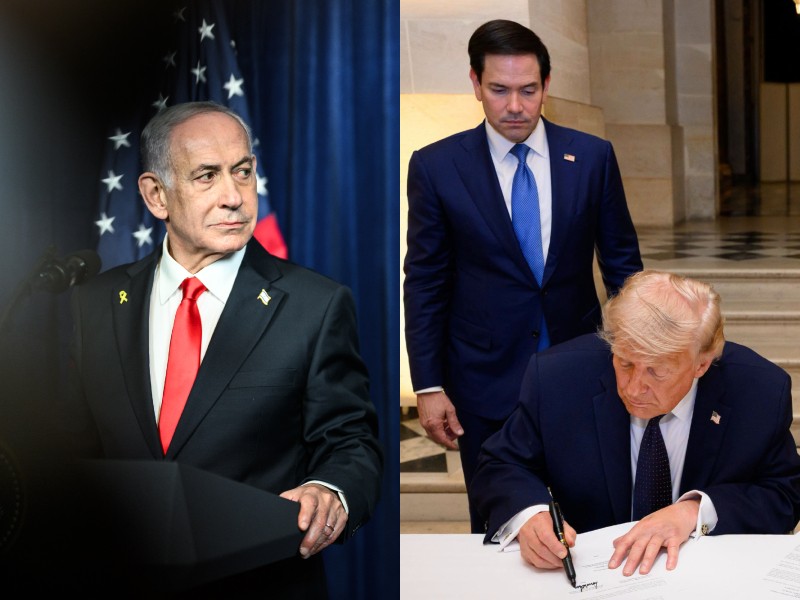
Israeli Prime Minister Benjamin Netanyahu addressed the agreement briefly, emphasising that Israel would continue pursuing its security objectives.
"Additional challenges lie ahead of us," Netanyahu said, adding that the situation requires "calmness, a firm stance on our security interests, and at the same time, maintaining the important connection with our American friends."
He reiterated Israel’s long-standing position on Tehran’s nuclear programme, stating: "Iran will not have nuclear weapons."
Netanyahu also stressed that Israel intends to maintain security arrangements along its northern border with Lebanon.
Growing debate over US-Israel relations
The agreement has intensified debate within Israel over the country's relationship with the Trump administration and Netanyahu’s close ties with the US president.
Recent comments by Trump have fuelled concerns among Israeli political figures.
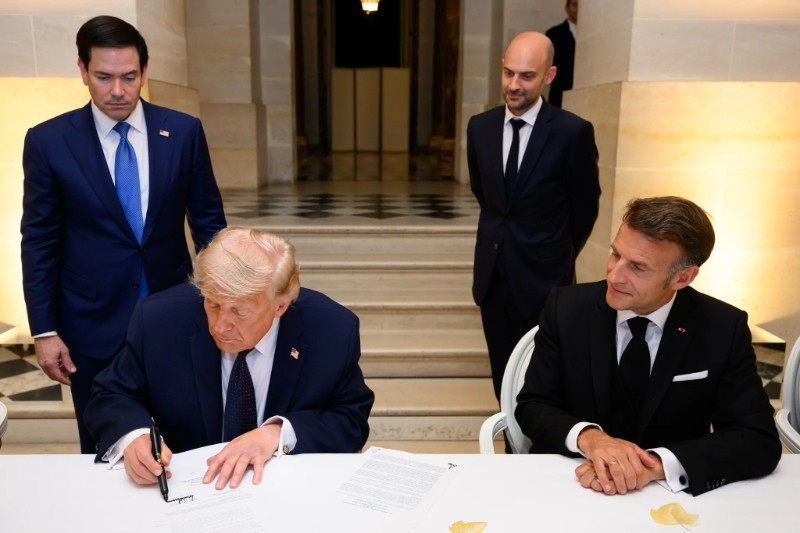 Donald Trump signs US-Iran MoU in France, June 17, 2026. Photo: The White House
During the Group of Seven summit in France, Trump suggested that Israel was the "very small partner" in the bilateral relationship and indicated that other regional actors could help manage security challenges involving Hezbollah.
He also argued that it was reasonable for Iran to possess missiles because other countries in the region maintained similar capabilities.
Several Israeli commentators interpreted those remarks as a sign of growing differences between Washington and Jerusalem.
Likud lawmaker Hanoch Milwidsky posted a video on social media showing himself removing a red MAGA cap and replacing it with one bearing the Hebrew phrase for "total victory".
Columnist Ben-Dror Yemini wrote that Trump had "reneged on every promise" and accused the US administration of strengthening Iran’s regional position.
JD Vance defends agreement
US Vice President JD Vance strongly rejected Israeli criticism of the agreement and urged Israeli leaders to recognise their reliance on Washington.
Speaking to reporters at the White House, Vance said: "If I was in the cabinet of the Israeli government, I might not be attacking the only powerful ally that I have anywhere left in the entire world."
He added that "two-thirds" of the weapons used to defend Israel during the previous three months had been financed by US taxpayers.
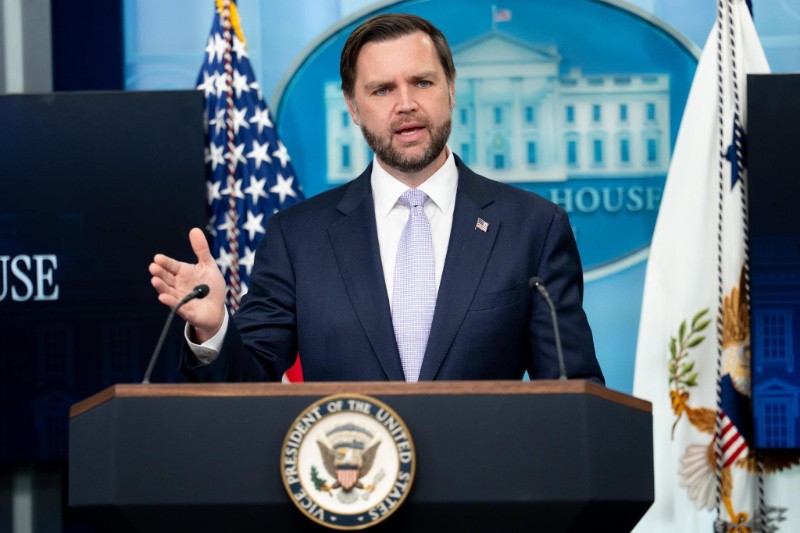 US Vice President JD Vance slams Israeli ‘freakout’ over Iran deal. Photo: Facebook/@VicePresident
"Anybody in Israel who thinks their biggest problem is the president of the United States needs to wake up and smell the reality of the situation that country is in," Vance said.
He also described Trump as "the only head of state in the entire world who is sympathetic to the nation of Israel at this moment in time."
Nuclear negotiations set to begin
The agreement establishes a 60-day period for negotiations over Iran’s nuclear programme.
Talks are expected to begin in Switzerland in the coming days.
While Vance stated that Iran had agreed to halt uranium enrichment, Iranian officials have continued to insist that the country retains both the right and intention to pursue enrichment activities.
The International Atomic Energy Agency (IAEA) is expected to play a supervisory role in the upcoming discussions.
IAEA Director General Rafael Mariano Grossi welcomed the agreement and stressed the importance of political commitment from both sides.
"All of this depends on the political will of both sides," Grossi said. "We are at the gates of the decisive phase of the technical conversations."
US lifts Iranian port blockade
As part of the agreement, the United States has lifted its blockade of Iranian ports and coastal areas.
US Central Command announced that blockade enforcement operations had ended and confirmed that maritime traffic could resume.
The measure is expected to ease economic pressure on Tehran and allow Iranian oil exports to resume more freely.
The agreement also includes provisions for reopening the Strait of Hormuz, easing sanctions on Iranian oil exports and launching a proposed $300 billion reconstruction and development initiative.
Republicans voice concerns
The agreement has also drawn criticism from several senior Republican lawmakers in the United States.
Senator Roger Wicker expressed concern that the deal could undermine military gains achieved during the conflict and criticised the proposed reconstruction fund.
Senator Bill Cassidy described the agreement as "the worst foreign policy blunder in decades".
Senator Tom Cotton said he had concerns that certain elements of the arrangement represented "a step in the wrong direction", particularly regarding potential revenue Iran could generate from renewed oil exports.
Senate Majority Leader John Thune also questioned whether financial relief should be granted to Iran before a clear commitment to ending its nuclear programme.
Regional and global implications
The memorandum was signed after nearly four months of conflict that disrupted shipping through the Strait of Hormuz, strained military resources and pushed energy prices higher.
Despite the agreement, officials from both countries have continued exchanging warnings.
US Defence Secretary Pete Hegseth stated that Washington remained capable of restoring an "ironclad blockade" if Iran failed to comply with the deal's terms.
Meanwhile, Iranian Foreign Ministry spokesman Esmaeil Baqaei argued that the conflict had left Iran "MORE #powerful both militarily and diplomatically".
Although international leaders have broadly welcomed the agreement as a step towards reducing regional instability, key issues surrounding Iran’s nuclear programme, missile capabilities and future compliance remain central to the negotiations scheduled to begin in Switzerland.
Support Our Journalism
We cannot do without you.. your contribution supports unbiased journalism
IBNS is not driven by any ism- not wokeism, not racism, not skewed secularism, not hyper right-wing or left liberal ideals, nor by any hardline religious beliefs or hyper nationalism. We want to serve you good old objective news, as they are. We do not judge or preach. We let people decide for themselves. We only try to present factual and well-sourced news.
Support objective journalism for a small contribution.