


 Bangladesh
India closes two more Bangladesh visa centres amid rising 'security concerns'
Dhaka/IBNS: India has shut down two more visa application centres in Bangladesh, extending restrictions beyond Dhaka to Rajshahi and Khulna, citing a "worsening security situation".
The decision comes amid rising anti-India sentiment and street protests led by radical Islamist groups in the country.
An official notification on the Indian Visa Application Centre (IVAC) website confirmed that the Rajshahi and Khulna centres would remain closed on December 18, 2025.
Applicants who had appointments scheduled for the day were assured of fresh slots at a later date.
Protests near Indian mission raise alarm
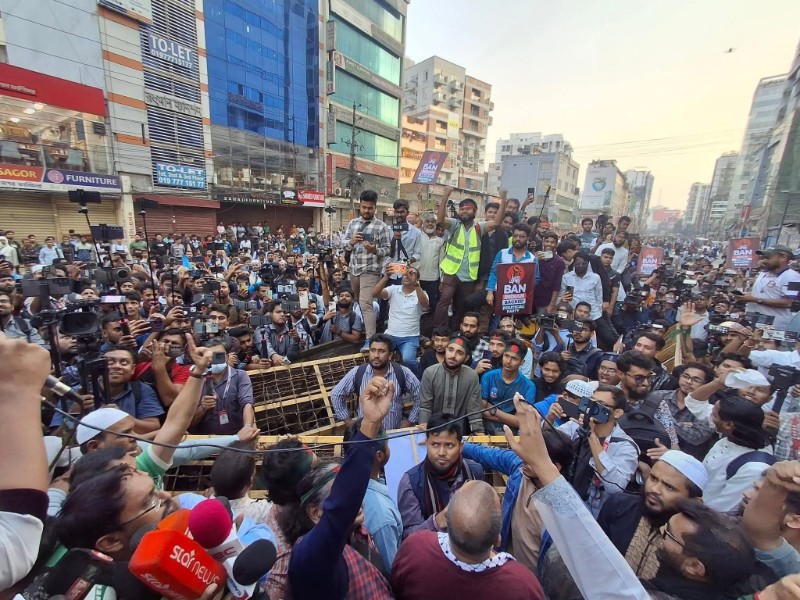
The closures follow a protest march organised near the Indian High Commission in Dhaka under the banner of “July Oikya,” a coalition linked to radical Islamist elements.
The demonstrators raised a series of demands, including the return of ousted former prime minister Sheikh Hasina.
Demanding the extradition of #SheikhHasina, members of "July Oikya" attempted to march to the Indian High Commission in #Dhaka this afternoon. Police blocked the procession in the Gulshan area.#Bangladesh #India #IndiaSafeHeavenForCriminals pic.twitter.com/dFr7nuLQ7V
— Basherkella - বাঁশেরকেল্লা (@basherkella) December 17, 2025
Indian authorities have flagged a surge in openly hostile rhetoric against India, particularly targeting the northeastern states, under Bangladesh’s interim administration led by Muhammad Yunus.
New Delhi views the developments as part of a broader deterioration in the security environment.
Dhaka pushes back on India’s concerns
Bangladesh’s Foreign Affairs Adviser Touhid Hossain has downplayed India’s concerns, insisting that law and order remain under control.
He also distanced the interim government from provocative remarks made by National Citizen Party (NCP) leader Hasnat Abdullah, who had threatened to sever India’s “seven sisters” from the rest of the country.
“Hasnat is not part of the government. If it were the government’s position, it would come from the highest office,” Hossain said, dismissing the remarks as irrelevant.
Despite these assurances, radical figures such as Abdullah have continued issuing inflammatory statements, including threats to expel India’s High Commissioner from Bangladesh, further straining bilateral ties.
Interim govt, radical groups and political tensions
The NCP emerged from the student-led protests that toppled Sheikh Hasina’s Awami League government last year, with backing from Jamaat-e-Islami Bangladesh and its student wing, Chhatra Shibir.
While the party commands limited popular support, it has endorsed Muhammad Yunus as head of the interim government, giving it disproportionate political visibility.
#WATCH | Bangladesh | A group called 'July 36 Mancha' organised a march towards the Indian Assistant High Commission in Dhaka today. They demanded that all persons whom they consider fugitive accused, including former Prime Minister Sheikh Hasina, must return to the country pic.twitter.com/meCV4BQz5Y
— ANI (@ANI) December 18, 2025
India has expressed concern that such groups have been allowed a free hand, creating an atmosphere of intimidation and instability ahead of national elections.
India urges peaceful elections, faces resistance
New Delhi has repeatedly urged Bangladesh’s interim authorities to ensure internal security and conduct free, fair and peaceful elections to restore an elected government.
The Ministry of External Affairs has stressed that stability and democratic legitimacy are essential for Bangladesh’s future.
PAK INFLUENCED, BANGLADESH STATE SPONSORED?
— Rahul Shivshankar (@RShivshankar) December 18, 2025
Indian HC officials in Dhaka face tense times. Fresh Protest at Assistant Indian High Commission in Bangladesh's Rajshahi. pic.twitter.com/7iVxW8inyk
However, Hossain rejected what he described as Indian “advice,” arguing that New Delhi had remained silent during flawed elections under previous governments.
Observers in Bangladesh warn that delaying elections could allow radical groups backing the interim setup to deepen instability by fuelling anti-India narratives.
Support Our Journalism
We cannot do without you.. your contribution supports unbiased journalism
IBNS is not driven by any ism- not wokeism, not racism, not skewed secularism, not hyper right-wing or left liberal ideals, nor by any hardline religious beliefs or hyper nationalism. We want to serve you good old objective news, as they are. We do not judge or preach. We let people decide for themselves. We only try to present factual and well-sourced news.
Support objective journalism for a small contribution.


