 UAE
UAE
How UAE stopped Iranian missile storm: Inside the shield that protected the nation
Residents across the United Arab Emirates watched the night sky flicker with distant flashes and felt windows tremble from muffled explosions.
What unfolded in seconds above Abu Dhabi and Dubai, however, reflected years of military planning, billions in defence investment and a complex network of radars and interceptors working in synchrony.
After joint US–Israeli strikes targeted Iran, Tehran retaliated with missile and drone attacks across the Gulf.
Within hours, the UAE Ministry of Defence confirmed that its air defence systems had intercepted several incoming ballistic missiles.
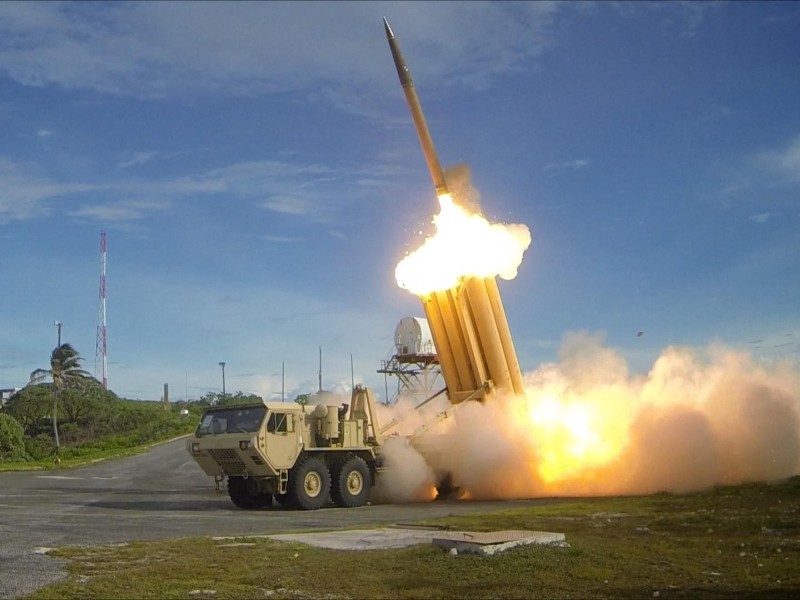 THAAD interceptor. Photo: Wikimedia Commons/US Army
While most threats were destroyed mid-air, debris from one interception fell in Abu Dhabi, killing a civilian near strategic installations, including Al Dhafra Air Base.
Behind those brief streaks of light lay one of the region’s most sophisticated missile defence architectures.
A multi-layer shield against ballistic missiles
The UAE’s missile defence network operates on a layered model, designed to intercept threats at different altitudes and stages of flight.
At the highest tier sits the Terminal High Altitude Area Defence system, better known as THAAD.
Developed by Lockheed Martin, THAAD targets ballistic missiles during their terminal descent phase.
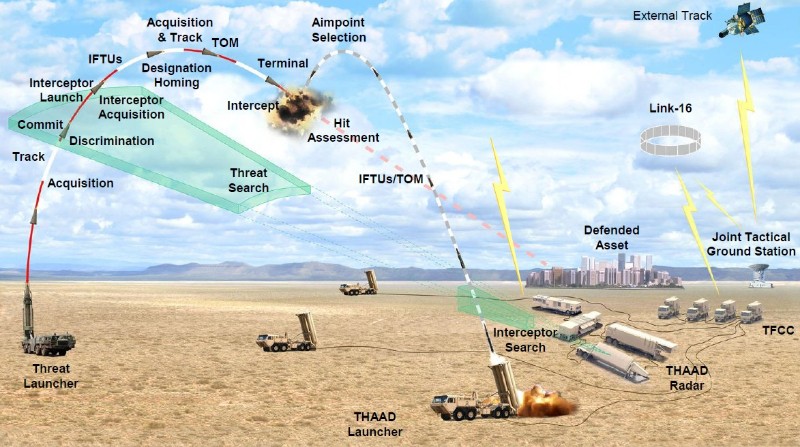 Threat Intercept process by THAAD. Photo: Wikimedia Commons/US Army
Unlike conventional air defence systems that detonate near a threat, THAAD uses a “hit-to-kill” method, colliding directly with incoming missiles at extraordinary speeds to neutralise them through kinetic force.
The UAE became the first country outside the United States to deploy THAAD, securing it under a multibillion-dollar defence agreement aimed at protecting critical infrastructure and urban centres.
Patriot and the lower defensive layer
THAAD does not operate alone. The UAE also fields the MIM-104 Patriot system, including Patriot PAC-3 batteries, to provide lower-altitude interception capability.
Patriot interceptors engage tactical ballistic missiles and hostile aircraft at medium altitudes, offering a second opportunity to destroy threats that evade high-altitude systems.
Together, THAAD and Patriot form a layered umbrella, giving defence operators multiple chances to intercept missiles before they reach populated areas.
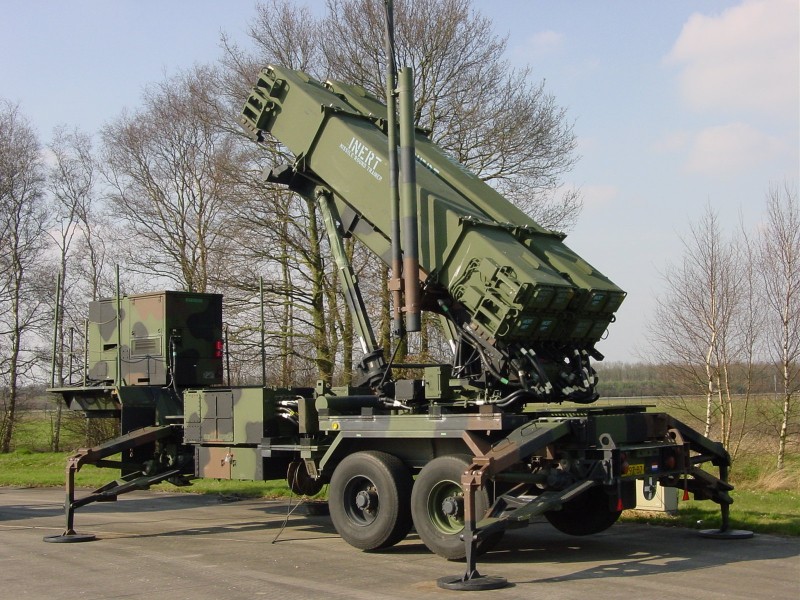 A Patriot PAC-3 installation. Photo: Wikimedia Commons/Ministerie van Defensie
To counter low-flying drones and cruise missiles, the UAE supplements its network with systems such as the Pantsir-S1, which combines short-range missiles with rapid-fire cannons.
The country has also expanded its coverage with South Korea’s Cheongung II, or M-SAM, adding another layer against aircraft and precision-guided munitions.
The radar that detects first
Missile defence begins long before an interceptor launches.
Early-warning radars detect missile launches within seconds, allowing defence crews to calculate trajectories in real time.
A key component linked to THAAD is the AN/TPY-2 X-band radar.
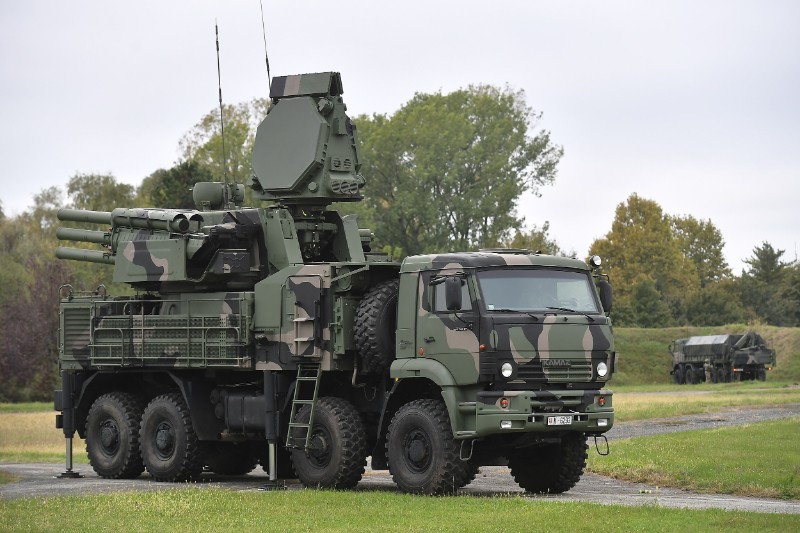 A Pantsir missile system. Photo: Wikimedia Commons/Jovo Mamula
This powerful system tracks small, fast-moving objects hundreds of kilometres away, even when they travel at hypersonic speeds exceeding 20,000 kilometres per hour.
Once radar systems identify a launch, command-and-control networks assess whether the missile threatens cities, airports or military bases.
Operators then calculate the precise interception point and launch interceptors to meet the incoming projectile in mid-air.
The entire sequence often unfolds in just a few minutes.
Why interception is so challenging
Ballistic missiles travel at extreme velocities, sometimes crossing the UAE in minutes.
Defence crews must detect, track and engage threats within a narrow window. Even minor miscalculations can result in catastrophic consequences.
To meet that challenge, the UAE integrates early-warning sensors, tracking radars, interceptor missiles and secure communications systems into a unified command structure.
This integration allows operators to respond almost instantaneously to emerging threats.
Despite these capabilities, interception does not eliminate danger entirely.
When interceptors destroy a missile at high altitude, fragments can fall back to earth.
Saturday’s fatal incident in Abu Dhabi highlighted that reality. Although the missile was neutralised before impact, debris still caused loss of life.
Scale of the assault
The UAE Ministry of Defence reported that since the onset of the attacks, it had detected 137 ballistic missiles as of March 1, destroying 132 of them, while five fell into the sea.
Authorities also tracked 209 drones, intercepting 195, with the remainder causing minor material damage.
Eight cruise missiles were also detected and destroyed, according to authorities.
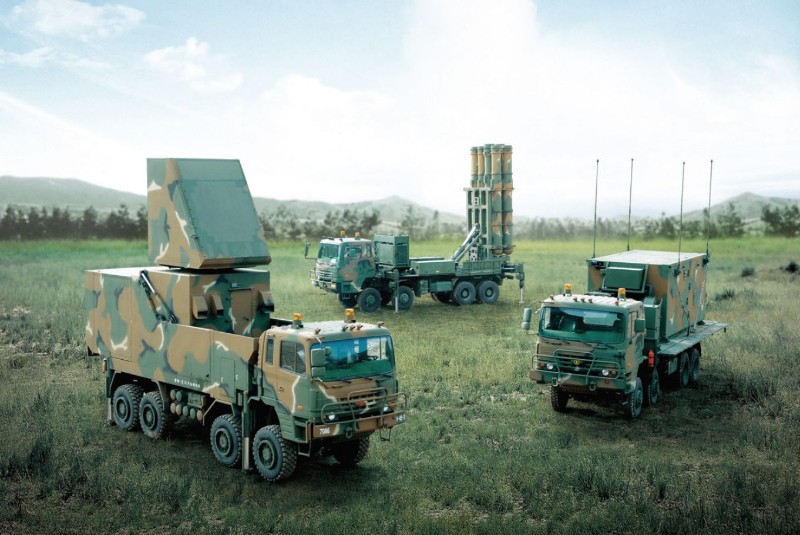 South Korean M-SAM's multifunction radar, vertical launcher, and control centre vehicles. Photo: Wikimedia Commons/Defence Acquisition Programme Administration (DAPA)
In updated figures released later, officials confirmed that air defences had intercepted the overwhelming majority of projectiles aimed at Emirati territory, limiting casualties despite the scale of the assault.
At one stage, the ministry announced that air defence systems were “dealing with a barrage” of ballistic missiles launched from Iran in the early hours of the morning.
Emergency alerts urged residents to remain indoors and follow official guidance.
Strategic targets and civil impact
Iranian strikes targeted sites across the UAE, including areas near major landmarks and infrastructure.
Authorities confirmed that debris from interception operations sparked a fire at the Burj Al Arab hotel in Dubai, which civil defence teams quickly extinguished without injuries.
Fires were also reported at a berth in Jebel Ali Port following falling debris.
Emergency crews responded immediately and brought the situation under control.
Dubai International Airport confirmed an incident linked to the attacks, activating emergency response teams and providing medical assistance to four injured individuals.
The UAE has shot down another Iranian ballistic missile.
— Visegrád 24 (@visegrad24) March 1, 2026
The video shows debris falling down over Abu Dhabi. pic.twitter.com/yXdkRFLe7F
In Abu Dhabi, reports indicated that debris near strategic installations resulted in fatalities and injuries.
The proximity of Al Dhafra Air Base, which hosts Emirati and US forces, underscores the strategic dimension of the assault.
Schools in Dubai and Abu Dhabi shifted temporarily to distance learning, while airports resumed limited operations to assist stranded passengers.
The General Authority of Civil Aviation announced that the state would cover accommodation and sustenance costs for affected travellers.
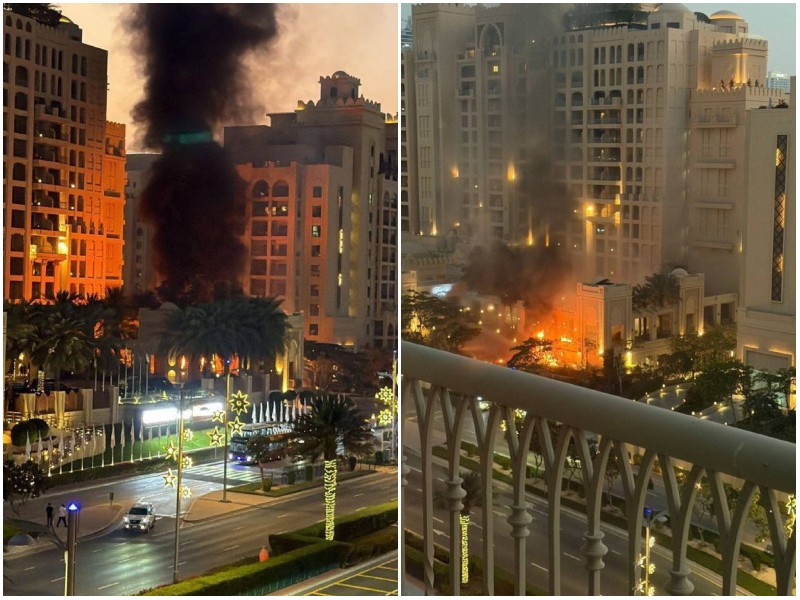 Luxury Dubai hotel Fairmont The Palm on fire in Iran's retaliatory air attack. Photo: X
Why Gulf states invested in missile shields
The rapid development of ballistic missile arsenals in the region, particularly by Iran, has driven Gulf nations to strengthen air defence capabilities over the past decade.
Iran is widely considered to hold one of the Middle East’s largest ballistic missile inventories.
For the UAE, protecting economic hubs, energy infrastructure and military facilities is a strategic necessity.
Qatar:-Missile attacks by Iran and people are recording videos for reels Instead of taking shelter. 🤦🏻♂️#Qatar #Iran #IranWar #Israel pic.twitter.com/RjJT85CEKd
— Tathvam-asi (@tathvamasi6) March 2, 2026
Cities such as Abu Dhabi and Dubai host key commercial centres, global aviation hubs and critical defence installations.
The events of recent days demonstrate how that investment has translated into operational readiness.
Defence officials emphasised that the country’s systems remain fully prepared to address further threats.
Support Our Journalism
We cannot do without you.. your contribution supports unbiased journalism
IBNS is not driven by any ism- not wokeism, not racism, not skewed secularism, not hyper right-wing or left liberal ideals, nor by any hardline religious beliefs or hyper nationalism. We want to serve you good old objective news, as they are. We do not judge or preach. We let people decide for themselves. We only try to present factual and well-sourced news.
Support objective journalism for a small contribution.