 Iran War
How Iran brought down US warplanes: Inside the rare air defence breakthrough
The reported downing of United States military aircraft by Iran marks an unusual development in modern conflict dynamics.
Such incidents involving American warplanes are rare and highlight the continued operational capability of Iran’s air defence network, even after weeks of sustained strikes by US and Israeli forces.
The claims emerged amid ongoing hostilities, with Washington previously asserting that Iran’s military capacity had been significantly reduced.
However, the reported incidents suggest that Tehran retains the ability to respond in contested airspace.
Reported losses and ongoing ops
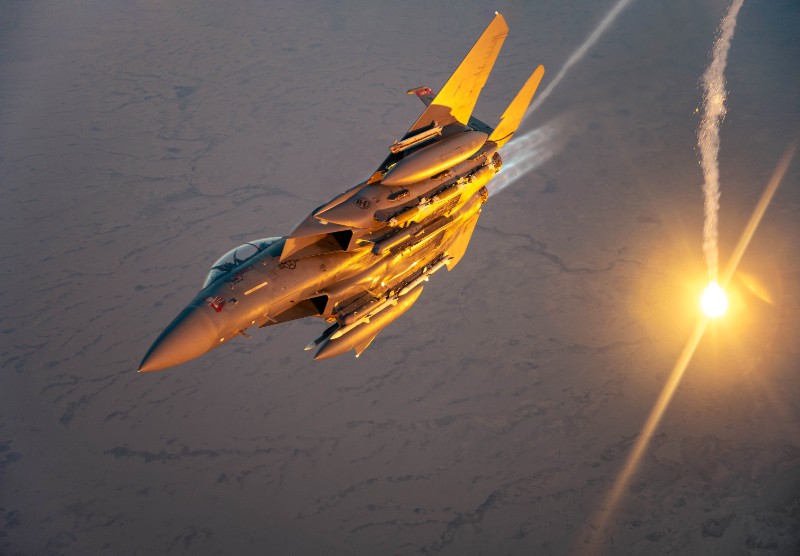
US officials confirmed that an F-15E Strike Eagle was brought down, with one crew member rescued while search efforts for another continue.
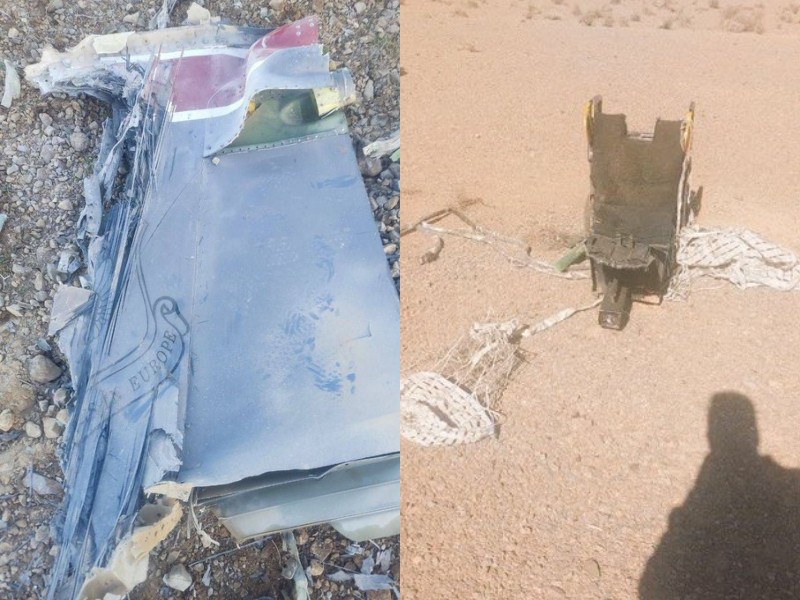 Iran says IRGC shot down US warplanes. Photo: Iranian state media
Iranian state media also reported that an A-10 Warthog aircraft crashed in the Persian Gulf region after sustaining damage from Iranian defences.
These developments follow weeks of extensive aerial operations, during which US Central Command reported more than 13,000 missions and over 12,300 strikes on targets across Iran.
Shift to infrared and passive tracking systems
Analysts examining footage released by Iran’s Islamic Revolutionary Guard Corps (IRGC) indicate that the targeting process may have relied on electro-optical and infrared tracking systems rather than conventional radar.
The imagery shows thermal signatures consistent with infrared detection, suggesting that Iran may have adapted its tactics following damage to radar-based systems.
By using passive sensors, air defence units can detect aircraft without emitting signals, reducing the risk of being identified and targeted.
Infrared systems function by locking onto heat signatures emitted by aircraft engines and airframe friction.
Once a target is identified, the missile guidance system tracks the heat source to maintain a trajectory toward the aircraft.
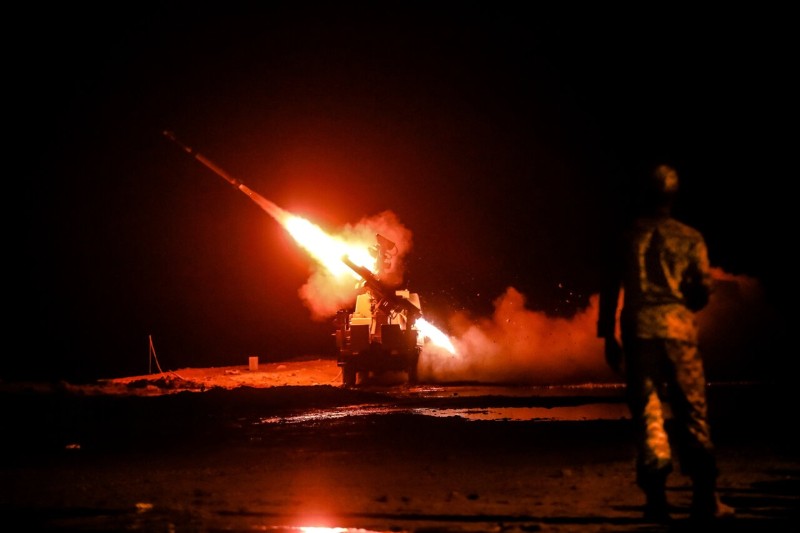 Iran's Majid surface-to-air missile system. Photo: Wikimedia Commons/Mehr News Agency/Ali Haddadi Asl
Role of indigenous air defence systems
Iran’s domestically developed Majid surface-to-air missile system is believed to have played a role in these engagements.
Designed for short-range and low-altitude defence, the system operates using electro-optical tracking and infrared homing technology.
Mounted on mobile platforms, the system provides flexibility in deployment and can engage multiple targets within a limited range.
Its passive detection capability allows it to operate without relying on radar emissions, enhancing survivability in contested environments.
The system can detect targets up to 15 kilometres away and engage threats within a range of up to 8 kilometres, reaching speeds of approximately Mach 2.
It is designed to counter low-flying aircraft, drones and cruise missiles.
Challenges in targeting advanced aircraft
Engaging modern fighter jets such as the F-15E or A-10 using infrared systems presents significant technical challenges.
These aircraft operate at high speeds and deploy advanced countermeasures, including flares and thermal decoys, to evade missile systems.
Modern aircraft also incorporate design features that reduce their thermal signatures, such as cooled engine nozzles and specialised coatings.
These factors complicate detection and targeting, particularly at longer distances or in adverse weather conditions.
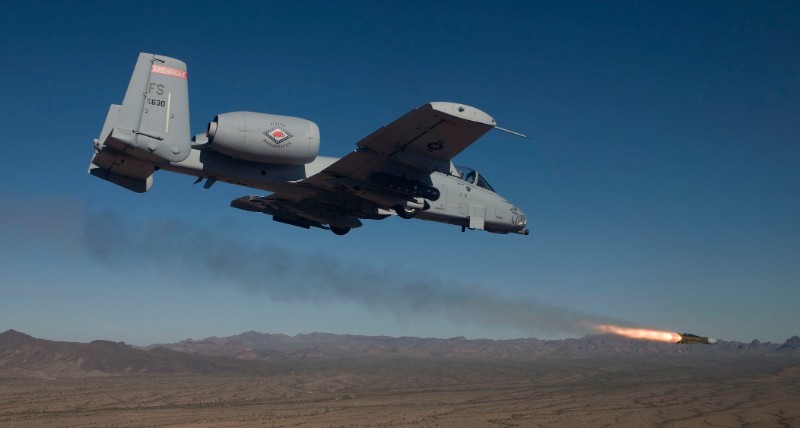 USAF A-10 Warthog. Photo: Wikimedia Commons/Jim Haseltine
Electro-optical tracking systems also face limitations related to visibility, range and atmospheric interference.
Fast-moving targets can quickly exit the field of view, making sustained tracking difficult.
Close-range engagements and tactical windows
Experts suggest that successful engagements using infrared systems typically require close-range conditions and specific operational windows.
Such scenarios may arise when aircraft operate at lower altitudes or when countermeasures are depleted.
In these circumstances, air defence systems can briefly lock onto a target’s heat signature and guide missiles with higher accuracy.
Even then, such outcomes remain highly dependent on timing and situational factors.
Pattern of recent engagement claims
Iran has also reported multiple engagements involving drones and aircraft in recent weeks.
These include claims of downing unmanned aerial vehicles such as MQ-9 Reapers and Israeli reconnaissance platforms over various regions.
The reported incidents culminated in the claimed downing of the F-15E Strike Eagle, which challenges assumptions about uncontested air superiority over Iranian territory.
Continuing aerial campaign
Despite these developments, aerial operations continue at scale.
US Central Command has indicated that thousands of sorties have been conducted as part of the ongoing campaign, targeting a wide range of strategic objectives.
Support Our Journalism
We cannot do without you.. your contribution supports unbiased journalism
IBNS is not driven by any ism- not wokeism, not racism, not skewed secularism, not hyper right-wing or left liberal ideals, nor by any hardline religious beliefs or hyper nationalism. We want to serve you good old objective news, as they are. We do not judge or preach. We let people decide for themselves. We only try to present factual and well-sourced news.
Support objective journalism for a small contribution.