 Economic Woes
Economic woes dash job prospects in low income countries: ILO
New York: Soaring debt levels compounded by high inflation and rising interest rates have dashed job-seekers’ hopes in developing countries, the International Labour Organization (ILO) warned on Wednesday.
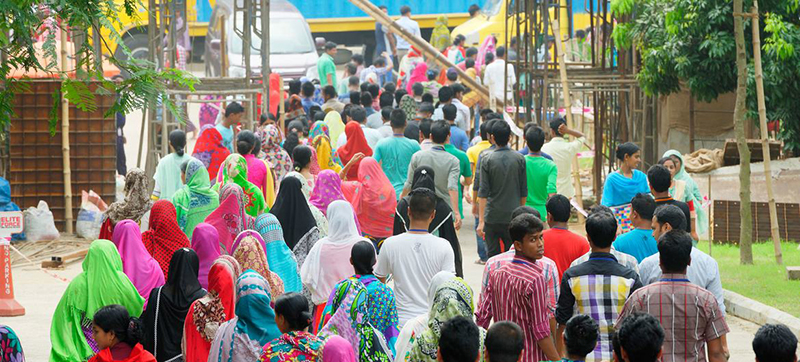
In its new Monitor on the World of Work report, ILO shows that while in high-income countries, only 8.2 per cent of people willing to work are jobless, that number rises to over 21 per cent in low-income countries - or one in every five people.
Low-income countries in debt distress are worst affected, with more than one in four people who want to work unable to secure employment.
Widening jobs gap
ILO’s Assistant Director-General for Jobs and Social Protection, Mia Seppo, said that global unemployment was expected to fall below pre-pandemic levels, with a projected rate of 5.3 per cent in 2023, equivalent to 191 million people.
However, low-income countries, especially those in Africa and the Arab region, were unlikely to see such declines in unemployment this year.
The 2023 global jobs gap, which refers to those who want to work but do not have a job, is projected to rise to 453 million people, she said, with women 1.5 times more affected than men.
Africa hit hardest
The UN agency further indicated that Africa’s labour market had been hit the hardest during the pandemic, which explained the slow pace of recovery on the continent.
Unlike wealthy nations, debt distress across the continent and a very limited fiscal and policy space, meant that few countries in Africa could put in place the kind of comprehensive stimulus packages they needed to spur economic recovery, ILO explained.
Inadequate social protection
Ms. Seppo stressed that without improvement in people’s employment prospects, there would be no sound economic and social recovery. Equally important is investment in welfare safety nets for those who lose their jobs, the ILO senior official insisted, which is often inadequate in low-income countries.
According to the agency’s research, boosting social protection and expanding old age pensions would increase gross domestic product (GDP) per capita in low and middle-income countries by almost 15 per cent over a decade.
Social investment benefit
The annual cost of such measures would be around 1.6 per cent of GDP - a “large but not insurmountable” investment. Ms. Seppo suggested that the amount could be financed by a mix of social contributions, taxes and international support.
“There is an economic gain to investing in social protection”, she said.
Ms. Seppo also insisted that the need to create fiscal space for social investment in low-income countries should be considered “with urgency as part of the ongoing global discussion on the reform of the international financial architecture.”
Prepare for the future of work
While the unemployed divide projected by the report was worrisome, it was “not inevitable”, Ms. Seppo said, and the right concerted action on jobs and social protection funding could support a recovery and reconstruction which leaves no one behind.
In calling for improved capacity to develop “coherent, data-informed labour market policies” that protect the most vulnerable, the ILO senior official insisted that these should have an emphasis on upskilling and reskilling the labour force to prepare it for a “greener, more digital world of work”.
Support Our Journalism
We cannot do without you.. your contribution supports unbiased journalism
IBNS is not driven by any ism- not wokeism, not racism, not skewed secularism, not hyper right-wing or left liberal ideals, nor by any hardline religious beliefs or hyper nationalism. We want to serve you good old objective news, as they are. We do not judge or preach. We let people decide for themselves. We only try to present factual and well-sourced news.
Support objective journalism for a small contribution.