Counselling and dieting among new UN health agency guidelines on child obesity
Faced with evidence indicating that the problem affects rich and poor countries alike, the World Health Organization (WHO) has released details on how trained professionals can better identify youngsters in need of help.
The just-published obesity guidelines include counselling and dieting, an assessment of eating habits along with the more usual weight and height measurements.
WHO says the prevalence of obesity in children reflects changing patterns towards unhealthy diets and physical inactivity. Urbanization, increased incomes, availability of fast foods, educational demands, television viewing and gaming have led to a rise in the consumption of foods high in fats, sugar and salt and lower levels of physical activity.
While there have been major public health interventions to promote improved diet and patterns of physical activity in adults, the contribution of antenatal and young-child interventions to reducing the risk of obesity in later life have not been significantly reviewed.
An estimated 41 million children under five years old are obese or overweight, United Nations health experts warned on Wednesday, launching new guidelines to tackle what they call a global epidemic.
Faced with evidence indicating that the problem affects rich and poor countries alike, the World Health Organization (WHO) has released details on how trained professionals can better identify youngsters in need of help.
The just-published obesity guidelines include counselling and dieting, an assessment of eating habits along with the more usual weight and height measurements.
Failing to heed these recommendations may leave vulnerable children at an increased risk of dying young from a range of life-threatening diseases, WHO warns.
In 2016, Asia accounted for half of all overweight or obese children, and one quarter lived in Africa, according to the UN agency’s Dr. Francesco Branca, Director of the Department of Nutrition for Health and Development.
He explained that this is related to the fact that children in poorer countries often get too little breastmilk, nor the right complimentary food.
Paradoxically, this leaves under-nourished children at greater risk of putting on excess weight as they grow, when they’re offered so-called “cheap calories,” in the form of fatty, sugary foods.
“Malnutrition is responsible for a lack of resilience to changes in the food environment. So a malnourished child would be more susceptible to gaining more weight when exposed to a food environment which is high in far, sugar, for instance.”
The problem of excess weight is rising in all world regions, but most rapidly in poorer and middle-income countries.
Dr. Branca insisted that it was up to governments to do more to address the problem, faced with what he called an “unsuitable food system” that fails to provide sufficient nutritious foods “with the right levels of vitamins and minerals.”
Educating people about the risks of eating unhealthily is a welcome first step, he said, but what’s really needed is more regulation to ensure that healthier foods are cheaper and more readily available.
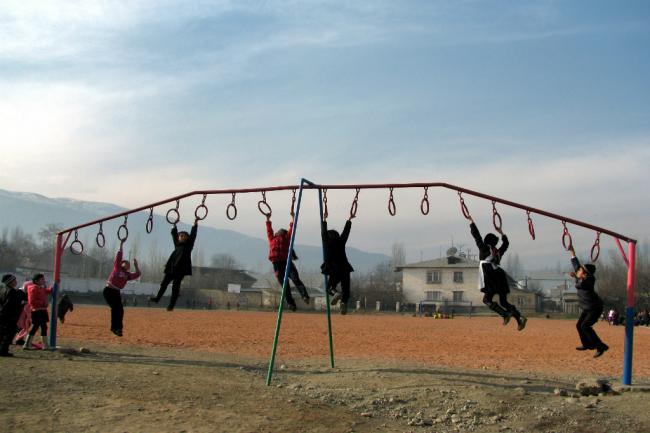
Photo: OCHA/Eurasia Foundation of Central Asia, T. Jeannere
Source: www.justearthnews.com
Support Our Journalism
We cannot do without you.. your contribution supports unbiased journalism
IBNS is not driven by any ism- not wokeism, not racism, not skewed secularism, not hyper right-wing or left liberal ideals, nor by any hardline religious beliefs or hyper nationalism. We want to serve you good old objective news, as they are. We do not judge or preach. We let people decide for themselves. We only try to present factual and well-sourced news.
Support objective journalism for a small contribution.