 Uyghur Man
China admits death of Uyghur man whose family says he was held in Xinjiang camps since 2017
London: In a rare stance, China has formally confirmed to the UN the death of a Uyghur man whose family believes he had been held in a Xinjiang internment camp since 2017, media reports said.
Abdulghafur Hapiz’s disappearance was registered with the United Nations Working Group on Enforced or Involuntary Disappearances (WGEID) in April 2019, but the Chinese government didn’t respond to formal inquiries until this month, reports The Guardian.
When it did respond, in a document seen by the Guardian, it told WGEID that the retired driver from Kashgar had died almost two years ago, on 3 November, 2018 of “severe pneumonia and tuberculosis”, reports the British newspaper.
“I don’t believe it,” his daughter, Fatimah Abdulghafur, told the Guardian. “If he died of anything it would have been diabetes.”
“I know my father’s health and I’ve been talking about his health issues. He had a (tuberculosis) shot.”
Abdulghafur, a poet and activist living in Australia, said she last heard from her father in April 2016, when he left her a voice message on WeChat saying: “‘I have something urgent to tell you please call me’, but when I called him back he wasn’t there.”
She said she believed her father was sent to the camp in March 2017.
“I was frantically looking for my father, when he was already gone. It’s also really sad because I couldn’t speak to him before his death,” she said. Authorities gave no information about his burial, or the location of his body.
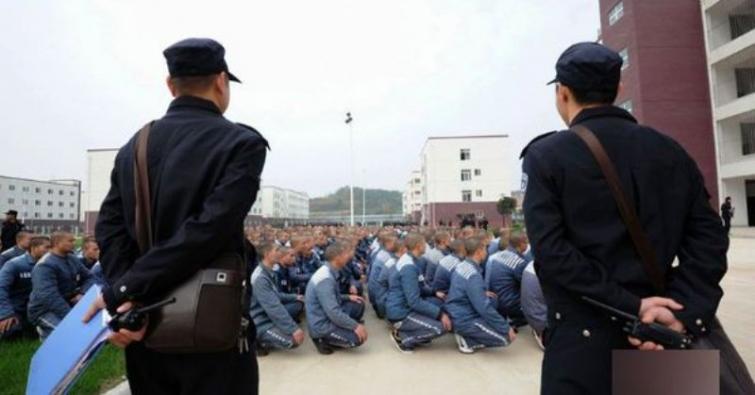
Meanwhile, an Australian think-tank has said it seems China is expanding its network of secret detention centers in Xinjiang.
People from the Muslim community are allegedly kept in these centres in the majority numbers, media reports said.
The Australian Strategic Policy Institute in its report said: "Since 2017, a government crackdown in the far-western region of China known as the Xinjiang Uyghur Autonomous Region has seen over a million Uyghurs and other Turkic and Muslim minorities extrajudicially detained in a vast network of purpose-built detention facilities."
"There have also been media reports about incidents of mosques demolished or repurposed, along with other Uyghur cultural sites," the think-tank said.
"Credible data on the extent of Xinjiang’s post-2017 detention system is scarce. But researchers at ASPI’s International Cyber Policy Centre have now located, mapped and analysed 380 suspected detention facilities in Xinjiang, making it the most comprehensive data on Xinjiang’s detention system in the world," it said.
"This new database highlights ‘re-education’ camps, detention centres, and prisons which have been newly built or expanded since 2017, and we believe it covers most such detention facilities," the report said.
The findings of this research contradicts Chinese officials’ claims that all “re-education camp” detainees had ‘graduated’ in December 2019. It presents satellite imagery evidence that shows newly constructed detention facilities, along with growth in several existing facilities, that has occurred across 2019 and 2020, the think-tank said.
The think-tank said 30 percent of important Islamic cultural sites (sacred shrines, cemeteries and pilgrimage routes) across southern Xinjiang have been demolished since 2017, with an additional 28 percent damaged or altered in some way. This includes the complete demolition of the ancient pilgrimage town of Ordam Mazar.
Support Our Journalism
We cannot do without you.. your contribution supports unbiased journalism
IBNS is not driven by any ism- not wokeism, not racism, not skewed secularism, not hyper right-wing or left liberal ideals, nor by any hardline religious beliefs or hyper nationalism. We want to serve you good old objective news, as they are. We do not judge or preach. We let people decide for themselves. We only try to present factual and well-sourced news.
Support objective journalism for a small contribution.