'Catastrophic' floods in Myanmar hit most vulnerable, including children: UN
“The floods are hitting children and families who are already very vulnerable, including those living in camps in Rakhine state,” said Shalini Bahuguna, from the UN Children's Fund (UNICEF). There are 140,000 displaced children and families in Rakhine alone.
“Beyond the immediate impact, the floods will have a longer term impact on the livelihoods of these families,” she warned.
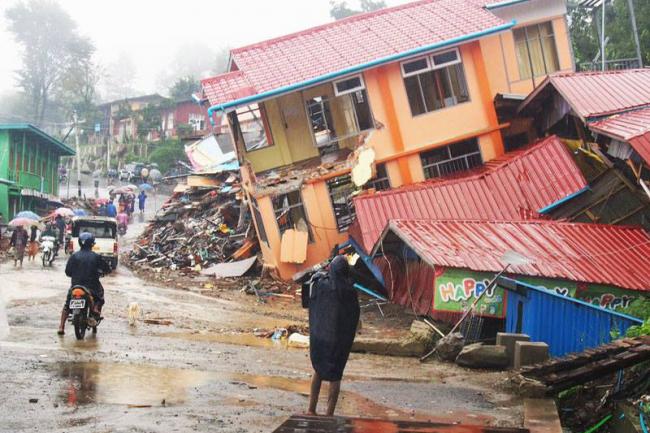
According to the Myanmar Government, 39 people have died and over 200,000 people across the country are in need of lifesaving assistance. Twelve out of Myanmar's 14 states and regions have been affected by the rains.
On 31 July, President U Thein Sein issued a statement declaring natural disaster zones in four regions, including Rakhine, where access is limited due to flooding, road blockages and landslides.
“Initial reports indicate that there is extensive damage to shelters and other infrastructure in camps around Sittwe [Rakhine's capital], where some 100,000 displaced people are staying,” stressed the UN Office for the Coordination for Humanitarian Affairs (OCHA) in anupdate from 30 July.
Limited information is availablethis this stage on the situation in Magway region and Chin state. In one township alone in Magway, around 70 villages are reported to be affected by floods and people in the area being relocated to schools, monasteries and other safe locations.
In Chin state, at least 100 houses reported have been destroyed by landslides, pointed out OCHA.
Local authorities, the Government, the military, as well as the Myanmar Red Cross Society and local civil society organizations, with support from the UN and international organizations, are responding to the floods in different parts of the country, carrying out rescue operations and providing food, water, blankets, medical and other basic necessities to those affected.
Against that background, vulnerable children in Myanmar, UNICEF says, face a “double catastrophe” as floods add to the hardships of poverty, violence and conflict.
UNICEF is working closely with other UN agencies is working closely with the Myanmar authorities, dispatching assessment teams to affected areas to identify the priority needs of children and families in terms of water and sanitation, health care, and nutrition.
“UNICEF has already supported the distribution of water purification tablets and hygiene kits to the affected areas,” Bahuguna said.
She said, “We are working…to get emergency messages out to local communities through radio, to tell people how to prevent water borne diseases.”
Myanmar is prone to natural disasters such as floods, cyclones and earthquakes. There is a need for more resources to scale up disaster preparedness, and to improve community resilience.
The heaviest affected areas are among the poorest states in Myanmar, a country where nearly 70 percent of people live close to the $2-per-day poverty threshold, and children make up 34 per cent of the population.
Earlier this year, UNICEF appealed for $24.9 million to help children affected by violence and conflict in Rakhine state. The agency has received $5.6 million so far, leaving a $19.3 million shortfall, even before the needs of flood-affected families are taken into account.
“The impact of these floods makes the need for funding, particularly for displaced and vulnerable families, even more urgent,” Bahuguna said.
She added, “The poorest children and families are going to be the hardest hit, and we need to build their resilience so they can cope with these kinds of crises.”
Photo: UNICEF Myanmar
Support Our Journalism
We cannot do without you.. your contribution supports unbiased journalism
IBNS is not driven by any ism- not wokeism, not racism, not skewed secularism, not hyper right-wing or left liberal ideals, nor by any hardline religious beliefs or hyper nationalism. We want to serve you good old objective news, as they are. We do not judge or preach. We let people decide for themselves. We only try to present factual and well-sourced news.
Support objective journalism for a small contribution.