 Nepal
Nepal
Balen Shah’s 150-day reality check: How Nepal’s Gen Z hero lost his political shine
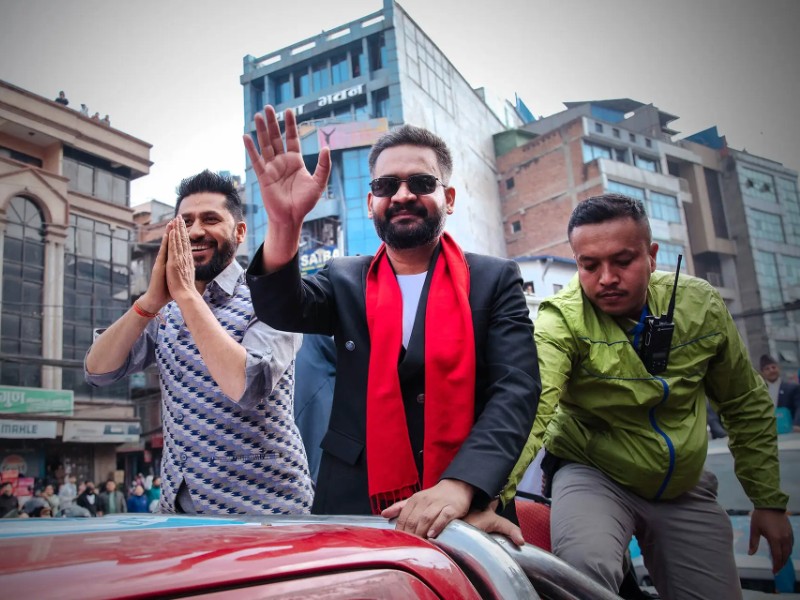
When Balendra ‘Balen’ Shah entered Nepal’s prime ministerial office on March 27, he appeared to represent a decisive break from a political system dominated for years by familiar faces.
The former underground rapper, structural engineer and Kathmandu mayor had built his political identity around confrontation with the establishment.
His rise was closely associated with Nepal’s Gen Z political wave and the rejection of the country’s revolving-door politics.
At 35, Shah became one of Nepal’s youngest prime ministers in decades.
His Rastriya Swatantra Party (RSP), with Shah as its prime ministerial candidate, secured a sweeping mandate in the March 5 election, defeating established political forces.
The symbolism was powerful.
A mayor who had cultivated an outsider image had moved from Kathmandu’s city hall to the country’s highest political office.
But 150 days into his tenure, that image is under considerably greater strain.
The shift has not come from one decisive political defeat. Instead, a series of controversies, administrative setbacks, diplomatic complications, street protests and questions over Shah’s engagement with Parliament and his own party have steadily changed the political landscape around him.
Customs decision becomes an early test
One of the first major controversies of Shah’s tenure emerged around Nepal’s open border with India.
In April, his government moved to enforce customs rules more strictly on goods brought into Nepal from Indian border markets.
The restrictions affected everyday purchases, including groceries, medicines and household products, and generated anger in border communities.
Reports at the time said Nepali authorities were enforcing a Rs 100 threshold for goods carried from Indian markets, with even low-value items being stopped or seized.
Protests followed, particularly in areas dependent on cross-border shopping.
The episode exposed one of the first difficulties of Shah’s transition from outsider politics to government: decisions that might appear administratively straightforward in Kathmandu could have immediate economic and political consequences along Nepal’s highly integrated border with India.
The government subsequently backed away from the strict enforcement, turning the episode into an early test of its political judgement.
Relationship with India becomes a diplomatic challenge
The more consequential test came over the long-running India-Nepal territorial dispute involving Lipulekh, Kalapani and Limpiyadhura.
During a parliamentary discussion in June, Shah made remarks on the disputed areas that triggered criticism in both Nepal and India.
His comments prompted opposition protests and demands for clarification, while New Delhi rejected any suggestion of third-party involvement in resolving the boundary dispute.
For a leader whose political persona had been built around independence from established power centres, the episode was particularly damaging because the India relationship requires a careful balance between sovereignty concerns, nationalist sentiment and the practical depth of bilateral ties.
The timing also mattered.
While Shah was facing criticism over the border issue, RSP chairman Rabi Lamichhane travelled to India at the invitation of the Bharatiya Janata Party.
During his June visit, Lamichhane met Prime Minister Narendra Modi, Union Home Minister Amit Shah, External Affairs Minister S Jaishankar and BJP leadership.
The RSP itself had described the visit as an opportunity for high-level political and diplomatic engagement.
India’s Ministry of Home Affairs said Home Minister Amit Shah congratulated Lamichhane on the RSP’s election victory and conveyed India’s best wishes for the new government.
Modi subsequently said India looked forward to working with Nepal’s new government to strengthen the bilateral relationship.
The reception given to Lamichhane inevitably generated political speculation because of the simultaneous controversy surrounding Shah’s comments on the border.
The visit did not amount to a formal challenge to Shah’s authority.
But it demonstrated that New Delhi could maintain direct political engagement with the ruling party even while relations with the prime minister himself were undergoing friction.
Balen eventually adjusts his diplomatic approach
The episode also appears to have exposed the limits of Balen Shah’s deliberately distant approach to foreign representatives.
He had earlier restricted one-on-one meetings with foreign envoys below ministerial level, a position that made his subsequent decision to meet India’s ambassador and China’s ambassador separately at Singha Durbar in August particularly notable.
The change suggested a more conventional diplomatic approach after months in which the new prime minister had sought to maintain an unusually rigid distance from foreign interlocutors.
For Shah, the adjustment came as questions about his handling of Nepal’s external relationships were already intensifying.
The issue has practical consequences beyond diplomatic protocol.
Nepal’s economic, security and strategic relationships with India and China make foreign policy an unavoidable part of the prime minister’s job, particularly when border issues and regional security remain politically sensitive.
Gorkha recruitment issue adds another India test
The India relationship has also intersected with a domestic employment issue involving Nepali Gorkhas and the Indian Army.
Recruitment of Nepali citizens under India’s Agnipath scheme has remained stalled since 2020.
Gorkha veterans and their supporters have recently pressed Kathmandu to resolve the deadlock, arguing that military service in India has historically provided an important employment route for Nepali youths.
The issue resurfaced during Indian Army Chief General Dhiraj Seth’s August visit to Nepal.
Seth met Shah and other senior Nepali leaders to discuss defence cooperation and was conferred the honorary rank of General of the Nepali Army, continuing a longstanding military tradition between the two countries.
The recruitment question remains unresolved, leaving Shah to navigate another politically sensitive issue in a relationship that his government cannot afford to treat as peripheral.
Streets that once made Shah now challenge him
The most damaging pressure, however, has come from within Nepal.
In July, the death of 25-year-old ride-hailing driver Ganesh Nepali after he set himself on fire outside the Department of Passports in Kathmandu became a powerful symbol of public frustration.
Nepali had been involved in a dispute with municipal authorities over his motorcycle, which had been wheel-locked.
He suffered severe burns and died while receiving treatment at Bir Hospital.
The incident struck a particularly sensitive chord because Shah’s political identity had been built on challenging bureaucratic behaviour and presenting himself as a leader closer to ordinary citizens.
The protests that followed brought questions about municipal enforcement, the treatment of informal workers and the distance between government institutions and citizens back into the political debate.
For a leader whose rise was closely tied to youth anger against the old political order, the symbolism was difficult to ignore.
Parliament is becoming another pressure point
Shah’s relationship with Parliament has also become increasingly contentious.
According to recent reporting, Shah has attended only five of the 39 parliamentary sittings since becoming prime minister.
Speaker Dol Prasad Aryal has now directed Balen Shah to appear before the House on August 26 for a question-and-answer session, following repeated protests from opposition lawmakers over his absence.
The parliamentary scrutiny is significant because Shah’s electoral appeal was rooted partly in the promise of accountability and a departure from established political practices.
His limited presence in the legislature has therefore created a political contradiction: a leader elected on a strong mandate is now facing criticism for limited engagement with one of the central institutions through which that mandate is exercised.
The coming parliamentary session could consequently become an important test of how Shah responds when his decisions are challenged directly by lawmakers.
Distance from the RSP
Questions are no longer confined to Shah’s relationship with voters or Parliament.
His engagement with the RSP itself has also attracted attention.
The party chairman, Lamichhane, remains a crucial figure within the political organisation that brought Shah to power. Yet reports have pointed to limited interaction between Shah and the party structure.
His absence from an RSP Central Committee meeting on August 21, where preparations for forthcoming local elections were being discussed, further fuelled speculation about the relationship between the prime minister and the organisation behind his mandate.
Reports said Shah travelled from Kathmandu to Pokhara and later Mustang instead of attending the meeting.
His occasional presence at party meetings and the RSP central office has reportedly prompted questions among party leaders about the extent of his engagement with the organisation.
The issue goes beyond attendance.
A two-thirds mandate gave Shah considerable political authority, but that authority depends on maintaining cohesion between the prime minister, the party leadership and lawmakers.
Any widening gap between those components could complicate the government’s ability to convert its electoral mandate into sustained legislative control.
Communal unrest exposes another weakness
The most serious test of Shah’s government came in late July, when communal violence erupted in southeastern Nepal.
Clashes between Hindu and Muslim groups began in Sunsari district near the Indian border after a dispute involving loud music and religious flags during a Hindu procession.
The violence later spread to neighbouring districts, including Siraha. At least three people died, and dozens were injured, while authorities imposed curfews and deployed security forces.
The unrest forced Shah to make his first major televised address to the nation since becoming prime minister.
“I, on behalf of the government, sincerely appeal to the citizens, civil society, religious communities, all respected leaders, all political parties and responsible media, to exercise patience and restraint and maintain peace, harmony, brotherhood and national unity,” Shah said.
He also promised a “completely fair and transparent” investigation and said those responsible would face justice.
The government later formed investigation committees into the incidents. By August 18, the committees had submitted their reports to the Home Ministry, with their conclusions and recommendations under review.
But politically, the episode added to the impression of a government responding to crises after they had already escalated.
That may be the central tension in Shah’s first 150 days.
Outsider style meets demands of govt
As Kathmandu mayor, his confrontational style was an important part of his appeal.
It allowed him to position himself against established political parties, bureaucratic inertia and conventional political etiquette.
The premiership demands a different balance.
Border disputes require diplomatic precision, parliamentary government requires regular engagement with lawmakers, party leadership requires coordination, communal unrest demands rapid political intervention, and administrative decisions affecting border communities require careful assessment of their social and economic consequences.
Shah has encountered all of these pressures within five months.
His political journey from rapper and independent mayor to prime minister remains remarkable. But the same outsider identity that helped propel him to power has increasingly become inseparable from the governing style now under scrutiny.
Support Our Journalism
We cannot do without you.. your contribution supports unbiased journalism
IBNS is not driven by any ism- not wokeism, not racism, not skewed secularism, not hyper right-wing or left liberal ideals, nor by any hardline religious beliefs or hyper nationalism. We want to serve you good old objective news, as they are. We do not judge or preach. We let people decide for themselves. We only try to present factual and well-sourced news.
Support objective journalism for a small contribution.